
Recent from talks
Nikolay Lossky
Knowledge base stats:
Talk channels stats:
Members stats:
Nikolay Lossky
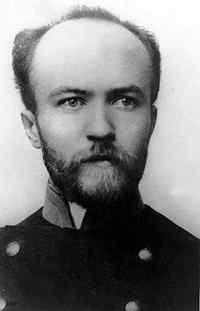
Nikolay Onufriyevich Lossky (/ˈlɒski/; 6 December [O.S. 24 November] 1870 – 24 January 1965), also known as N. O. Lossky, was a Russian philosopher, representative of Russian idealism, intuitionist epistemology, personalism, libertarianism, ethics and axiology (value theory). He gave his philosophical system the name intuitive-personalism. He spent his working life in St. Petersburg and, after his exile by the Bolsheviks in 1922, in Prague and New York. He was the father of the influential Christian theologian Vladimir Lossky.
Lossky was born in Kreslavka then in the Russian Empire. His father, Onufry Lossky, had Belarusian roots (his grandfather was a Greek-Catholic Uniate priest) and was an Eastern Orthodox Christian; his mother Adelajda Przylenicka was Polish and Roman Catholic. He was expelled from school for propagating atheism.
Lossky undertook postgraduate studies in Germany under Wilhelm Windelband, Wilhelm Wundt and G. E. Müller, receiving a master's degree in 1903 and a doctorate in 1907.
Returning to Russia, he became a lecturer and subsequently assistant professor of philosophy in Saint Petersburg.
Lossky called for a Russian religious and spiritual reawakening while pointing out post-revolution excesses. At the same time, Lossky survived an elevator accident that nearly killed him, which caused him to turn back to the Russian Orthodox Church under the direction of Fr. Pavel Florensky. These criticisms and conversion cost Lossky his professorship of philosophy and led to his exile abroad, on the famed Philosophers' ship (in 1922) from the Soviet Union as a counter-revolutionary.
Lossky was invited to Prague by Tomáš Masaryk and became professor at the Russian University of Prague at Bratislava, in Czechoslovakia. Being part of a group of ex-Marxists, including Nikolai Berdyaev, Sergei Bulgakov, Gershenzon, Peter Berngardovich Struve, Semyon Frank, Lossky, though a Fabian socialist, contributed to the group's symposium named Vekhi or Signposts. He also helped the Harvard sociologist Pitirim Sorokin with his Social and Cultural Dynamics
In 1947 N. O. Lossky took a position teaching theology at Saint Vladimir's Orthodox Theological Seminary, an Orthodox Christian seminary in Crestwood, New York.
In 1961, after the death of his famous son, theologian Vladimir Lossky, N. O. Lossky went to France. The last four years of his life were spent in illness there.
Hub AI
Nikolay Lossky AI simulator
(@Nikolay Lossky_simulator)
Nikolay Lossky
Nikolay Onufriyevich Lossky (/ˈlɒski/; 6 December [O.S. 24 November] 1870 – 24 January 1965), also known as N. O. Lossky, was a Russian philosopher, representative of Russian idealism, intuitionist epistemology, personalism, libertarianism, ethics and axiology (value theory). He gave his philosophical system the name intuitive-personalism. He spent his working life in St. Petersburg and, after his exile by the Bolsheviks in 1922, in Prague and New York. He was the father of the influential Christian theologian Vladimir Lossky.
Lossky was born in Kreslavka then in the Russian Empire. His father, Onufry Lossky, had Belarusian roots (his grandfather was a Greek-Catholic Uniate priest) and was an Eastern Orthodox Christian; his mother Adelajda Przylenicka was Polish and Roman Catholic. He was expelled from school for propagating atheism.
Lossky undertook postgraduate studies in Germany under Wilhelm Windelband, Wilhelm Wundt and G. E. Müller, receiving a master's degree in 1903 and a doctorate in 1907.
Returning to Russia, he became a lecturer and subsequently assistant professor of philosophy in Saint Petersburg.
Lossky called for a Russian religious and spiritual reawakening while pointing out post-revolution excesses. At the same time, Lossky survived an elevator accident that nearly killed him, which caused him to turn back to the Russian Orthodox Church under the direction of Fr. Pavel Florensky. These criticisms and conversion cost Lossky his professorship of philosophy and led to his exile abroad, on the famed Philosophers' ship (in 1922) from the Soviet Union as a counter-revolutionary.
Lossky was invited to Prague by Tomáš Masaryk and became professor at the Russian University of Prague at Bratislava, in Czechoslovakia. Being part of a group of ex-Marxists, including Nikolai Berdyaev, Sergei Bulgakov, Gershenzon, Peter Berngardovich Struve, Semyon Frank, Lossky, though a Fabian socialist, contributed to the group's symposium named Vekhi or Signposts. He also helped the Harvard sociologist Pitirim Sorokin with his Social and Cultural Dynamics
In 1947 N. O. Lossky took a position teaching theology at Saint Vladimir's Orthodox Theological Seminary, an Orthodox Christian seminary in Crestwood, New York.
In 1961, after the death of his famous son, theologian Vladimir Lossky, N. O. Lossky went to France. The last four years of his life were spent in illness there.
Recent media