
Recent from talks
Nitrous oxide engine
Knowledge base stats:
Talk channels stats:
Members stats:
Nitrous oxide engine
A nitrous oxide engine, or nitrous oxide system (NOS), is an internal combustion engine in which oxygen for burning the fuel comes from the decomposition of nitrous oxide, N2O, as well as air. The system increases the engine's power output by allowing fuel to be burned at a higher-than-normal rate, because of the higher partial pressure of oxygen injected with the fuel mixture. Nitrous injection systems may be "dry", where the nitrous oxide is injected separately from fuel, or "wet" in which additional fuel is carried into the engine along with the nitrous. NOS may not be permitted for street or highway use, depending on local regulations. N2O use is permitted in certain classes of auto racing. Reliable operation of an engine with nitrous injection requires careful attention to the strength of engine components and to the accuracy of the mixing systems, otherwise destructive detonations or exceeding engineered component maximums may occur. Nitrous oxide systems were applied as early as World War II for certain aircraft engines.
In the context of racing, nitrous oxide is often termed nitrous or NOS. The term NOS is derived from the initials of the company name Nitrous Oxide Systems, Inc. (now a brand of Holley Performance Products) one of the pioneering companies in the development of nitrous oxide injection systems for automotive performance use. Nitro is also sometimes used, though incorrect, as it refers more to nitromethane engines.
When a mole of nitrous oxide decomposes, it releases half a mole of O2 molecules (oxygen gas), and one mole of N2 molecules (nitrogen gas). This decomposition allows an oxygen concentration of 36.36% to be reached. Nitrogen gas is non-combustible and does not support combustion. Air—which contains only 21% oxygen, the rest being nitrogen and other equally non-combustible and non-combustion-supporting gasses—permits a 12-percent-lower maximum-oxygen level than that of nitrous oxide. This oxygen supports combustion; it combines with fuels such as gasoline, alcohol, diesel fuel, propane, or compressed natural gas (CNG) to produce carbon dioxide and water vapor, along with heat, which causes the former two products of combustion to expand and exert pressure on pistons, driving the engine.
Nitrous oxide is stored as a liquid in tanks, but is a gas under atmospheric conditions. When injected as a liquid into an inlet manifold, the vaporization and expansion causes a reduction in air/fuel charge temperature with an associated increase in density, thereby increasing the cylinder's volumetric efficiency.
As the decomposition of N2O into oxygen and nitrogen gas is exothermic and thus contributes to a higher temperature in the combustion engine, the decomposition increases engine efficiency and performance, which is directly related to the difference in temperature between the unburned fuel mixture and the hot combustion gasses produced in the cylinders.
All systems are based on a single stage kit, but these kits can be used in multiples (called two-, three-, or even four-stage kits). The most advanced systems are controlled by an electronic progressive delivery unit that allows a single kit to perform better than multiple kits can. Most Pro Mod and some Pro Street drag race cars use three stages for additional power, but more and more are switching to pulsed progressive technology. Progressive systems have the advantage of utilizing a larger amount of nitrous (and fuel) to produce even greater power increases as the additional power and torque are gradually introduced (as opposed to being applied to the engine and transmission immediately), reducing the risk of mechanical shock and, consequently, damage.
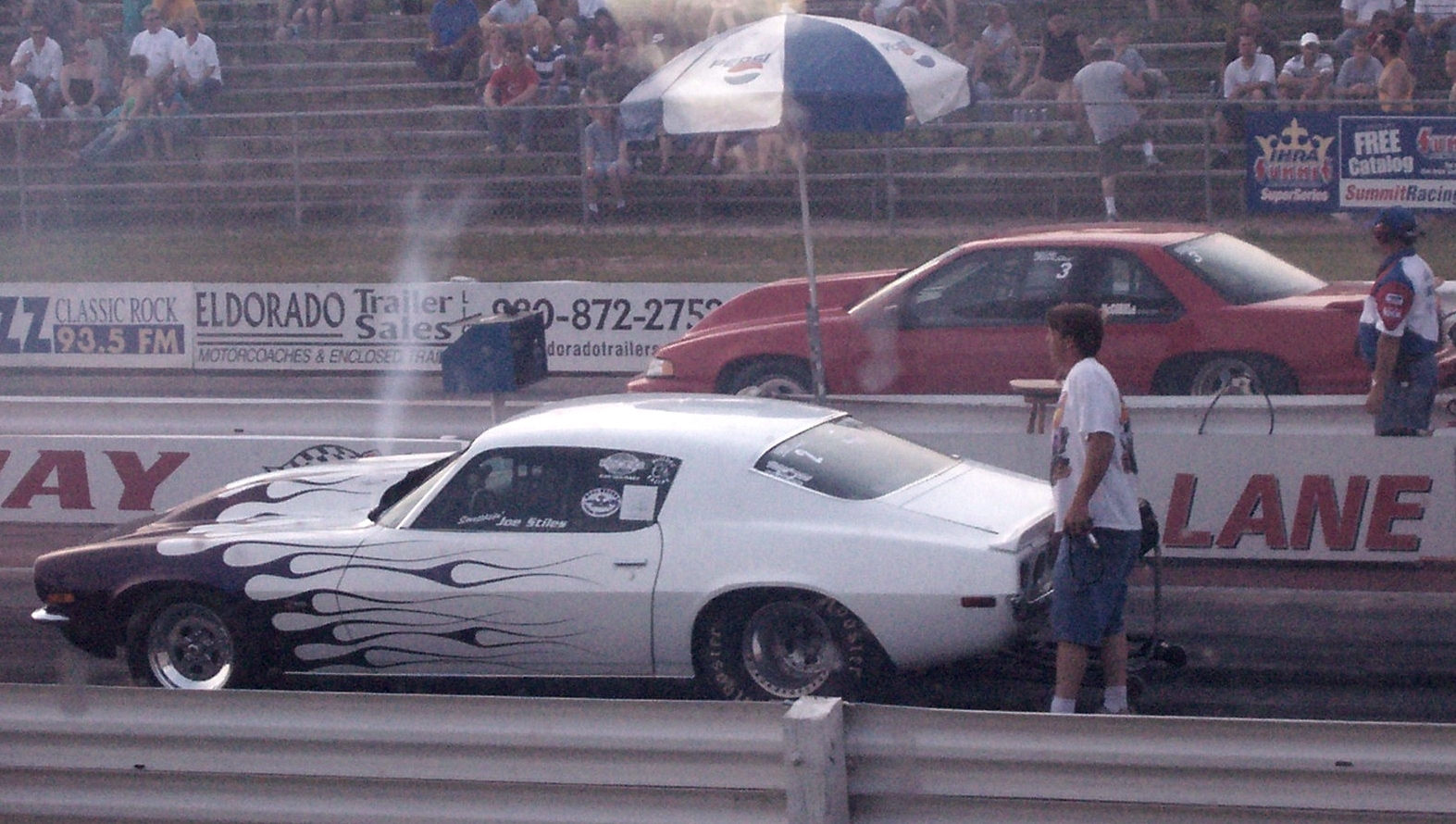
Cars with nitrous-equipped engines may be identified by the "purge" of the delivery system that most drivers perform prior to reaching the starting line. A separate electrically operated valve is used to release air and gaseous nitrous oxide trapped in the delivery system. This brings liquid nitrous oxide all the way up through the plumbing from the storage tank to the solenoid valve or valves that will release it into the engine's intake tract. When the purge system is activated, one or more plumes of nitrous oxide will be visible for a moment as the liquid flashes to vapor as it is released. The purpose of a nitrous purge is to ensure that the correct amount of nitrous oxide is delivered the moment the system is activated as nitrous and fuel jets are sized to produce correct air / fuel ratios, and as liquid nitrous is denser than gaseous nitrous, any nitrous vapor in the lines will cause the car to "bog" for an instant (as the ratio of nitrous / fuel will be too rich reducing engine power) until liquid nitrous oxide reaches the injection nozzle.
There are two categories of nitrous systems: dry & wet with four main delivery methods of nitrous systems: single nozzle, direct port, plate, and bar used to discharge nitrous into the plenums of the intake manifold. Nearly all nitrous systems use specific orifice inserts, called jets, along with pressure calculations to meter the nitrous, or nitrous and fuel in wet applications, delivered to create a proper air-fuel ratio (AFR) for the additional horsepower desired.
Hub AI
Nitrous oxide engine AI simulator
(@Nitrous oxide engine_simulator)
Nitrous oxide engine
A nitrous oxide engine, or nitrous oxide system (NOS), is an internal combustion engine in which oxygen for burning the fuel comes from the decomposition of nitrous oxide, N2O, as well as air. The system increases the engine's power output by allowing fuel to be burned at a higher-than-normal rate, because of the higher partial pressure of oxygen injected with the fuel mixture. Nitrous injection systems may be "dry", where the nitrous oxide is injected separately from fuel, or "wet" in which additional fuel is carried into the engine along with the nitrous. NOS may not be permitted for street or highway use, depending on local regulations. N2O use is permitted in certain classes of auto racing. Reliable operation of an engine with nitrous injection requires careful attention to the strength of engine components and to the accuracy of the mixing systems, otherwise destructive detonations or exceeding engineered component maximums may occur. Nitrous oxide systems were applied as early as World War II for certain aircraft engines.
In the context of racing, nitrous oxide is often termed nitrous or NOS. The term NOS is derived from the initials of the company name Nitrous Oxide Systems, Inc. (now a brand of Holley Performance Products) one of the pioneering companies in the development of nitrous oxide injection systems for automotive performance use. Nitro is also sometimes used, though incorrect, as it refers more to nitromethane engines.
When a mole of nitrous oxide decomposes, it releases half a mole of O2 molecules (oxygen gas), and one mole of N2 molecules (nitrogen gas). This decomposition allows an oxygen concentration of 36.36% to be reached. Nitrogen gas is non-combustible and does not support combustion. Air—which contains only 21% oxygen, the rest being nitrogen and other equally non-combustible and non-combustion-supporting gasses—permits a 12-percent-lower maximum-oxygen level than that of nitrous oxide. This oxygen supports combustion; it combines with fuels such as gasoline, alcohol, diesel fuel, propane, or compressed natural gas (CNG) to produce carbon dioxide and water vapor, along with heat, which causes the former two products of combustion to expand and exert pressure on pistons, driving the engine.
Nitrous oxide is stored as a liquid in tanks, but is a gas under atmospheric conditions. When injected as a liquid into an inlet manifold, the vaporization and expansion causes a reduction in air/fuel charge temperature with an associated increase in density, thereby increasing the cylinder's volumetric efficiency.
As the decomposition of N2O into oxygen and nitrogen gas is exothermic and thus contributes to a higher temperature in the combustion engine, the decomposition increases engine efficiency and performance, which is directly related to the difference in temperature between the unburned fuel mixture and the hot combustion gasses produced in the cylinders.
All systems are based on a single stage kit, but these kits can be used in multiples (called two-, three-, or even four-stage kits). The most advanced systems are controlled by an electronic progressive delivery unit that allows a single kit to perform better than multiple kits can. Most Pro Mod and some Pro Street drag race cars use three stages for additional power, but more and more are switching to pulsed progressive technology. Progressive systems have the advantage of utilizing a larger amount of nitrous (and fuel) to produce even greater power increases as the additional power and torque are gradually introduced (as opposed to being applied to the engine and transmission immediately), reducing the risk of mechanical shock and, consequently, damage.
Cars with nitrous-equipped engines may be identified by the "purge" of the delivery system that most drivers perform prior to reaching the starting line. A separate electrically operated valve is used to release air and gaseous nitrous oxide trapped in the delivery system. This brings liquid nitrous oxide all the way up through the plumbing from the storage tank to the solenoid valve or valves that will release it into the engine's intake tract. When the purge system is activated, one or more plumes of nitrous oxide will be visible for a moment as the liquid flashes to vapor as it is released. The purpose of a nitrous purge is to ensure that the correct amount of nitrous oxide is delivered the moment the system is activated as nitrous and fuel jets are sized to produce correct air / fuel ratios, and as liquid nitrous is denser than gaseous nitrous, any nitrous vapor in the lines will cause the car to "bog" for an instant (as the ratio of nitrous / fuel will be too rich reducing engine power) until liquid nitrous oxide reaches the injection nozzle.
There are two categories of nitrous systems: dry & wet with four main delivery methods of nitrous systems: single nozzle, direct port, plate, and bar used to discharge nitrous into the plenums of the intake manifold. Nearly all nitrous systems use specific orifice inserts, called jets, along with pressure calculations to meter the nitrous, or nitrous and fuel in wet applications, delivered to create a proper air-fuel ratio (AFR) for the additional horsepower desired.
Recent media