
Recent from talks
Niš
Knowledge base stats:
Talk channels stats:
Members stats:
Niš
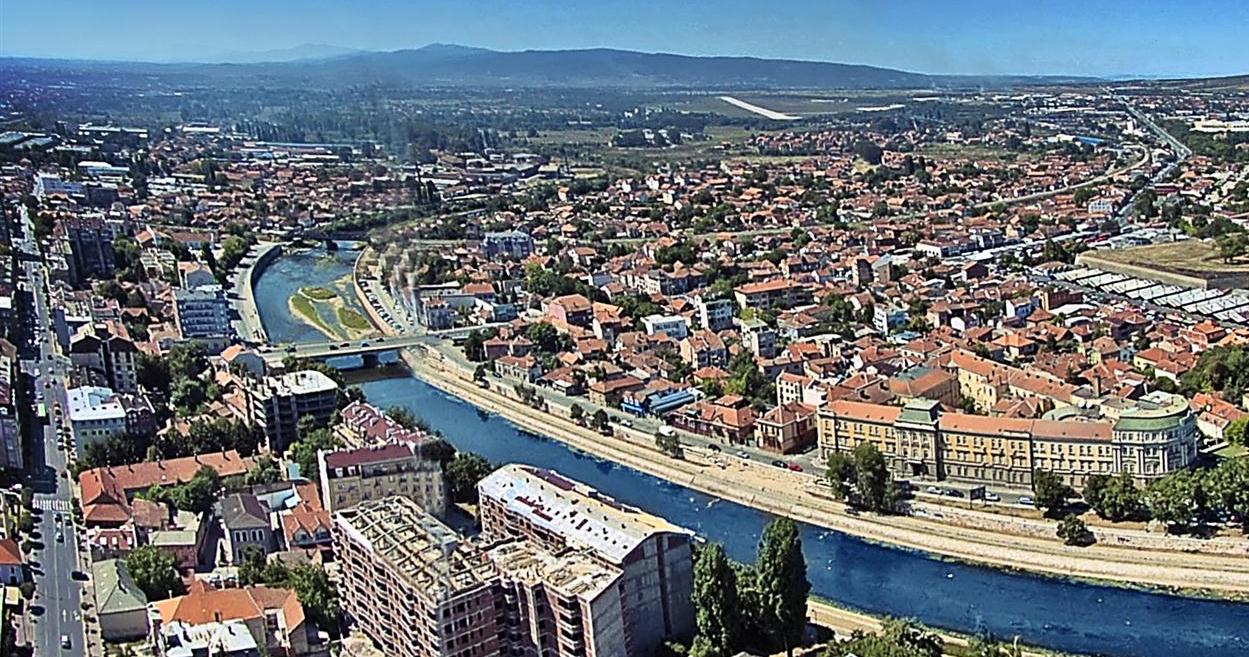
Niš (/ˈniːʃ/; Serbian Cyrillic: Ниш, Serbian pronunciation: [nîːʃ] ⓘ; names in other languages), less often spelled in English as Nish, is the third largest city in Serbia and the administrative center of the Nišava District. It is located in the southern part of Serbia. According to the 2022 census[update], the city proper has a population of 178,976, while its administrative area has a population of 249,501 inhabitants.
Several Roman emperors were born in Niš or used it as a residence: Constantine the Great, the first Christian emperor and the founder of Constantinople, Constantius III, Constans, Vetranio, Julian, Valentinian I, Valens; and Justin I. Emperor Claudius Gothicus decisively defeated the Goths at the Battle of Naissus (present-day Niš). Later playing a prominent role in the history of the Byzantine Empire, the city's past would earn it the nickname Imperial City.
After about 400 years of Ottoman rule, the city was liberated in 1878 and became part of the Principality of Serbia, though not without great bloodshed—remnants of which can be found throughout the city. Today, Niš is one of the most important economic centers in Serbia, especially in the electronics, mechanical engineering, textile, and tobacco industries. Constantine the Great Airport is Niš's international airport. The city is also the seat of the University of Niš, the Eparchy of Niš and the Command of Serbian Army.
In 2013, the city was host to the celebration of 1700 years of Constantine's Edict of Milan.
Niš was known as Нишь or Ньшь (Nyšь) in Old Serbian and Old Bulgarian. Nāissus is the Ancient name of the city. Naissus is itself probably a derivative of the older *Nāviskos, from *Nāvia ("trough valley"), the Celtic name of the Nišava River, which flows through the city. In historical sources, the town is mentioned as Naissus, Ναϊσσός, Naessus, urbs Naisitana, Нишь, Ньшь, Nisso and Nix.
Niš evolved from the toponym attested in Ancient Greek as ΝΑΙΣΣΟΣ (Naissos) achieving its present form via phonetic changes in Proto-Albanian and thereafter the placename entered Slavic. Nish might indicate that Proto-Albanian was spoken in the region in pre-Slavic antiquity. According to Ismajli (2015), when this settlement happened is a matter of debate, as Proto-Albanians might have moved relatively late in antiquity in the area which might have been an eastern expansion of Proto-Albanian settlement as no other toponyms known in antiquity in the area presuppose an Albanian development. It cannot be ruled out however that the development of Nish < Naiss- may also represent a regional development in late antiquity Balkans which, while closely related to Albanian (i.e. characterized by the same phonetic system), may not be identical with it. Attempts have been made to explain the place name in various ways as "a purely Slavic development", such as by Serbian linguist Aleksandar Loma, however, Austrian linguist Joachim Matzinger, who maintains the Albanian transmission of Naiss > Niš, states that "a discussion with historical South Slavic linguistics is an urgent desideratum".
The first settlement on the site of today's Niš may have been founded by the Celts at the end of the 3rd century BC. There is very little archaeological evidence however which can be used to reconstruct a pre-Roman history of Niš. During the Roman era, the city of Naissus became a large urban center. During the Roman conquest of the Balkans, between 168 and 75 BC, the city was used as a base of operations. Naissus was first mentioned in Roman documents near the beginning of the 2nd century CE, and was considered a place worthy of note in the Geography of Ptolemy of Alexandria.[citation needed]
The Romans occupied the town during the Dardanian campaign (75–73 BC), and set up a legionary camp in the city. The city, called refugia and vici in pre-Roman relation, as a result of its strategic position (the Thracians were based to the south) developed as an important garrison and market town in the province of Moesia Superior. In 169 AD, Naissus was established as a municipium and from Diocletian onwards it belonged to the province of Dardania. In 272, the future Emperor Constantine the Great was born in Naissus. Constantine created the Dacia Mediterranea province, of which Naissus was the capital, which also included Remesiana on the Via Militaris and the towns of Pautalia and Germania. He lived in Naissus briefly from 316 to 322.
Hub AI
Niš AI simulator
(@Niš_simulator)
Niš
Niš (/ˈniːʃ/; Serbian Cyrillic: Ниш, Serbian pronunciation: [nîːʃ] ⓘ; names in other languages), less often spelled in English as Nish, is the third largest city in Serbia and the administrative center of the Nišava District. It is located in the southern part of Serbia. According to the 2022 census[update], the city proper has a population of 178,976, while its administrative area has a population of 249,501 inhabitants.
Several Roman emperors were born in Niš or used it as a residence: Constantine the Great, the first Christian emperor and the founder of Constantinople, Constantius III, Constans, Vetranio, Julian, Valentinian I, Valens; and Justin I. Emperor Claudius Gothicus decisively defeated the Goths at the Battle of Naissus (present-day Niš). Later playing a prominent role in the history of the Byzantine Empire, the city's past would earn it the nickname Imperial City.
After about 400 years of Ottoman rule, the city was liberated in 1878 and became part of the Principality of Serbia, though not without great bloodshed—remnants of which can be found throughout the city. Today, Niš is one of the most important economic centers in Serbia, especially in the electronics, mechanical engineering, textile, and tobacco industries. Constantine the Great Airport is Niš's international airport. The city is also the seat of the University of Niš, the Eparchy of Niš and the Command of Serbian Army.
In 2013, the city was host to the celebration of 1700 years of Constantine's Edict of Milan.
Niš was known as Нишь or Ньшь (Nyšь) in Old Serbian and Old Bulgarian. Nāissus is the Ancient name of the city. Naissus is itself probably a derivative of the older *Nāviskos, from *Nāvia ("trough valley"), the Celtic name of the Nišava River, which flows through the city. In historical sources, the town is mentioned as Naissus, Ναϊσσός, Naessus, urbs Naisitana, Нишь, Ньшь, Nisso and Nix.
Niš evolved from the toponym attested in Ancient Greek as ΝΑΙΣΣΟΣ (Naissos) achieving its present form via phonetic changes in Proto-Albanian and thereafter the placename entered Slavic. Nish might indicate that Proto-Albanian was spoken in the region in pre-Slavic antiquity. According to Ismajli (2015), when this settlement happened is a matter of debate, as Proto-Albanians might have moved relatively late in antiquity in the area which might have been an eastern expansion of Proto-Albanian settlement as no other toponyms known in antiquity in the area presuppose an Albanian development. It cannot be ruled out however that the development of Nish < Naiss- may also represent a regional development in late antiquity Balkans which, while closely related to Albanian (i.e. characterized by the same phonetic system), may not be identical with it. Attempts have been made to explain the place name in various ways as "a purely Slavic development", such as by Serbian linguist Aleksandar Loma, however, Austrian linguist Joachim Matzinger, who maintains the Albanian transmission of Naiss > Niš, states that "a discussion with historical South Slavic linguistics is an urgent desideratum".
The first settlement on the site of today's Niš may have been founded by the Celts at the end of the 3rd century BC. There is very little archaeological evidence however which can be used to reconstruct a pre-Roman history of Niš. During the Roman era, the city of Naissus became a large urban center. During the Roman conquest of the Balkans, between 168 and 75 BC, the city was used as a base of operations. Naissus was first mentioned in Roman documents near the beginning of the 2nd century CE, and was considered a place worthy of note in the Geography of Ptolemy of Alexandria.[citation needed]
The Romans occupied the town during the Dardanian campaign (75–73 BC), and set up a legionary camp in the city. The city, called refugia and vici in pre-Roman relation, as a result of its strategic position (the Thracians were based to the south) developed as an important garrison and market town in the province of Moesia Superior. In 169 AD, Naissus was established as a municipium and from Diocletian onwards it belonged to the province of Dardania. In 272, the future Emperor Constantine the Great was born in Naissus. Constantine created the Dacia Mediterranea province, of which Naissus was the capital, which also included Remesiana on the Via Militaris and the towns of Pautalia and Germania. He lived in Naissus briefly from 316 to 322.
Recent media