
Recent from talks
Nubian pyramids
Knowledge base stats:
Talk channels stats:
Members stats:
Nubian pyramids
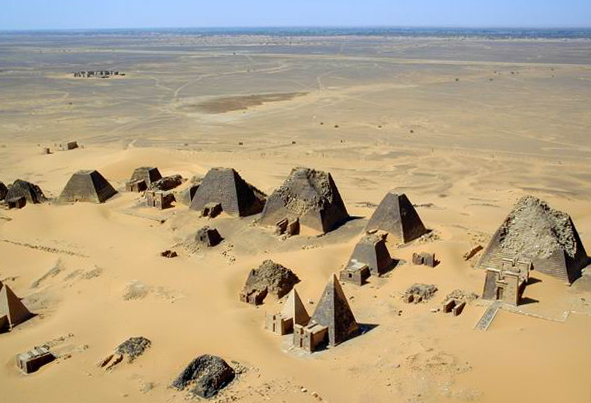
The Nubian pyramids were constructed by the rulers of the ancient Kushite kingdoms in the region of the Nile Valley known as Nubia, located in present-day northern Sudan. This area was the site of three ancient Kushite kingdoms. The capital of the first was at Kerma (2500–1500 BC), the second was centered on Napata (1000–300 BC) and the third was centered on Meroë (300 BC – 300 AD).
In Nubian culture, the pyramids were integral to burial customs for royalty and other wealthy figures of the Kushite kingdom, with this practice starting as early as the 7th century BC. These customs endured for almost a thousand years from 700 BC to 350 AD. The Nubian pyramids display adaptations of Egyptian architecture that were prevalent during the New Kingdom. Notably these are a UNESCO World Heritage Site.
The Nubian pyramids were built over a period of a few hundred years to serve as tombs for the kings and queens and wealthy citizens of Napata and Meroë. The four main sites in which these pyramids hold prominence are El-Kurru, Nuri, Jebel Barkal, and Meroe. The first three sites are located around Napata in Lower Nubia, near the modern town of Karima.
The earliest pyramids in El Kurru were constructed in 751 BC, which formed the center of the Empire of Kush during the Napatan period, ca. 850-300 BC. It is recognized as the origin of the tombs belonging to the rulers of Egypt and Nubia's 25th Dynasty, c. 750–664 BC, along with their ancestors. The tradition of building royal Kushite pyramids is believed to have originated from King Piankhy. This burial tradition was continued by Piye's successor Shabataka, Shabaka. and Tanwetamani.
Later these pyramids begin to be built 26 kilometers upstream from El-Kurru at the site of Nuri which contains burials from 670-310 BC. The earliest burial at Nuri is accredited to King Taharqo who ruled from 690–664 BC. The oldest and largest pyramid at Nuri–and in all of Nubia–is that of the Napatan king and Twenty-fifth Dynasty pharaoh Taharqa. His tomb, standing at 160–180 feet tall, differed from other Nubian pyramids in the manner that it mirrored the tomb of Osiris, an Egyptian pyramid. The pyramid was built on the left bank of the Nile, typically the west bank representing sunset and death. However, due to the bend of the Nile at Nuri, the left bank is actually the east bank representing sunrise and rebirth. In this way, the tomb was used to associate Taharqa's passing with new beginnings and rebirth, paving the way to a new golden age with the ushering in of the next ruler. This necropolis was the burial place of 21 kings and 52 queens and princes including Anlami and Aspelta. The bodies of these kings were placed in huge granite sarcophagi. Aspelta's weighed 15.5 tons, and its lid weighed four tons.
The next burial sites appear at Jebel Barkal from late 4th century. This location was an important political and religious centre of the Kingdom of Kush, ancient Napata. The pyramids here are located beside the mountain of Jebel Barkal and consist of 25 pyramids that are split into 2 areas. The earliest pyramids at Jebel Barkal date from the beginning of the 3rd century while the second group of pyramids dates to the 1st century BC.
Eventually, the prosperity of the Nubian kingdom began to decline. Assyrians invaded Nubia, forcing Taharqa's successor to flee from Egypt. Following this, a new Egyptian dynasty formed, defeating the Nubians and regaining its independence in 593 BC In response, the capital of Nubia was moved from Napata to Meroe. Nubian rulers consequently chose to be entombed in the new capital, and a new group of pyramids was built at Meroe. The pyramids at Meroe were built beginning in 270 BC and the construction of these pyramids lasted for over 700 years. Centuries passed, until the Nubian kingdom based in Meroe collapsed. The last Nubian pyramid (and the last African pyramid) was built at Meroe around 350 AD.
Egyptian burial methods began to adapt in Nubia during Egyptian occupation of Nubia during the New Kingdom period.
Hub AI
Nubian pyramids AI simulator
(@Nubian pyramids_simulator)
Nubian pyramids
The Nubian pyramids were constructed by the rulers of the ancient Kushite kingdoms in the region of the Nile Valley known as Nubia, located in present-day northern Sudan. This area was the site of three ancient Kushite kingdoms. The capital of the first was at Kerma (2500–1500 BC), the second was centered on Napata (1000–300 BC) and the third was centered on Meroë (300 BC – 300 AD).
In Nubian culture, the pyramids were integral to burial customs for royalty and other wealthy figures of the Kushite kingdom, with this practice starting as early as the 7th century BC. These customs endured for almost a thousand years from 700 BC to 350 AD. The Nubian pyramids display adaptations of Egyptian architecture that were prevalent during the New Kingdom. Notably these are a UNESCO World Heritage Site.
The Nubian pyramids were built over a period of a few hundred years to serve as tombs for the kings and queens and wealthy citizens of Napata and Meroë. The four main sites in which these pyramids hold prominence are El-Kurru, Nuri, Jebel Barkal, and Meroe. The first three sites are located around Napata in Lower Nubia, near the modern town of Karima.
The earliest pyramids in El Kurru were constructed in 751 BC, which formed the center of the Empire of Kush during the Napatan period, ca. 850-300 BC. It is recognized as the origin of the tombs belonging to the rulers of Egypt and Nubia's 25th Dynasty, c. 750–664 BC, along with their ancestors. The tradition of building royal Kushite pyramids is believed to have originated from King Piankhy. This burial tradition was continued by Piye's successor Shabataka, Shabaka. and Tanwetamani.
Later these pyramids begin to be built 26 kilometers upstream from El-Kurru at the site of Nuri which contains burials from 670-310 BC. The earliest burial at Nuri is accredited to King Taharqo who ruled from 690–664 BC. The oldest and largest pyramid at Nuri–and in all of Nubia–is that of the Napatan king and Twenty-fifth Dynasty pharaoh Taharqa. His tomb, standing at 160–180 feet tall, differed from other Nubian pyramids in the manner that it mirrored the tomb of Osiris, an Egyptian pyramid. The pyramid was built on the left bank of the Nile, typically the west bank representing sunset and death. However, due to the bend of the Nile at Nuri, the left bank is actually the east bank representing sunrise and rebirth. In this way, the tomb was used to associate Taharqa's passing with new beginnings and rebirth, paving the way to a new golden age with the ushering in of the next ruler. This necropolis was the burial place of 21 kings and 52 queens and princes including Anlami and Aspelta. The bodies of these kings were placed in huge granite sarcophagi. Aspelta's weighed 15.5 tons, and its lid weighed four tons.
The next burial sites appear at Jebel Barkal from late 4th century. This location was an important political and religious centre of the Kingdom of Kush, ancient Napata. The pyramids here are located beside the mountain of Jebel Barkal and consist of 25 pyramids that are split into 2 areas. The earliest pyramids at Jebel Barkal date from the beginning of the 3rd century while the second group of pyramids dates to the 1st century BC.
Eventually, the prosperity of the Nubian kingdom began to decline. Assyrians invaded Nubia, forcing Taharqa's successor to flee from Egypt. Following this, a new Egyptian dynasty formed, defeating the Nubians and regaining its independence in 593 BC In response, the capital of Nubia was moved from Napata to Meroe. Nubian rulers consequently chose to be entombed in the new capital, and a new group of pyramids was built at Meroe. The pyramids at Meroe were built beginning in 270 BC and the construction of these pyramids lasted for over 700 years. Centuries passed, until the Nubian kingdom based in Meroe collapsed. The last Nubian pyramid (and the last African pyramid) was built at Meroe around 350 AD.
Egyptian burial methods began to adapt in Nubia during Egyptian occupation of Nubia during the New Kingdom period.
Recent media