
Recent from talks
Nuclear holocaust
Knowledge base stats:
Talk channels stats:
Members stats:
Nuclear holocaust
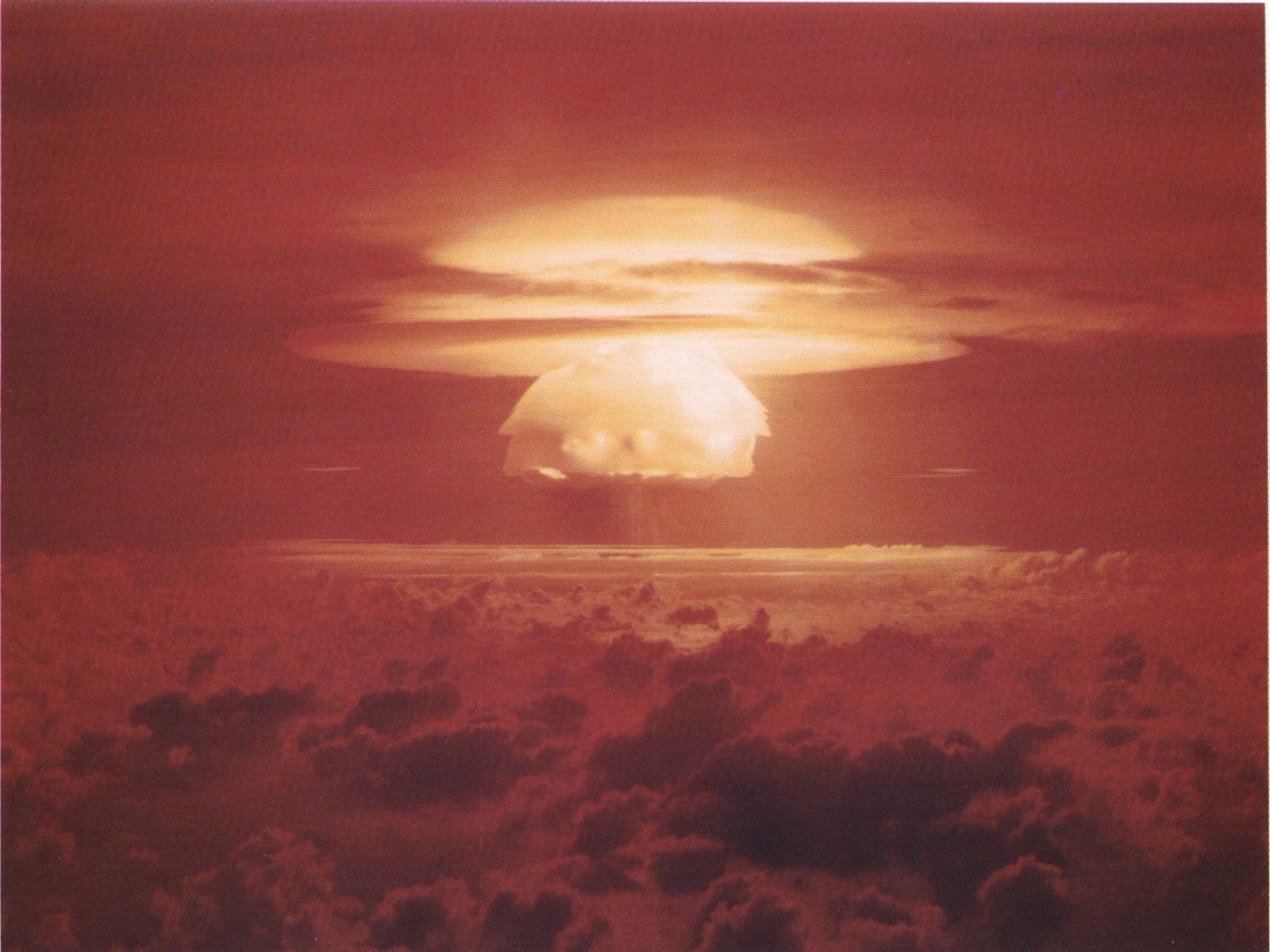
A nuclear holocaust, also known as a nuclear apocalypse, nuclear annihilation, nuclear armageddon, or atomic holocaust, is a theoretical scenario where the mass detonation of nuclear weapons causes widespread destruction and radioactive fallout, with global consequences. Such a scenario envisages large parts of the Earth becoming uninhabitable due to the effects of nuclear warfare, potentially causing the collapse of civilization, the extinction of humanity, or the termination of most biological life on Earth.
Besides the immediate destruction of cities by nuclear blasts, the potential aftermath of a nuclear war could involve firestorms, a nuclear winter, widespread radiation sickness from fallout, and/or the temporary (if not permanent) loss of much modern technology due to electromagnetic pulses. Some scientists, such as Alan Robock, have speculated that a thermonuclear war could result in the end of modern civilization on Earth, in part due to a long-lasting nuclear winter. In one model, the average temperature of Earth following a full thermonuclear war falls for several years by 7 to 8 °C (13 to 15 degrees Fahrenheit) on average.
Early Cold War-era studies suggested that billions of humans would survive the immediate effects of nuclear blasts and radiation following a global thermonuclear war. The International Physicians for the Prevention of Nuclear War believe that nuclear war could indirectly contribute to human extinction via secondary effects, including environmental consequences, societal breakdown, and economic collapse.
The threat of a nuclear holocaust plays an important role in the anti-nuclear movement and the development of popular perception of nuclear weapons. It features in the security concept of mutually assured destruction (MAD) and is a common scenario in survivalism. Nuclear holocaust is a common feature in literature and film, especially in speculative genres such as science fiction, dystopian and post-apocalyptic fiction.
The English word "holocaust", derived from the Greek term "holokaustos" meaning "completely burnt", refers to great destruction and loss of life, especially by fire.
One early use of the word "holocaust" to describe an imagined nuclear destruction appears in Reginald Glossop's 1926 novel The Orphan of Space: "Moscow ... beneath them ... a crash like a crack of Doom! The echoes of this Holocaust rumbled and rolled ... a distinct smell of sulphur ... atomic destruction." In the novel, an atomic weapon is planted in the office of the Soviet dictator, who, with German help and Chinese mercenaries, is preparing the takeover of Western Europe.
More broadly, the use of nuclear weapons, particularly their testing, has been discussed as genocide, ecocide, environmental racism, nuclear imperialism, and colonialism by anti-nuclear activists.
As of 2021, humanity has about 13,410 nuclear weapons, thousands of which are on hair-trigger alert. While stockpiles have been on the decline following the end of the Cold War, every nuclear country is currently undergoing modernization of its nuclear arsenal. The Bulletin advanced their symbolic Doomsday Clock in 2015, citing among other factors "a nuclear arms race resulting from modernization of huge arsenals". In January 2020, it was moved forward to 100 seconds before midnight. In 2023, it was moved forward to 90 seconds before midnight. In 2025, it was moved to 89 seconds before midnight.
Hub AI
Nuclear holocaust AI simulator
(@Nuclear holocaust_simulator)
Nuclear holocaust
A nuclear holocaust, also known as a nuclear apocalypse, nuclear annihilation, nuclear armageddon, or atomic holocaust, is a theoretical scenario where the mass detonation of nuclear weapons causes widespread destruction and radioactive fallout, with global consequences. Such a scenario envisages large parts of the Earth becoming uninhabitable due to the effects of nuclear warfare, potentially causing the collapse of civilization, the extinction of humanity, or the termination of most biological life on Earth.
Besides the immediate destruction of cities by nuclear blasts, the potential aftermath of a nuclear war could involve firestorms, a nuclear winter, widespread radiation sickness from fallout, and/or the temporary (if not permanent) loss of much modern technology due to electromagnetic pulses. Some scientists, such as Alan Robock, have speculated that a thermonuclear war could result in the end of modern civilization on Earth, in part due to a long-lasting nuclear winter. In one model, the average temperature of Earth following a full thermonuclear war falls for several years by 7 to 8 °C (13 to 15 degrees Fahrenheit) on average.
Early Cold War-era studies suggested that billions of humans would survive the immediate effects of nuclear blasts and radiation following a global thermonuclear war. The International Physicians for the Prevention of Nuclear War believe that nuclear war could indirectly contribute to human extinction via secondary effects, including environmental consequences, societal breakdown, and economic collapse.
The threat of a nuclear holocaust plays an important role in the anti-nuclear movement and the development of popular perception of nuclear weapons. It features in the security concept of mutually assured destruction (MAD) and is a common scenario in survivalism. Nuclear holocaust is a common feature in literature and film, especially in speculative genres such as science fiction, dystopian and post-apocalyptic fiction.
The English word "holocaust", derived from the Greek term "holokaustos" meaning "completely burnt", refers to great destruction and loss of life, especially by fire.
One early use of the word "holocaust" to describe an imagined nuclear destruction appears in Reginald Glossop's 1926 novel The Orphan of Space: "Moscow ... beneath them ... a crash like a crack of Doom! The echoes of this Holocaust rumbled and rolled ... a distinct smell of sulphur ... atomic destruction." In the novel, an atomic weapon is planted in the office of the Soviet dictator, who, with German help and Chinese mercenaries, is preparing the takeover of Western Europe.
More broadly, the use of nuclear weapons, particularly their testing, has been discussed as genocide, ecocide, environmental racism, nuclear imperialism, and colonialism by anti-nuclear activists.
As of 2021, humanity has about 13,410 nuclear weapons, thousands of which are on hair-trigger alert. While stockpiles have been on the decline following the end of the Cold War, every nuclear country is currently undergoing modernization of its nuclear arsenal. The Bulletin advanced their symbolic Doomsday Clock in 2015, citing among other factors "a nuclear arms race resulting from modernization of huge arsenals". In January 2020, it was moved forward to 100 seconds before midnight. In 2023, it was moved forward to 90 seconds before midnight. In 2025, it was moved to 89 seconds before midnight.
Recent media