
Recent from talks
Nucleolus
Knowledge base stats:
Talk channels stats:
Members stats:
Nucleolus
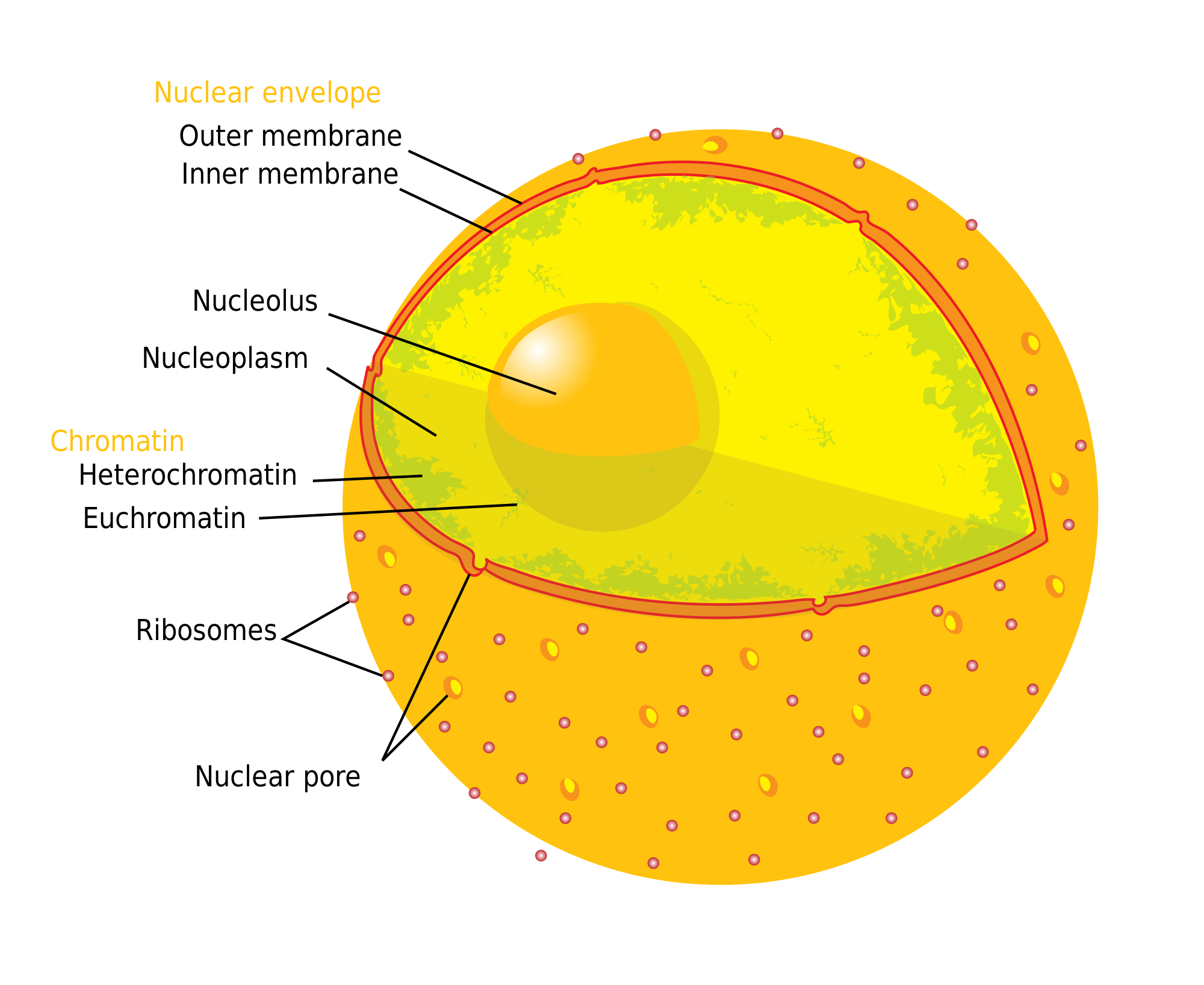
The nucleolus (/njuːˈkliːələs, ˌnjuːkliˈoʊləs/; pl.: nucleoli /-laɪ/) is the largest structure in the nucleus of eukaryotic cells. It is best known as the site of ribosome biogenesis. The nucleolus also participates in the formation of signal recognition particles and plays a role in the cell's response to stress. Nucleoli are made of proteins, DNA and RNA, and form around specific chromosomal regions called nucleolar organizing regions. Malfunction of the nucleolus is the cause of several human conditions called "nucleolopathies" and the nucleolus is being investigated as a target for cancer chemotherapy.
The nucleolus was identified by bright-field microscopy during the 1830s. Theodor Schwann in his 1839 treatise described that Schleiden had identified small corpuscles in nuclei, and named the structures "Kernkörperchen". In a 1947 translation of the work to English, the structure was named "nucleolus".
In addition to these peculiarities of the cytoblast, already made known by Brown and Meyen, Schleiden has discovered in its interior a small corpuscle (see plate I, fig. 1, 4,) which, in the fully-developed cytoblast, looks like a thick ring, or a thick-walled hollow globule. It appears, however, to present a different appearance in different cytoblasts. Sometimes only the external sharply-defined circle of this ring can be distinguished, with a dark point in the centre,—occasionally, and indeed most frequently, only a sharply circumscribed spot. In other instances this spot is very small, and sometimes cannot be recognized at all. As it will frequently be necessary to speak of this body in the following treatise, I will for brevity's sake name it the "nucleolus," (Kernkorperchen, 'nucleus-corpuscle.")
— Theodor Schwann, translated by Henry Smith, Microscopical Researches Into the Accordance in the Structure and Growth of Animals and Plants, page 3
Little was known about the function of the nucleolus until 1964, when a study of nucleoli by John Gurdon and Donald Brown in the African clawed frog Xenopus laevis generated increased interest in its function and detailed structure. They found that 25% of the frog eggs had no nucleolus, and that such eggs were not capable of life. Half of the eggs had one nucleolus and 25% had two. They concluded that the nucleolus had a function necessary for life. In 1966, Max L. Birnstiel and collaborators showed via nucleic acid hybridization experiments that DNA within nucleoli codes for ribosomal RNA.
Three major components of the nucleolus are recognized: the fibrillar center (FC), the dense fibrillar component (DFC), and the granular component (GC). Transcription of the rDNA occurs in the FC. The DFC contains the protein fibrillarin, which is important in rRNA processing. The GC contains the protein nucleophosmin, (B23 in the external image), which is also involved in ribosome biogenesis.
However, it has been proposed that this particular organization is only observed in higher eukaryotes and that it evolved from a bipartite organization with the transition from anamniotes to amniotes. Reflecting the substantial increase in the DNA intergenic region, an original fibrillar component would have separated into the FC and the DFC.
Another structure identified within many nucleoli (particularly in plants) is a clear area in the center of the structure referred to as a nucleolar vacuole. Nucleoli of various plant species have been shown to have very high concentrations of iron in contrast to human and animal cell nucleoli.
Hub AI
Nucleolus AI simulator
(@Nucleolus_simulator)
Nucleolus
The nucleolus (/njuːˈkliːələs, ˌnjuːkliˈoʊləs/; pl.: nucleoli /-laɪ/) is the largest structure in the nucleus of eukaryotic cells. It is best known as the site of ribosome biogenesis. The nucleolus also participates in the formation of signal recognition particles and plays a role in the cell's response to stress. Nucleoli are made of proteins, DNA and RNA, and form around specific chromosomal regions called nucleolar organizing regions. Malfunction of the nucleolus is the cause of several human conditions called "nucleolopathies" and the nucleolus is being investigated as a target for cancer chemotherapy.
The nucleolus was identified by bright-field microscopy during the 1830s. Theodor Schwann in his 1839 treatise described that Schleiden had identified small corpuscles in nuclei, and named the structures "Kernkörperchen". In a 1947 translation of the work to English, the structure was named "nucleolus".
In addition to these peculiarities of the cytoblast, already made known by Brown and Meyen, Schleiden has discovered in its interior a small corpuscle (see plate I, fig. 1, 4,) which, in the fully-developed cytoblast, looks like a thick ring, or a thick-walled hollow globule. It appears, however, to present a different appearance in different cytoblasts. Sometimes only the external sharply-defined circle of this ring can be distinguished, with a dark point in the centre,—occasionally, and indeed most frequently, only a sharply circumscribed spot. In other instances this spot is very small, and sometimes cannot be recognized at all. As it will frequently be necessary to speak of this body in the following treatise, I will for brevity's sake name it the "nucleolus," (Kernkorperchen, 'nucleus-corpuscle.")
— Theodor Schwann, translated by Henry Smith, Microscopical Researches Into the Accordance in the Structure and Growth of Animals and Plants, page 3
Little was known about the function of the nucleolus until 1964, when a study of nucleoli by John Gurdon and Donald Brown in the African clawed frog Xenopus laevis generated increased interest in its function and detailed structure. They found that 25% of the frog eggs had no nucleolus, and that such eggs were not capable of life. Half of the eggs had one nucleolus and 25% had two. They concluded that the nucleolus had a function necessary for life. In 1966, Max L. Birnstiel and collaborators showed via nucleic acid hybridization experiments that DNA within nucleoli codes for ribosomal RNA.
Three major components of the nucleolus are recognized: the fibrillar center (FC), the dense fibrillar component (DFC), and the granular component (GC). Transcription of the rDNA occurs in the FC. The DFC contains the protein fibrillarin, which is important in rRNA processing. The GC contains the protein nucleophosmin, (B23 in the external image), which is also involved in ribosome biogenesis.
However, it has been proposed that this particular organization is only observed in higher eukaryotes and that it evolved from a bipartite organization with the transition from anamniotes to amniotes. Reflecting the substantial increase in the DNA intergenic region, an original fibrillar component would have separated into the FC and the DFC.
Another structure identified within many nucleoli (particularly in plants) is a clear area in the center of the structure referred to as a nucleolar vacuole. Nucleoli of various plant species have been shown to have very high concentrations of iron in contrast to human and animal cell nucleoli.
Recent media