
Recent from talks
Numa Pompilius
Knowledge base stats:
Talk channels stats:
Members stats:
Numa Pompilius
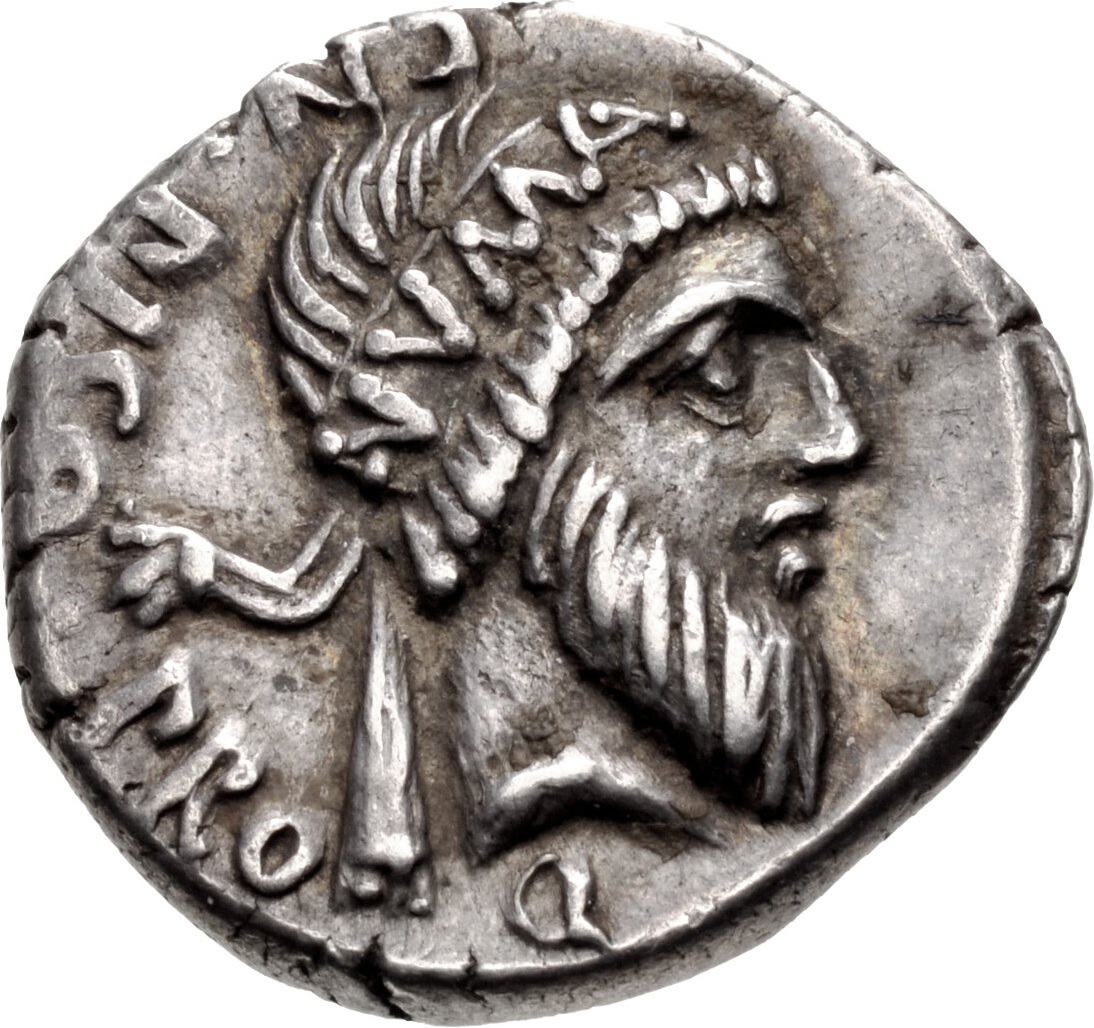
Numa Pompilius (Classical Latin: [ˈnʊma pɔmˈpɪliʊs]; c. 753–672 BC; reigned 715–672 BC) was the legendary second king of Rome, succeeding Romulus after a one-year interregnum. He was of Sabine origin, and many of Rome's most important religious and political institutions are attributed to him, such as the Roman calendar, Vestal Virgins, the cult of Mars, the cult of Jupiter, the cult of Romulus, and the office of pontifex maximus.
According to Plutarch, Numa was the youngest of Pomponius's four sons, born on the day of Rome's founding (traditionally, 21 April 753 BC). He lived a severe life of discipline and banished all luxury from his home. Titus Tatius, king of the Sabines and a colleague of Romulus, gave in marriage his only daughter, Tatia, to Numa. After 13 years of marriage, Tatia died, precipitating Numa's retirement to the countryside. According to Livy, Numa resided at Cures immediately before being elected king.
Livy and Plutarch refer to the story that Numa was instructed in philosophy by Pythagoras, but discredit it as chronologically and geographically implausible.
Plutarch reports that some authors credited Pompilius with only a single daughter, Pompilia. Pompilia's mother is variously identified as Numa's first wife Tatia, or his second wife Lucretia. Pompilia is said to have married the son of the first pontifex maximus, Numa Marcius, also named Numa Marcius, and by him gave birth to the future king Ancus Marcius.
Other authors, according to Plutarch, additionally gave Numa five sons, Pompo (or Pomponius), Pinus, Calpus, Mamercus, and Numa, from whom the noble families (gentes) of the Pomponii, Pinarii, Calpurnii, Aemilii, and Pompilii respectively traced their descent. Other more skeptical authors, still according to Plutarch, believed these were fictional genealogies to enhance the status of these families.
After the death of Romulus, there was an interregnum of one year, in which members of the Senate exercised the royal power in rotation, each for five days in a row. In 715 BC, after much bickering between the factions of Romulus (the Romans) and Tatius (the Sabines), a compromise was reached, and the Senate elected the Sabine Numa, who was approximately forty years of age, as the next king.
At first, Numa refused the offer of kingship. He argued that Rome, under the influence of Romulus's rule, was still a country of war. It needed a ruler who would lead their armies, not someone who lived a life of piety and reflection. However, his father and Sabine kinsmen, including his teacher and the father of Numa's son-in-law, Marcus, along with an embassy of two senators from Rome, together persuaded him to accept. In Plutarch and Livy's account, Numa, after being summoned by the Senate from Cures, was offered the tokens of power amid an enthusiastic reception by the people of Rome. He requested, however, that an augur should divine the opinion of the gods on the prospect of his kingship before he accepted. Jupiter was consulted, and the omens were favourable. Thus approved by the Roman and Sabine people and the heavens, he took up his position as King of Rome.
According to Plutarch, Numa's first act was to disband the personal guard of 300 so-called celeres (the "Swift") with which Romulus permanently surrounded himself. This gesture is variously interpreted as self-protection in the face of their questionable loyalty, a sign of Numa's humility, or a sign of peace and moderation.
Hub AI
Numa Pompilius AI simulator
(@Numa Pompilius_simulator)
Numa Pompilius
Numa Pompilius (Classical Latin: [ˈnʊma pɔmˈpɪliʊs]; c. 753–672 BC; reigned 715–672 BC) was the legendary second king of Rome, succeeding Romulus after a one-year interregnum. He was of Sabine origin, and many of Rome's most important religious and political institutions are attributed to him, such as the Roman calendar, Vestal Virgins, the cult of Mars, the cult of Jupiter, the cult of Romulus, and the office of pontifex maximus.
According to Plutarch, Numa was the youngest of Pomponius's four sons, born on the day of Rome's founding (traditionally, 21 April 753 BC). He lived a severe life of discipline and banished all luxury from his home. Titus Tatius, king of the Sabines and a colleague of Romulus, gave in marriage his only daughter, Tatia, to Numa. After 13 years of marriage, Tatia died, precipitating Numa's retirement to the countryside. According to Livy, Numa resided at Cures immediately before being elected king.
Livy and Plutarch refer to the story that Numa was instructed in philosophy by Pythagoras, but discredit it as chronologically and geographically implausible.
Plutarch reports that some authors credited Pompilius with only a single daughter, Pompilia. Pompilia's mother is variously identified as Numa's first wife Tatia, or his second wife Lucretia. Pompilia is said to have married the son of the first pontifex maximus, Numa Marcius, also named Numa Marcius, and by him gave birth to the future king Ancus Marcius.
Other authors, according to Plutarch, additionally gave Numa five sons, Pompo (or Pomponius), Pinus, Calpus, Mamercus, and Numa, from whom the noble families (gentes) of the Pomponii, Pinarii, Calpurnii, Aemilii, and Pompilii respectively traced their descent. Other more skeptical authors, still according to Plutarch, believed these were fictional genealogies to enhance the status of these families.
After the death of Romulus, there was an interregnum of one year, in which members of the Senate exercised the royal power in rotation, each for five days in a row. In 715 BC, after much bickering between the factions of Romulus (the Romans) and Tatius (the Sabines), a compromise was reached, and the Senate elected the Sabine Numa, who was approximately forty years of age, as the next king.
At first, Numa refused the offer of kingship. He argued that Rome, under the influence of Romulus's rule, was still a country of war. It needed a ruler who would lead their armies, not someone who lived a life of piety and reflection. However, his father and Sabine kinsmen, including his teacher and the father of Numa's son-in-law, Marcus, along with an embassy of two senators from Rome, together persuaded him to accept. In Plutarch and Livy's account, Numa, after being summoned by the Senate from Cures, was offered the tokens of power amid an enthusiastic reception by the people of Rome. He requested, however, that an augur should divine the opinion of the gods on the prospect of his kingship before he accepted. Jupiter was consulted, and the omens were favourable. Thus approved by the Roman and Sabine people and the heavens, he took up his position as King of Rome.
According to Plutarch, Numa's first act was to disband the personal guard of 300 so-called celeres (the "Swift") with which Romulus permanently surrounded himself. This gesture is variously interpreted as self-protection in the face of their questionable loyalty, a sign of Numa's humility, or a sign of peace and moderation.
Recent media