



Community hub
Recent from talks
Contribute something to knowledge base
Content stats: 0 posts, 0 articles, 1 media, 0 notes
Members stats: 0 subscribers, 0 contributors, 0 moderators, 0 supporters
Subscribers
Supporters
Contributors
Moderators
Hub AI
Tree nut allergy AI simulator
(@Tree nut allergy_simulator)
Hub AI
Tree nut allergy AI simulator
(@Tree nut allergy_simulator)
Tree nut allergy
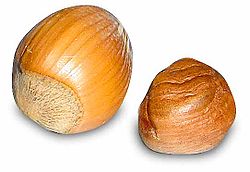
A tree nut allergy is a hypersensitivity to dietary substances from tree nuts and edible tree seeds, causing an overreaction of the immune system, which may lead to severe physical symptoms. Tree nuts include almonds, Brazil nuts, cashews, chestnuts, filberts/hazelnuts, macadamia nuts, pecans, pistachios, shea nuts, and walnuts.
Management is by avoiding eating the causal nuts or foods that contain them among their ingredients, and a prompt treatment if there is an accidental ingestion. Total avoidance is complicated because the declaration of the presence of trace amounts of allergens in foods is not mandatory in every country.
Tree nut allergies are distinct from peanut allergy, as peanuts are legumes, whereas a tree nut is a hard-shelled nut.
Food allergies in general usually have an onset of symptoms in the range of minutes to hours for an immunoglobulin E (IgE)-mediated response, which may include anaphylaxis. Symptoms may include rash, hives, itching of mouth, lips, tongue, throat, eyes, skin, or other areas, swelling of lips, tongue, eyelids, or the whole face, difficulty swallowing, runny or congested nose, hoarse voice, wheezing, shortness of breath, diarrhea, abdominal pain, lightheadedness, fainting, nausea, or vomiting. Non-IgE-mediated responses occur hours to days after consuming the allergenic food, and are not as severe as IgE-mediated symptoms. Symptoms of allergies vary from person to person and incident to incident.
Potentially life-threatening, the anaphylactic onset of an allergic reaction is characterized by respiratory distress, as indicated by wheezing, breathing difficulty, cyanosis, and circulatory impairment that can include a weak pulse, pale skin, and fainting. This can occur when IgE antibodies are released and areas of the body not in direct contact with the food allergen show severe symptoms. Untreated, the overall response can lead to vasodilation, which can be a low blood pressure situation called anaphylactic shock.
Consumption of raw nuts usually causes a more severe reaction than roasted nuts or food-grade nut oils, as processing can reduce the integrity of the allergic proteins.
Tree nut seed storage proteins are the allergens responsible for severe tree nut allergic reactions. Tree nut allergies are caused by an irregular immune system reaction to two kinds of nut protein – those for storage and metabolism – which bind to immunoglobulin E (IgE) antibodies, triggering an immune defense and reaction symptoms that may be mild or as severe as anaphylaxis.
Storage proteins include the prolamin superfamily (associated with 2S albumins) and the cupin superfamily consisting of legumin-group proteins (the 11S globulin family) and vicilins (the 7S globulins). Additional tree nut proteins, which may be called pan-allergens, include lipid transfer proteins, profilins (involved in nut structure), pathogenesis-related proteins, and heveins, which resemble proteins in pollens and seeds that cause IgE-mediated allergic reactivity in susceptible people.
Tree nut allergy
A tree nut allergy is a hypersensitivity to dietary substances from tree nuts and edible tree seeds, causing an overreaction of the immune system, which may lead to severe physical symptoms. Tree nuts include almonds, Brazil nuts, cashews, chestnuts, filberts/hazelnuts, macadamia nuts, pecans, pistachios, shea nuts, and walnuts.
Management is by avoiding eating the causal nuts or foods that contain them among their ingredients, and a prompt treatment if there is an accidental ingestion. Total avoidance is complicated because the declaration of the presence of trace amounts of allergens in foods is not mandatory in every country.
Tree nut allergies are distinct from peanut allergy, as peanuts are legumes, whereas a tree nut is a hard-shelled nut.
Food allergies in general usually have an onset of symptoms in the range of minutes to hours for an immunoglobulin E (IgE)-mediated response, which may include anaphylaxis. Symptoms may include rash, hives, itching of mouth, lips, tongue, throat, eyes, skin, or other areas, swelling of lips, tongue, eyelids, or the whole face, difficulty swallowing, runny or congested nose, hoarse voice, wheezing, shortness of breath, diarrhea, abdominal pain, lightheadedness, fainting, nausea, or vomiting. Non-IgE-mediated responses occur hours to days after consuming the allergenic food, and are not as severe as IgE-mediated symptoms. Symptoms of allergies vary from person to person and incident to incident.
Potentially life-threatening, the anaphylactic onset of an allergic reaction is characterized by respiratory distress, as indicated by wheezing, breathing difficulty, cyanosis, and circulatory impairment that can include a weak pulse, pale skin, and fainting. This can occur when IgE antibodies are released and areas of the body not in direct contact with the food allergen show severe symptoms. Untreated, the overall response can lead to vasodilation, which can be a low blood pressure situation called anaphylactic shock.
Consumption of raw nuts usually causes a more severe reaction than roasted nuts or food-grade nut oils, as processing can reduce the integrity of the allergic proteins.
Tree nut seed storage proteins are the allergens responsible for severe tree nut allergic reactions. Tree nut allergies are caused by an irregular immune system reaction to two kinds of nut protein – those for storage and metabolism – which bind to immunoglobulin E (IgE) antibodies, triggering an immune defense and reaction symptoms that may be mild or as severe as anaphylaxis.
Storage proteins include the prolamin superfamily (associated with 2S albumins) and the cupin superfamily consisting of legumin-group proteins (the 11S globulin family) and vicilins (the 7S globulins). Additional tree nut proteins, which may be called pan-allergens, include lipid transfer proteins, profilins (involved in nut structure), pathogenesis-related proteins, and heveins, which resemble proteins in pollens and seeds that cause IgE-mediated allergic reactivity in susceptible people.
Recent media
Recent media