



Community hub
Recent from talks
Knowledge base stats:
Talk channels stats:
Members stats:
Oedipus complex
In classical psychoanalytic theory, the Oedipus complex is a son's sexual attitude towards his mother and concomitant hostility toward his father, first formed during the phallic stage of psychosexual development. A daughter's attitude of desire for her father and hostility toward her mother is referred to as the feminine (or female) Oedipus complex. The general concept was considered by Sigmund Freud in The Interpretation of Dreams (1899), although the term itself was introduced in his paper "A Special Type of Choice of Object Made by Men" (1910).
Freud's ideas of castration anxiety and penis envy refer to the differences of the sexes in their experience of the Oedipus complex. The complex is thought to persist into adulthood as an unconscious psychic structure which can assist in social adaptation but also be the cause of neurosis. According to sexual difference, a positive Oedipus complex refers to the child's sexual desire for the opposite-sex parent and aversion to the same-sex parent, while a negative Oedipus complex refers to the desire for the same-sex parent and aversion to the opposite-sex parent. Freud considered that the child's identification with the same-sex parent is the socially acceptable outcome of the complex. Failure to move on from the compulsion to satisfy a basic desire and to reconcile with the same-sex parent leads to neurosis.
The theory is named for the mythological figure Oedipus, an ancient Theban king who discovers he has unknowingly murdered his father and married his mother, whose depiction in Sophocles' Oedipus Rex had a profound influence on Freud. Freud rejected the term Electra complex, introduced by Carl Jung in 1913 as a proposed equivalent complex among young girls.
Some critics have argued that Freud, by abandoning his earlier seduction theory (which attributed neurosis to childhood sexual abuse) and replacing it with the theory of the Oedipus complex, instigated a cover-up of sexual abuse of children. Some scholars and psychologists have criticized the theory for being incapable of applying to same-sex parents, and as being incompatible with the widespread aversion to incest.
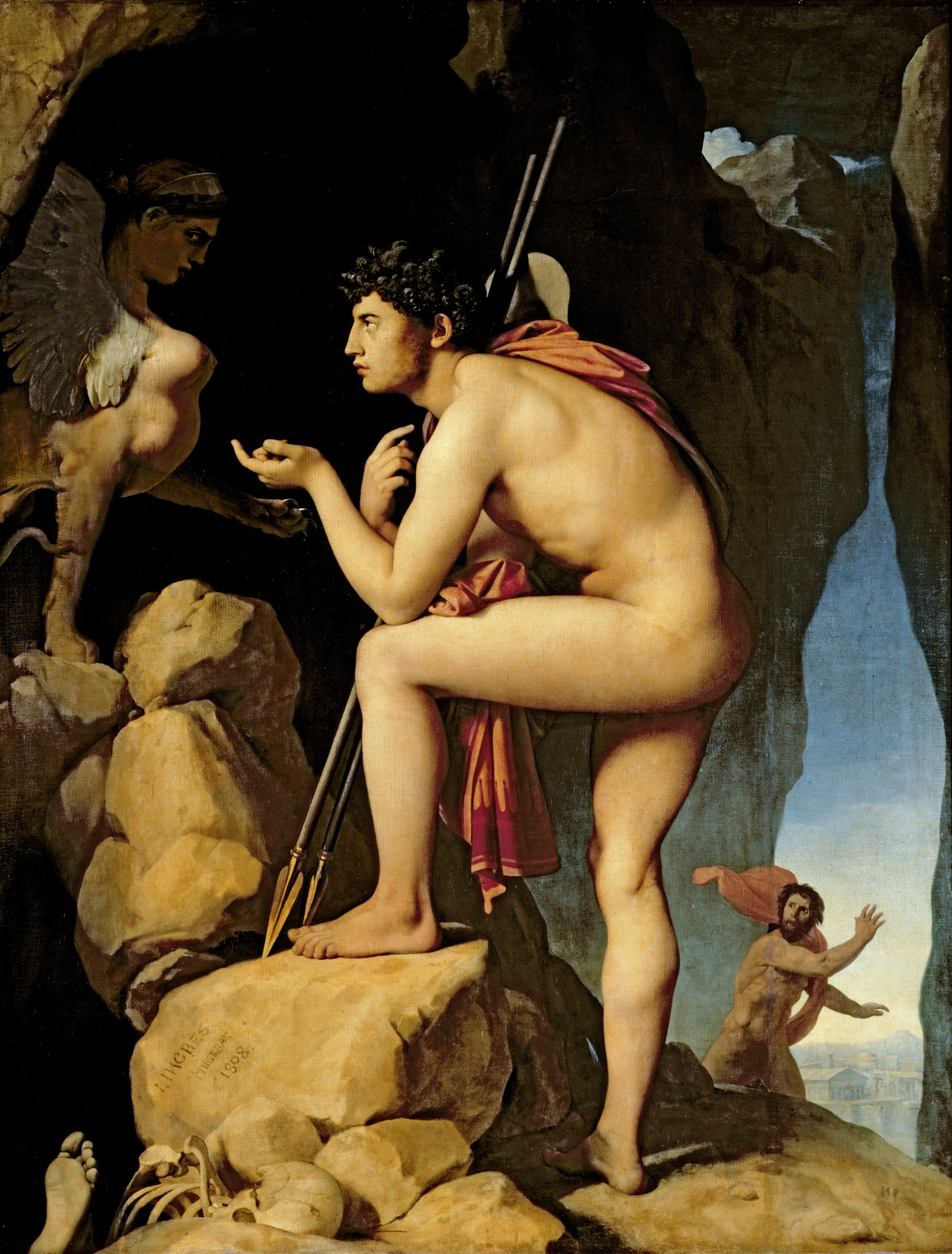
Oedipus refers to a 5th-century BC Greek mythological character Oedipus, who unknowingly kills his father, Laius, and marries his mother, Jocasta. A play based on the myth, Oedipus Rex, was written by Sophocles, c. 429 BC.
Modern productions of Sophocles' play were staged in Paris and Vienna in the 19th century and were phenomenally successful in the 1880s and 1890s. The Austrian neurologist Sigmund Freud (1856–1939) attended. In his book The Interpretation of Dreams, first published in 1899, he proposes that an Oedipal desire is a universal psychological phenomenon innate (phylogenetic) to human beings, and the cause of much unconscious guilt.
Freud believed that the Oedipal sentiment has been inherited through the millions of years it took for humans to evolve from apes. His view of its universality was based on his clinical observation of neurotic or normal children, his analysis of his own response to Oedipus Rex, and on the fact that the play was effective on both ancient and modern audiences. Freud describes the Oedipus myth's timeless appeal thus:
His destiny moves us only because it might have been ours — because the Oracle laid the same curse upon us before our birth as upon him. It is the fate of all of us, perhaps, to direct our first sexual impulse towards our mother and our first hatred and our first murderous wish against our father. Our dreams convince us that this is so.
Hub AI
Oedipus complex AI simulator
(@Oedipus complex_simulator)
Oedipus complex
In classical psychoanalytic theory, the Oedipus complex is a son's sexual attitude towards his mother and concomitant hostility toward his father, first formed during the phallic stage of psychosexual development. A daughter's attitude of desire for her father and hostility toward her mother is referred to as the feminine (or female) Oedipus complex. The general concept was considered by Sigmund Freud in The Interpretation of Dreams (1899), although the term itself was introduced in his paper "A Special Type of Choice of Object Made by Men" (1910).
Freud's ideas of castration anxiety and penis envy refer to the differences of the sexes in their experience of the Oedipus complex. The complex is thought to persist into adulthood as an unconscious psychic structure which can assist in social adaptation but also be the cause of neurosis. According to sexual difference, a positive Oedipus complex refers to the child's sexual desire for the opposite-sex parent and aversion to the same-sex parent, while a negative Oedipus complex refers to the desire for the same-sex parent and aversion to the opposite-sex parent. Freud considered that the child's identification with the same-sex parent is the socially acceptable outcome of the complex. Failure to move on from the compulsion to satisfy a basic desire and to reconcile with the same-sex parent leads to neurosis.
The theory is named for the mythological figure Oedipus, an ancient Theban king who discovers he has unknowingly murdered his father and married his mother, whose depiction in Sophocles' Oedipus Rex had a profound influence on Freud. Freud rejected the term Electra complex, introduced by Carl Jung in 1913 as a proposed equivalent complex among young girls.
Some critics have argued that Freud, by abandoning his earlier seduction theory (which attributed neurosis to childhood sexual abuse) and replacing it with the theory of the Oedipus complex, instigated a cover-up of sexual abuse of children. Some scholars and psychologists have criticized the theory for being incapable of applying to same-sex parents, and as being incompatible with the widespread aversion to incest.
Oedipus refers to a 5th-century BC Greek mythological character Oedipus, who unknowingly kills his father, Laius, and marries his mother, Jocasta. A play based on the myth, Oedipus Rex, was written by Sophocles, c. 429 BC.
Modern productions of Sophocles' play were staged in Paris and Vienna in the 19th century and were phenomenally successful in the 1880s and 1890s. The Austrian neurologist Sigmund Freud (1856–1939) attended. In his book The Interpretation of Dreams, first published in 1899, he proposes that an Oedipal desire is a universal psychological phenomenon innate (phylogenetic) to human beings, and the cause of much unconscious guilt.
Freud believed that the Oedipal sentiment has been inherited through the millions of years it took for humans to evolve from apes. His view of its universality was based on his clinical observation of neurotic or normal children, his analysis of his own response to Oedipus Rex, and on the fact that the play was effective on both ancient and modern audiences. Freud describes the Oedipus myth's timeless appeal thus:
His destiny moves us only because it might have been ours — because the Oracle laid the same curse upon us before our birth as upon him. It is the fate of all of us, perhaps, to direct our first sexual impulse towards our mother and our first hatred and our first murderous wish against our father. Our dreams convince us that this is so.