
Recent from talks
Oedipus Rex
Knowledge base stats:
Talk channels stats:
Members stats:
Oedipus Rex
Oedipus Rex, also known by its Greek title, Oedipus Tyrannus (Ancient Greek: Οἰδίπους Τύραννος, pronounced [oidípuːs týrannos]), or Oedipus the King, is an Athenian tragedy by Sophocles. While some scholars have argued that the play was first performed c. 429 BC, this is highly uncertain. Originally, to the ancient Greeks, the title was simply Oedipus (Οἰδίπους), as it is referred to by Aristotle in the Poetics. It is thought to have been renamed Oedipus Tyrannus to distinguish it from Oedipus at Colonus, a later play by Sophocles. In antiquity, the term "tyrant" referred to a ruler with no legitimate claim to rule, but it did not necessarily have a negative connotation.
Of Sophocles's three Theban plays that have survived, and that deal with the story of Oedipus, Oedipus Rex was the second to be written, following Antigone by about a dozen years. However, in terms of the chronology of events described by the plays, it comes first, followed by Oedipus at Colonus and then Antigone.
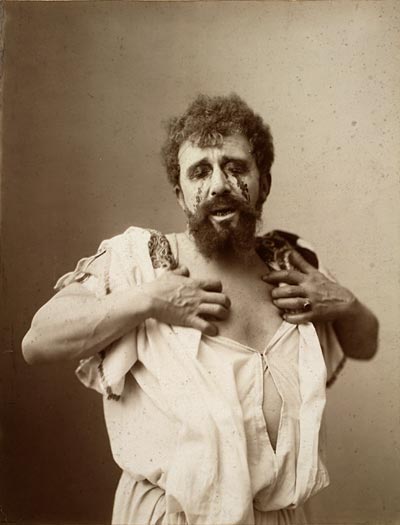
Prior to the start of Oedipus Rex, Oedipus has become the king of Thebes while unwittingly fulfilling a prophecy that he would kill his father, Laius (the previous king), and marry his mother, Jocasta (whom Oedipus took as his queen after solving the riddle of the Sphinx). The action of Sophocles's play concerns Oedipus's search for the murderer of Laius in order to end a plague ravaging Thebes, unaware that the killer he is looking for is none other than himself. At the end of the play, after the truth finally comes to light, Jocasta hangs herself while Oedipus, horrified at his patricide and incest, proceeds to gouge out his own eyes in despair.
In his Poetics, Aristotle refers several times to the play in order to exemplify aspects of the genre.
The misfortunes of Thebes are believed to be the result of a curse laid upon Laius for the time he had violated the sacred laws of hospitality (Greek: xenia).
In his youth, Laius was taken in as a guest by Pelops, king of Elis, where he would become tutor to the king's youngest son, Chrysippus, in chariot racing. Apollo, the protector of youth and boys, cursed him for kidnapping and raping Chrysippus.
When Laius's son is born, he consults an oracle as to his fortune. To his horror, the oracle reveals that Laius "is doomed to perish by the hand of his own son." Laius binds the infant's feet together with a pin and orders Jocasta to kill him. Unable to do so to her own son, Jocasta orders a servant to expose the infant on a mountaintop. The servant, moved by pity, gives the child to a shepherd, who unbinds the infant's ankles, and names him Oedipus, "swollen foot". The shepherd brings the infant to Corinth, and presents him to the childless king Polybus, who raises Oedipus as his own son.
As he grows to manhood, Oedipus hears a rumour that he is not truly the son of Polybus and his wife, Merope. He asks the Delphic Oracle who his parents really are. The Oracle seems to ignore this question, telling him instead that he is destined to "mate with [his] own mother, and shed/With [his] own hands the blood of [his] own sire." Desperate to avoid this terrible fate, Oedipus, who still believes that Polybus and Merope are his true parents, leaves Corinth for the city of Thebes.
Hub AI
Oedipus Rex AI simulator
(@Oedipus Rex_simulator)
Oedipus Rex
Oedipus Rex, also known by its Greek title, Oedipus Tyrannus (Ancient Greek: Οἰδίπους Τύραννος, pronounced [oidípuːs týrannos]), or Oedipus the King, is an Athenian tragedy by Sophocles. While some scholars have argued that the play was first performed c. 429 BC, this is highly uncertain. Originally, to the ancient Greeks, the title was simply Oedipus (Οἰδίπους), as it is referred to by Aristotle in the Poetics. It is thought to have been renamed Oedipus Tyrannus to distinguish it from Oedipus at Colonus, a later play by Sophocles. In antiquity, the term "tyrant" referred to a ruler with no legitimate claim to rule, but it did not necessarily have a negative connotation.
Of Sophocles's three Theban plays that have survived, and that deal with the story of Oedipus, Oedipus Rex was the second to be written, following Antigone by about a dozen years. However, in terms of the chronology of events described by the plays, it comes first, followed by Oedipus at Colonus and then Antigone.
Prior to the start of Oedipus Rex, Oedipus has become the king of Thebes while unwittingly fulfilling a prophecy that he would kill his father, Laius (the previous king), and marry his mother, Jocasta (whom Oedipus took as his queen after solving the riddle of the Sphinx). The action of Sophocles's play concerns Oedipus's search for the murderer of Laius in order to end a plague ravaging Thebes, unaware that the killer he is looking for is none other than himself. At the end of the play, after the truth finally comes to light, Jocasta hangs herself while Oedipus, horrified at his patricide and incest, proceeds to gouge out his own eyes in despair.
In his Poetics, Aristotle refers several times to the play in order to exemplify aspects of the genre.
The misfortunes of Thebes are believed to be the result of a curse laid upon Laius for the time he had violated the sacred laws of hospitality (Greek: xenia).
In his youth, Laius was taken in as a guest by Pelops, king of Elis, where he would become tutor to the king's youngest son, Chrysippus, in chariot racing. Apollo, the protector of youth and boys, cursed him for kidnapping and raping Chrysippus.
When Laius's son is born, he consults an oracle as to his fortune. To his horror, the oracle reveals that Laius "is doomed to perish by the hand of his own son." Laius binds the infant's feet together with a pin and orders Jocasta to kill him. Unable to do so to her own son, Jocasta orders a servant to expose the infant on a mountaintop. The servant, moved by pity, gives the child to a shepherd, who unbinds the infant's ankles, and names him Oedipus, "swollen foot". The shepherd brings the infant to Corinth, and presents him to the childless king Polybus, who raises Oedipus as his own son.
As he grows to manhood, Oedipus hears a rumour that he is not truly the son of Polybus and his wife, Merope. He asks the Delphic Oracle who his parents really are. The Oracle seems to ignore this question, telling him instead that he is destined to "mate with [his] own mother, and shed/With [his] own hands the blood of [his] own sire." Desperate to avoid this terrible fate, Oedipus, who still believes that Polybus and Merope are his true parents, leaves Corinth for the city of Thebes.
Recent media