Recent from talks
Contribute something to knowledge base
Content stats: 0 posts, 0 articles, 1 media, 0 notes
Members stats: 0 subscribers, 0 contributors, 0 moderators, 0 supporters
Subscribers
Supporters
Contributors
Moderators
Hub AI
Olea oleaster AI simulator
(@Olea oleaster_simulator)
Hub AI
Olea oleaster AI simulator
(@Olea oleaster_simulator)
Olea oleaster
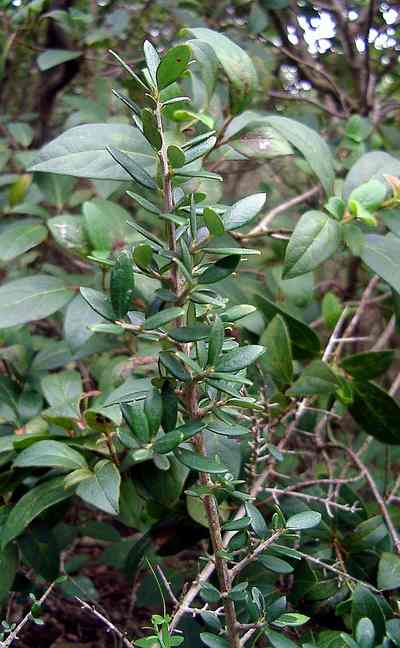
Olea oleaster, or wild olive, is a subspecies of the cultivated olive tree, Olea europea. Originating in the Mediterranean Basin, it is considered an ancestor to the modern olive, which was likely domesticated during the fourth and third millennia BCE from multiple local populations.
The wild olive (Ancient Greek κότινος / kótinos), which ancient Greeks distinguished from the cultivated olive (ἐλαία / ἐλἀα), was used to fashion the olive wreath awarded victors at the ancient Olympic games. The ancient and sacred wild olive tree of Olympia stood near the Temple of Zeus, patron of the games.
Due to natural hybridization and the very ancient domestication and extensive cultivation of the olive throughout the Mediterranean Basin, wild-growing feral forms of olive, called "oleasters", constitute a complex assortment of populations, potentially ranging from feral forms to the wild olive. The wild olive is characteristic of the maquis shrubland, itself partly the result of centuries, if not millennia, of human propagation.
The drought-tolerant sclerophyllous tree is believed to have originated in the eastern Mediterranean Basin; it still provides the hardy and disease-resistant rootstock on which cultivated olive varieties are grafted.
Literate Greeks recalled that the culture hero Aristaeus, originator of the arts of beekeeping, cheese-making and other innovations of the most distant past, was he who "first pressed the fruit of the oily wild-olive."
In Odyssey Book V, when shipwrecked Odysseus has been cast ashore, he finds a wild-olive that has grown together with a bearing one— inosculated, an arborist would say— on the Scherian seashore, where he crawled
Beneath two bushy olives sprung from the same root
one olive wild, the other well-bred stock
No sodden gusty winds could ever pierce them...
Olea oleaster
Olea oleaster, or wild olive, is a subspecies of the cultivated olive tree, Olea europea. Originating in the Mediterranean Basin, it is considered an ancestor to the modern olive, which was likely domesticated during the fourth and third millennia BCE from multiple local populations.
The wild olive (Ancient Greek κότινος / kótinos), which ancient Greeks distinguished from the cultivated olive (ἐλαία / ἐλἀα), was used to fashion the olive wreath awarded victors at the ancient Olympic games. The ancient and sacred wild olive tree of Olympia stood near the Temple of Zeus, patron of the games.
Due to natural hybridization and the very ancient domestication and extensive cultivation of the olive throughout the Mediterranean Basin, wild-growing feral forms of olive, called "oleasters", constitute a complex assortment of populations, potentially ranging from feral forms to the wild olive. The wild olive is characteristic of the maquis shrubland, itself partly the result of centuries, if not millennia, of human propagation.
The drought-tolerant sclerophyllous tree is believed to have originated in the eastern Mediterranean Basin; it still provides the hardy and disease-resistant rootstock on which cultivated olive varieties are grafted.
Literate Greeks recalled that the culture hero Aristaeus, originator of the arts of beekeeping, cheese-making and other innovations of the most distant past, was he who "first pressed the fruit of the oily wild-olive."
In Odyssey Book V, when shipwrecked Odysseus has been cast ashore, he finds a wild-olive that has grown together with a bearing one— inosculated, an arborist would say— on the Scherian seashore, where he crawled
Beneath two bushy olives sprung from the same root
one olive wild, the other well-bred stock
No sodden gusty winds could ever pierce them...
