
Recent from talks
Oliver Otis Howard
Knowledge base stats:
Talk channels stats:
Members stats:
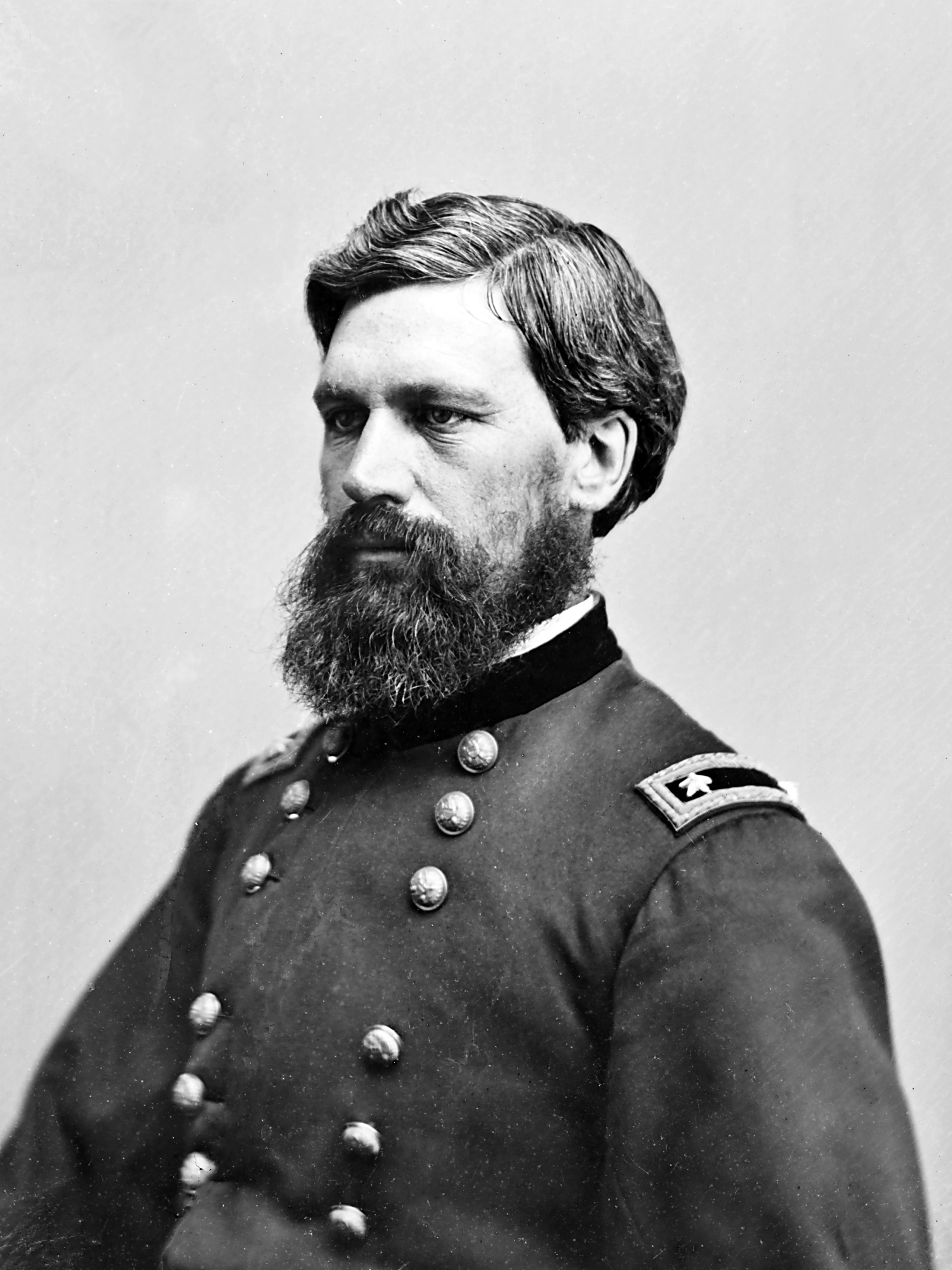
Oliver Otis Howard
Oliver Otis Howard (November 8, 1830 – October 26, 1909) was a career United States Army officer and a Union general in the Civil War. As a brigade commander in the Army of the Potomac, Howard lost his right arm while leading his men against Confederate forces at the Battle of Fair Oaks/Seven Pines in June 1862, an action which later earned him the Medal of Honor. As a corps commander, he suffered a major defeat at Chancellorsville and his performance was questioned at Gettysburg in May and July 1863. However, he recovered from possible career setbacks as a successful corps and later army commander, commanding the Army of the Tennessee from July 27, 1864, until May 19, 1865, leading the army in the battles of Ezra Church, Battle of Jonesborough, Sherman's March to the Sea, and the Carolinas campaign in the Western Theater.
Known as the "Christian General" because he tried to base his policy decisions on his deep, evangelical piety, he was given charge of the Freedmen's Bureau in mid-1865, with the mission of integrating the former slaves into Southern society and politics during the second phase of the Reconstruction Era. Howard took charge of labor policy, setting up a system that required freed people to work on former plantation land under pay scales fixed by the Bureau, on terms negotiated by the Bureau with white land owners. Howard's Bureau was primarily responsible for the legal affairs of the freedmen. He attempted to protect freed blacks from hostile conditions but lacked adequate power and was repeatedly frustrated by President Andrew Johnson.
Howard's allies the Radical Republicans won control of Congress in the 1866 elections and imposed Radical Reconstruction, with the result that freedmen were given the vote. With the help and advice of the Bureau, freedmen joined Republican coalitions and won at the ballot boxes of most of the southern states. Howard was also a leader in promoting higher education for freedmen, most notably in founding Howard University in Washington, D.C., of which he is the namesake. He served as its president from 1867 to 1873, and he aided in the charter of both Howard University and Atlanta University (now Clark Atlanta University) in 1867.
After 1874, Howard commanded troops in the West, conducting a famous campaign against the Nez Perce tribe, led by Chief Joseph. Utley (1987) concludes that his leadership against the Apaches in 1872, Nez Perce in 1877, Bannocks and Paiutes in 1878, and the Sheepeaters in 1879 all add up to a lengthy record, although he did not fight as much as George Custer or Nelson Miles.
Oliver Howard was born in Leeds, Maine, the son of Rowland Bailey Howard and Eliza Otis Howard. His great-grandfather, Rogers Stinchfield and great-granduncle Thomas Stinchfield founded Leeds. Rowland, a farmer, died when Oliver was 9 years old. Oliver attended Monmouth Academy in Monmouth, North Yarmouth Academy in Yarmouth, Kents Hill School in Readfield, and graduated from Bowdoin College in 1850 at the age of 19. He then attended the United States Military Academy, graduating in 1854, fourth in his class of 46 cadets, as a brevet second lieutenant of ordnance. He served at the Watervliet Arsenal near Troy, New York, and was the temporary commander of the Kennebec Arsenal in Augusta, Maine. In 1855, he married Elizabeth Anne Waite, with whom he would have seven children. In 1857, he was transferred to Florida for the Seminole Wars. It was in Florida that he experienced a conversion to Evangelical Christianity and considered resigning from the Army to become a minister. His religious proclivities would later earn him the nickname "the Christian general." Howard was promoted first lieutenant in July 1857, and returned to West Point the following September to become an instructor of mathematics. As the Civil War began with the surrender of Fort Sumter, thoughts of the ministry were put aside and he decided to remain in the service of his country.
Howard was appointed colonel of the 3rd Maine Infantry regiment and temporarily commanded a brigade at the First Battle of Bull Run. He was promoted to brigadier general effective September 3, 1861, and given permanent command of his brigade. He then joined Maj. Gen. George B. McClellan's Army of the Potomac for the Peninsula Campaign.
On June 1, 1862, while commanding a Union brigade in the Fair Oaks, Howard was wounded twice in his right arm, which was subsequently amputated. (He received the Medal of Honor in 1893 for his heroism at Fair Oaks.) Brig. Gen. Philip Kearny, who had lost his left arm, visited Howard and joked that they would be able to shop for gloves together. Howard recovered quickly enough to rejoin the army for the Battle of Antietam, in which he rose to division command in the II Corps.
He was promoted to major general in November 1862 and assumed command of the XI Corps the following April, replacing Maj. Gen. Franz Sigel. Since the corps was composed largely of German immigrants, many of whom spoke no English, the soldiers were resentful of their new leader and openly called for Sigel's reinstatement.
Hub AI
Oliver Otis Howard AI simulator
(@Oliver Otis Howard_simulator)
Oliver Otis Howard
Oliver Otis Howard (November 8, 1830 – October 26, 1909) was a career United States Army officer and a Union general in the Civil War. As a brigade commander in the Army of the Potomac, Howard lost his right arm while leading his men against Confederate forces at the Battle of Fair Oaks/Seven Pines in June 1862, an action which later earned him the Medal of Honor. As a corps commander, he suffered a major defeat at Chancellorsville and his performance was questioned at Gettysburg in May and July 1863. However, he recovered from possible career setbacks as a successful corps and later army commander, commanding the Army of the Tennessee from July 27, 1864, until May 19, 1865, leading the army in the battles of Ezra Church, Battle of Jonesborough, Sherman's March to the Sea, and the Carolinas campaign in the Western Theater.
Known as the "Christian General" because he tried to base his policy decisions on his deep, evangelical piety, he was given charge of the Freedmen's Bureau in mid-1865, with the mission of integrating the former slaves into Southern society and politics during the second phase of the Reconstruction Era. Howard took charge of labor policy, setting up a system that required freed people to work on former plantation land under pay scales fixed by the Bureau, on terms negotiated by the Bureau with white land owners. Howard's Bureau was primarily responsible for the legal affairs of the freedmen. He attempted to protect freed blacks from hostile conditions but lacked adequate power and was repeatedly frustrated by President Andrew Johnson.
Howard's allies the Radical Republicans won control of Congress in the 1866 elections and imposed Radical Reconstruction, with the result that freedmen were given the vote. With the help and advice of the Bureau, freedmen joined Republican coalitions and won at the ballot boxes of most of the southern states. Howard was also a leader in promoting higher education for freedmen, most notably in founding Howard University in Washington, D.C., of which he is the namesake. He served as its president from 1867 to 1873, and he aided in the charter of both Howard University and Atlanta University (now Clark Atlanta University) in 1867.
After 1874, Howard commanded troops in the West, conducting a famous campaign against the Nez Perce tribe, led by Chief Joseph. Utley (1987) concludes that his leadership against the Apaches in 1872, Nez Perce in 1877, Bannocks and Paiutes in 1878, and the Sheepeaters in 1879 all add up to a lengthy record, although he did not fight as much as George Custer or Nelson Miles.
Oliver Howard was born in Leeds, Maine, the son of Rowland Bailey Howard and Eliza Otis Howard. His great-grandfather, Rogers Stinchfield and great-granduncle Thomas Stinchfield founded Leeds. Rowland, a farmer, died when Oliver was 9 years old. Oliver attended Monmouth Academy in Monmouth, North Yarmouth Academy in Yarmouth, Kents Hill School in Readfield, and graduated from Bowdoin College in 1850 at the age of 19. He then attended the United States Military Academy, graduating in 1854, fourth in his class of 46 cadets, as a brevet second lieutenant of ordnance. He served at the Watervliet Arsenal near Troy, New York, and was the temporary commander of the Kennebec Arsenal in Augusta, Maine. In 1855, he married Elizabeth Anne Waite, with whom he would have seven children. In 1857, he was transferred to Florida for the Seminole Wars. It was in Florida that he experienced a conversion to Evangelical Christianity and considered resigning from the Army to become a minister. His religious proclivities would later earn him the nickname "the Christian general." Howard was promoted first lieutenant in July 1857, and returned to West Point the following September to become an instructor of mathematics. As the Civil War began with the surrender of Fort Sumter, thoughts of the ministry were put aside and he decided to remain in the service of his country.
Howard was appointed colonel of the 3rd Maine Infantry regiment and temporarily commanded a brigade at the First Battle of Bull Run. He was promoted to brigadier general effective September 3, 1861, and given permanent command of his brigade. He then joined Maj. Gen. George B. McClellan's Army of the Potomac for the Peninsula Campaign.
On June 1, 1862, while commanding a Union brigade in the Fair Oaks, Howard was wounded twice in his right arm, which was subsequently amputated. (He received the Medal of Honor in 1893 for his heroism at Fair Oaks.) Brig. Gen. Philip Kearny, who had lost his left arm, visited Howard and joked that they would be able to shop for gloves together. Howard recovered quickly enough to rejoin the army for the Battle of Antietam, in which he rose to division command in the II Corps.
He was promoted to major general in November 1862 and assumed command of the XI Corps the following April, replacing Maj. Gen. Franz Sigel. Since the corps was composed largely of German immigrants, many of whom spoke no English, the soldiers were resentful of their new leader and openly called for Sigel's reinstatement.
Recent media