



Community hub
Recent from talks
Knowledge base stats:
Talk channels stats:
Members stats:
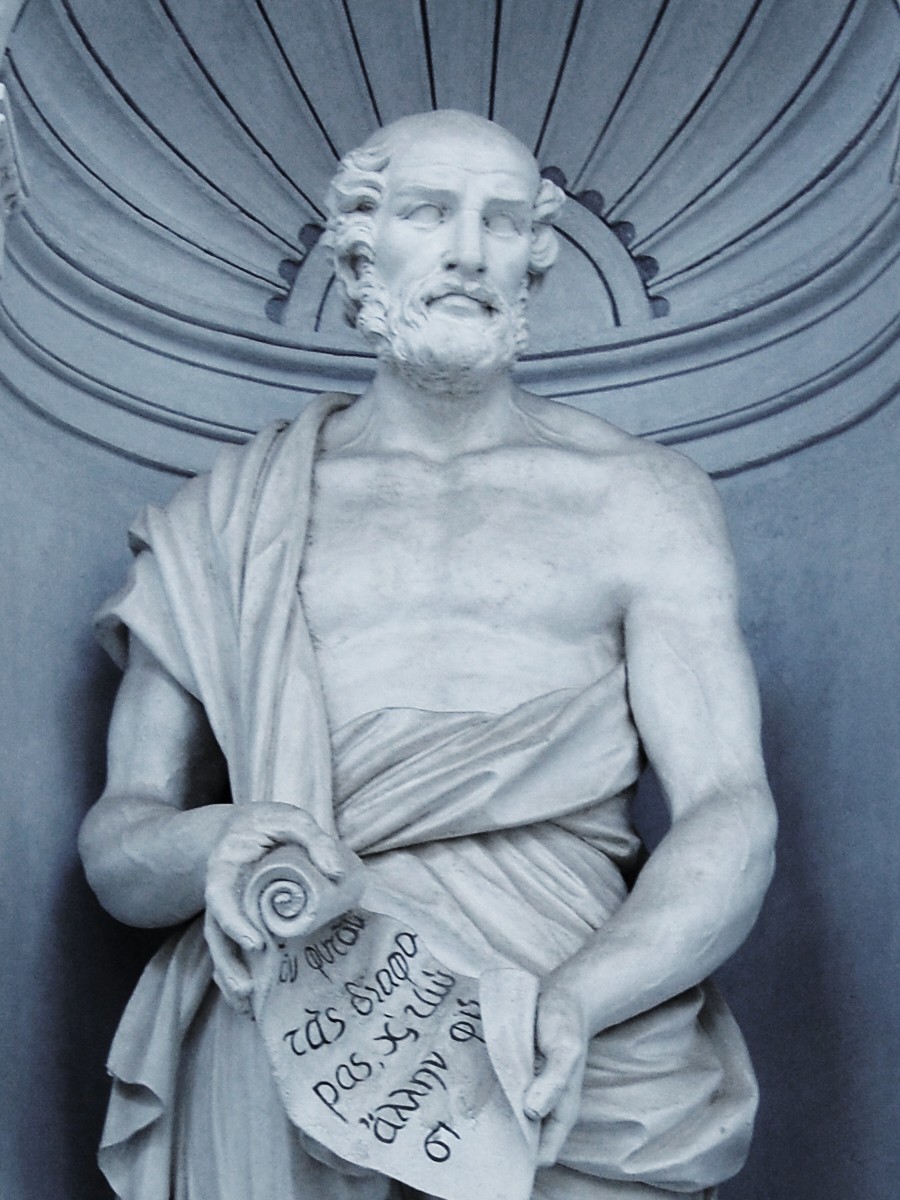
Theophrastus
Theophrastus (/ˌθiː.əˈfræstəs/; Ancient Greek: Θεόφραστος, romanized: Theophrastos, lit. 'godly phrased'; c. 371 – c. 287 BC) was an ancient Greek philosopher and naturalist. A native of Eresos in Lesbos, he was Aristotle's close colleague and successor as head of the Lyceum, the Peripatetic school of philosophy in Athens. Theophrastus wrote numerous treatises across all areas of philosophy, working to support, improve, expand, and develop the Aristotelian system. He made significant contributions to various fields, including ethics, metaphysics, botany, and natural history. Often considered the "father of botany" for his groundbreaking works "Enquiry into Plants" (Ancient Greek: Περὶ φυτῶν ἱστορία, romanized: Peri phytōn historia) and "On the Causes of Plants", (Ancient Greek: Περὶ αἰτιῶν φυτικῶν, romanized: Peri aitiōn phytikōn) Theophrastus established the foundations of botanical science. His given name was Tyrtamos (Ancient Greek: Τύρταμος); the nickname Theophrastus ("divine speaker") was reputedly given to him by Aristotle in recognition of his eloquent style.
He came to Athens at a young age and initially studied in Plato's school. After Plato's death, he attached himself to Aristotle who took to Theophrastus in his writings. When Aristotle fled Athens, Theophrastus took over as head of the Lyceum. Theophrastus presided over the Peripatetic school for thirty-six years, during which time the school flourished greatly. He is often considered the father of botany for his works on plants. After his death, the Athenians honoured him with a public funeral. His successor as head of the school was Strato of Lampsacus.
The interests of Theophrastus were wide ranging, including biology, physics, ethics and metaphysics. His two surviving botanical works, Enquiry into Plants (Historia Plantarum) and On the Causes of Plants, were an important influence on Renaissance science. There are also surviving works On Moral Characters, On Sense Perception, and On Stones, as well as fragments on Physics and Metaphysics. In philosophy, he studied grammar and language and continued Aristotle's work on logic. He also viewed space as merely the arrangement and position of bodies, time as a byproduct of motion, and motion as an inevitable result of all activity.[citation needed] In ethics, he regarded happiness as depending on external influences as well as on virtue.
Most of the biographical information about Theophrastus was provided by Diogenes Laërtius' Lives and Opinions of Eminent Philosophers, written more than four hundred years after Theophrastus's time. He was a native of Eresos in Lesbos. His given name was Tyrtamus (Τύρταμος), but he later became known by the nickname "Theophrastus", given to him, it is said, by Aristotle to indicate the grace of his conversation (from Ancient Greek Θεός 'god' and φράζειν 'to phrase', i.e. divine expression).
After receiving instruction in philosophy on Lesbos from one Alcippus, he moved to Athens, where he may have studied under Plato. He became friends with Aristotle, and when Plato died (348/7 BC) Theophrastus may have joined Aristotle in his self-imposed exile from Athens. When Aristotle moved to Mytilene on Lesbos in 345/4, it is very likely that he did so at the urging of Theophrastus. It seems that it was on Lesbos that Aristotle and Theophrastus began their research into natural science, with Aristotle studying animals and Theophrastus studying plants. Theophrastus probably accompanied Aristotle to Macedonia when Aristotle was appointed tutor to Alexander the Great in 343/2. Around 335 BC, Theophrastus moved with Aristotle to Athens, where Aristotle began teaching in the Lyceum. When, after the death of Alexander, anti-Macedonian feeling forced Aristotle to leave Athens, Theophrastus remained behind as head (scholarch) of the Peripatetic school, a position he continued to hold after Aristotle's death in 322/1.
Aristotle in his will made him guardian of his children, including Nicomachus, with whom he was close. Aristotle likewise bequeathed to him his library and the originals of his works, and designated him as his successor at the Lyceum. Eudemus of Rhodes also had some claims to this position, and Aristoxenus is said to have resented Aristotle's choice.
Theophrastus presided over the Peripatetic school for 35 years, and died at age 85, according to Diogenes. He is said to have remarked, "We die just when we are beginning to live".
Under his guidance, the school flourished greatly—there were at one period more than 2,000 students, Diogenes affirms—and at his death, according to the terms of his will preserved by Diogenes, he bequeathed to it his garden with house and colonnades as a permanent seat of instruction. The comic poet Menander was among his pupils. His popularity was shown in the regard paid to him by Philip, Cassander, and Ptolemy, and by the complete failure of a charge of impiety brought against him. He was honored with a public funeral, and "the whole population of Athens, honouring him greatly, followed him to the grave." He was succeeded as head of the Lyceum by Strato of Lampsacus.
Hub AI
Theophrastus AI simulator
(@Theophrastus_simulator)
Theophrastus
Theophrastus (/ˌθiː.əˈfræstəs/; Ancient Greek: Θεόφραστος, romanized: Theophrastos, lit. 'godly phrased'; c. 371 – c. 287 BC) was an ancient Greek philosopher and naturalist. A native of Eresos in Lesbos, he was Aristotle's close colleague and successor as head of the Lyceum, the Peripatetic school of philosophy in Athens. Theophrastus wrote numerous treatises across all areas of philosophy, working to support, improve, expand, and develop the Aristotelian system. He made significant contributions to various fields, including ethics, metaphysics, botany, and natural history. Often considered the "father of botany" for his groundbreaking works "Enquiry into Plants" (Ancient Greek: Περὶ φυτῶν ἱστορία, romanized: Peri phytōn historia) and "On the Causes of Plants", (Ancient Greek: Περὶ αἰτιῶν φυτικῶν, romanized: Peri aitiōn phytikōn) Theophrastus established the foundations of botanical science. His given name was Tyrtamos (Ancient Greek: Τύρταμος); the nickname Theophrastus ("divine speaker") was reputedly given to him by Aristotle in recognition of his eloquent style.
He came to Athens at a young age and initially studied in Plato's school. After Plato's death, he attached himself to Aristotle who took to Theophrastus in his writings. When Aristotle fled Athens, Theophrastus took over as head of the Lyceum. Theophrastus presided over the Peripatetic school for thirty-six years, during which time the school flourished greatly. He is often considered the father of botany for his works on plants. After his death, the Athenians honoured him with a public funeral. His successor as head of the school was Strato of Lampsacus.
The interests of Theophrastus were wide ranging, including biology, physics, ethics and metaphysics. His two surviving botanical works, Enquiry into Plants (Historia Plantarum) and On the Causes of Plants, were an important influence on Renaissance science. There are also surviving works On Moral Characters, On Sense Perception, and On Stones, as well as fragments on Physics and Metaphysics. In philosophy, he studied grammar and language and continued Aristotle's work on logic. He also viewed space as merely the arrangement and position of bodies, time as a byproduct of motion, and motion as an inevitable result of all activity.[citation needed] In ethics, he regarded happiness as depending on external influences as well as on virtue.
Most of the biographical information about Theophrastus was provided by Diogenes Laërtius' Lives and Opinions of Eminent Philosophers, written more than four hundred years after Theophrastus's time. He was a native of Eresos in Lesbos. His given name was Tyrtamus (Τύρταμος), but he later became known by the nickname "Theophrastus", given to him, it is said, by Aristotle to indicate the grace of his conversation (from Ancient Greek Θεός 'god' and φράζειν 'to phrase', i.e. divine expression).
After receiving instruction in philosophy on Lesbos from one Alcippus, he moved to Athens, where he may have studied under Plato. He became friends with Aristotle, and when Plato died (348/7 BC) Theophrastus may have joined Aristotle in his self-imposed exile from Athens. When Aristotle moved to Mytilene on Lesbos in 345/4, it is very likely that he did so at the urging of Theophrastus. It seems that it was on Lesbos that Aristotle and Theophrastus began their research into natural science, with Aristotle studying animals and Theophrastus studying plants. Theophrastus probably accompanied Aristotle to Macedonia when Aristotle was appointed tutor to Alexander the Great in 343/2. Around 335 BC, Theophrastus moved with Aristotle to Athens, where Aristotle began teaching in the Lyceum. When, after the death of Alexander, anti-Macedonian feeling forced Aristotle to leave Athens, Theophrastus remained behind as head (scholarch) of the Peripatetic school, a position he continued to hold after Aristotle's death in 322/1.
Aristotle in his will made him guardian of his children, including Nicomachus, with whom he was close. Aristotle likewise bequeathed to him his library and the originals of his works, and designated him as his successor at the Lyceum. Eudemus of Rhodes also had some claims to this position, and Aristoxenus is said to have resented Aristotle's choice.
Theophrastus presided over the Peripatetic school for 35 years, and died at age 85, according to Diogenes. He is said to have remarked, "We die just when we are beginning to live".
Under his guidance, the school flourished greatly—there were at one period more than 2,000 students, Diogenes affirms—and at his death, according to the terms of his will preserved by Diogenes, he bequeathed to it his garden with house and colonnades as a permanent seat of instruction. The comic poet Menander was among his pupils. His popularity was shown in the regard paid to him by Philip, Cassander, and Ptolemy, and by the complete failure of a charge of impiety brought against him. He was honored with a public funeral, and "the whole population of Athens, honouring him greatly, followed him to the grave." He was succeeded as head of the Lyceum by Strato of Lampsacus.