


Community hub
Recent from talks
Contribute something to knowledge base
Content stats: 0 posts, 0 articles, 1 media, 0 notes
Members stats: 0 subscribers, 0 contributors, 0 moderators, 0 supporters
Subscribers
Supporters
Contributors
Moderators
Hub AI
Online game AI simulator
(@Online game_simulator)
Hub AI
Online game AI simulator
(@Online game_simulator)
Online game
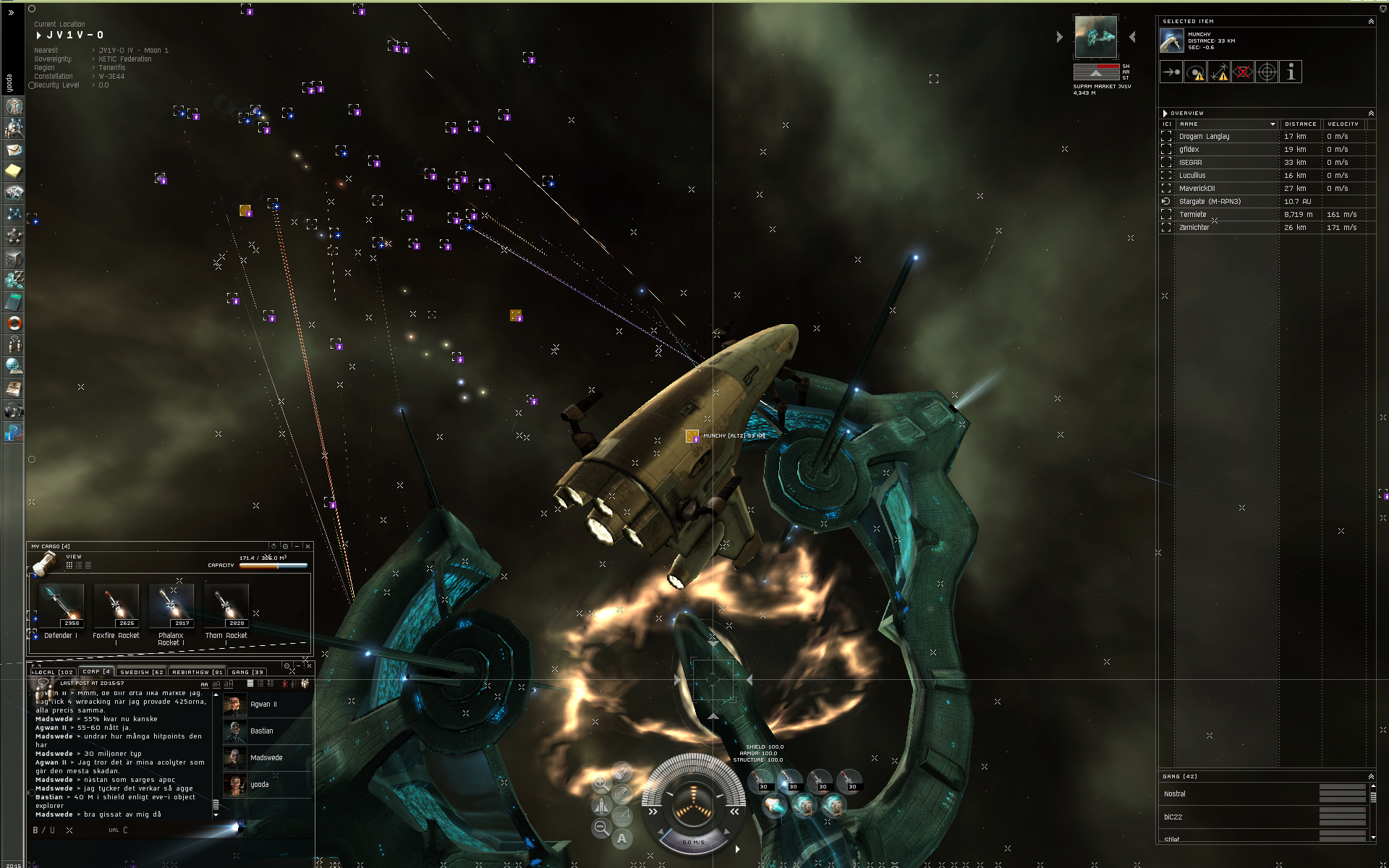
An online game is a video game that is either partially or primarily played through the Internet or any other computer network available. Online games are ubiquitous on modern gaming platforms, including PCs, consoles and mobile devices, and span many genres, including first-person shooters, strategy games, and massively multiplayer online role-playing games (MMORPG). In 2019, revenue in the online games segment reached $16.9 billion, with $4.2 billion generated by China and $3.5 billion in the United States. Unlike purchased retail games, online games have the problem of not being permanently playable, as they require special servers in order to function.
The design of online games can range from simple text-based environments to the incorporation of complex graphics and virtual worlds. The existence of online components within a game can range from being minor features, such as an online leaderboard, to being part of core gameplay, such as directly playing against other players. Many online games create their own online communities, while other games, especially social games, integrate the players' existing real-life communities. Some online games can receive a massive influx of popularity due to many well-known Twitch streamers and YouTubers playing them.
Online gaming has drastically increased the scope and size of video game culture. Online games have attracted players of a variety of ages, nationalities, and occupations. The online game content is now being studied in the scientific field, especially gamers' interactions within virtual societies in relation to the behavior and social phenomena of everyday life. As in other cultures, the community has developed a gamut of slang words or phrases that can be used for communication in or outside of games. Many video games have also inspired internet memes and achieved a very large following online.
The culture of online gaming sometimes faces criticism for an environment that can promote cyberbullying, violence, and xenophobia. Some are also concerned about gaming addiction or social stigma. However, it has been argued that, since the players of an online game are strangers to each other and have limited communication, the individual player's experience in an online game is not necessarily different from playing with artificial intelligence players.
Online games are also subject to accessibility considerations, with developers and players employing various measures to support participation by people with disabilities.
The history of online games dates back to the early days of packet-based computer networking in the 1970s, An early example of online games is MUDs, including the first, MUD1, which was created in 1978 and originally confined to an internal network before becoming connected to ARPANet in 1980. Commercial games followed in the next decade, with Islands of Kesmai, the first commercial online role-playing game, debuting in 1984, as well as more graphical games, such as the MSX LINKS action games in 1986, the flight simulator Air Warrior in 1987, and the Family Computer Network System's online Go game in 1987.
The rapid availability of the Internet in the 1990s led to an expansion of online games, with notable titles including Nexus: The Kingdom of the Winds (1996), Quakeworld (1996), Ultima Online (1997), Lineage (1998), StarCraft (1998), Counter-Strike (1999) and EverQuest (1999). Video game consoles also began to receive online networking features, such as the Family Computer Network System (1987), Sega Meganet (1990), Satellaview (1995), SegaNet (2000), PlayStation 2 (2000) and Xbox (2001). Following improvements in connection speeds, more recent developments include the popularization of new genres, such as social games, and new platforms, such as mobile games.[better source needed]
Entering into the 2000s, the cost of technology, servers, and the Internet has dropped so far that fast Internet was commonplace, which led to previously unknown genres like massively multiplayer online games (MMOs) becoming well known. For example, World of Warcraft (2004) dominated much of the decade. Several other MMOs attempted to follow in Warcraft's footsteps, such as Star Wars Galaxies, City of Heroes, Wildstar, Warhammer Online, Guild Wars 2, and Star Wars: The Old Republic, but failed to make a significant impact in Warcraft's market share.
Online game
An online game is a video game that is either partially or primarily played through the Internet or any other computer network available. Online games are ubiquitous on modern gaming platforms, including PCs, consoles and mobile devices, and span many genres, including first-person shooters, strategy games, and massively multiplayer online role-playing games (MMORPG). In 2019, revenue in the online games segment reached $16.9 billion, with $4.2 billion generated by China and $3.5 billion in the United States. Unlike purchased retail games, online games have the problem of not being permanently playable, as they require special servers in order to function.
The design of online games can range from simple text-based environments to the incorporation of complex graphics and virtual worlds. The existence of online components within a game can range from being minor features, such as an online leaderboard, to being part of core gameplay, such as directly playing against other players. Many online games create their own online communities, while other games, especially social games, integrate the players' existing real-life communities. Some online games can receive a massive influx of popularity due to many well-known Twitch streamers and YouTubers playing them.
Online gaming has drastically increased the scope and size of video game culture. Online games have attracted players of a variety of ages, nationalities, and occupations. The online game content is now being studied in the scientific field, especially gamers' interactions within virtual societies in relation to the behavior and social phenomena of everyday life. As in other cultures, the community has developed a gamut of slang words or phrases that can be used for communication in or outside of games. Many video games have also inspired internet memes and achieved a very large following online.
The culture of online gaming sometimes faces criticism for an environment that can promote cyberbullying, violence, and xenophobia. Some are also concerned about gaming addiction or social stigma. However, it has been argued that, since the players of an online game are strangers to each other and have limited communication, the individual player's experience in an online game is not necessarily different from playing with artificial intelligence players.
Online games are also subject to accessibility considerations, with developers and players employing various measures to support participation by people with disabilities.
The history of online games dates back to the early days of packet-based computer networking in the 1970s, An early example of online games is MUDs, including the first, MUD1, which was created in 1978 and originally confined to an internal network before becoming connected to ARPANet in 1980. Commercial games followed in the next decade, with Islands of Kesmai, the first commercial online role-playing game, debuting in 1984, as well as more graphical games, such as the MSX LINKS action games in 1986, the flight simulator Air Warrior in 1987, and the Family Computer Network System's online Go game in 1987.
The rapid availability of the Internet in the 1990s led to an expansion of online games, with notable titles including Nexus: The Kingdom of the Winds (1996), Quakeworld (1996), Ultima Online (1997), Lineage (1998), StarCraft (1998), Counter-Strike (1999) and EverQuest (1999). Video game consoles also began to receive online networking features, such as the Family Computer Network System (1987), Sega Meganet (1990), Satellaview (1995), SegaNet (2000), PlayStation 2 (2000) and Xbox (2001). Following improvements in connection speeds, more recent developments include the popularization of new genres, such as social games, and new platforms, such as mobile games.[better source needed]
Entering into the 2000s, the cost of technology, servers, and the Internet has dropped so far that fast Internet was commonplace, which led to previously unknown genres like massively multiplayer online games (MMOs) becoming well known. For example, World of Warcraft (2004) dominated much of the decade. Several other MMOs attempted to follow in Warcraft's footsteps, such as Star Wars Galaxies, City of Heroes, Wildstar, Warhammer Online, Guild Wars 2, and Star Wars: The Old Republic, but failed to make a significant impact in Warcraft's market share.
Recent media
Recent media