
Recent from talks
Operation Burnt Frost
Knowledge base stats:
Talk channels stats:
Members stats:
Operation Burnt Frost
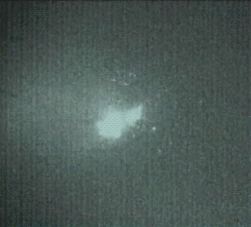
Operation Burnt Frost was a military operation to intercept and destroy non-functioning U.S. National Reconnaissance Office (NRO) satellite USA-193. The mission was described by the Missile Defense Agency as a "mission of safeguarding human life against the uncontrolled re-entry of a 5,000-pound satellite containing over 1,000 pounds of hazardous hydrazine propellant". The launch occurred on 21 February 2008 at approximately 10:26 p.m. EST from the cruiser USS Lake Erie, using a slightly modified Standard Missile-3 (SM-3) to shoot down the satellite. A few minutes after launch, the SM-3 intercepted its target and successfully completed its mission. The operation received scrutiny from other countries, mainly China and Russia.
USA-193, also known as NRO launch 21 (NROL-21 or simply L-21), was an American military reconnaissance satellite launched on December 14, 2006. The USA-193 was owned by the NRO and its precise function and purpose are classified[clarification needed]. Several websites speculate that the satellite was probably a high-resolution radar satellite intended to produce images for the NRO. This argument is additionally supported by the fact that the satellite used a similar inclination to that of a Lacrosse Radar Satellite. Lacrosse is a terrestrial radar imaging reconnaissance satellite operated by the NRO. It utilizes a synthetic aperture radar (SAR) to acquire high resolution images regardless of cloud cover.
The satellite was launched from Vandenberg Air Force Base at 1 p.m. PST aboard the Delta II space launch system. This marked the first launch conducted by the United Launch Alliance since it assumed the program from Boeing Integrated Defense Systems on December 1, 2006. The successful launch represented a record 49 successful consecutive operational launches for the Defense Department.
While the launch was successful, ground controllers lost control over the USA-193 satellite shortly after it was established on its orbit, and were unable to regain control. The satellite itself posed minimal risk of falling and causing damage. The satellite's hydrazine was claimed to pose environmental risks due to its toxicity though no hydrazine pollution has ever been recorded due to a satellite reentry. In 2008, President George W. Bush determined that the satellite's fuel could potentially cause environmental damage if released, and asked the United States Strategic Command to destroy it.
From inception to the successful interception of the satellite, the timeline spanned only a matter of months.
Discussions around the possibility of destroying USA-193 began as early as December 2007. However, Operation Burnt Frost started on 4 January 2008, when President Bush ordered the military to destroy the satellite.
On 27 January 2008, information about the orbital decay of USA-193 was given to the media. Several of the initial reports projected that the satellite would return to Earth sometime in late February, early March. Additionally, these reports suggested that likely no action would need to be taken as the satellite or any debris would have a small chance of hitting any inhabited area. However, White House National Security Council spokesman Gordon Johndroe, did mention that the U.S. government was monitoring the satellite's decay and that it was examining different options to “mitigate any damage”. Also, four anonymous U.S. Officials did report that the satellite, which never became operational, would have toxic rocket fuel (hydrazine fuel) that could pose a danger if the tank did not explode on re-entry.
On 14 February 2008 General James Cartwright, the Vice Chairman of the Joint Chiefs of Staff, made a public announcement that the U.S. intended to shoot down USA-193. In this announcement he laid out several criteria into when, how and why the satellite would be shot down. The major objective was to reduce the risk to space, air and terrestrial platforms. He explained that they would wait for the shuttle to land, so the potential harm to the shuttle would not be a factor. Next they wanted to wait until the satellite was close to re-entry, this would limit the amount of space debris created. Finally, they did not want to let the satellite enter the Earth's atmosphere because of its non-aerodynamic characteristics, which would make it extremely hard to intercept. He suggested that these criteria gave them an eight-day window.
Hub AI
Operation Burnt Frost AI simulator
(@Operation Burnt Frost_simulator)
Operation Burnt Frost
Operation Burnt Frost was a military operation to intercept and destroy non-functioning U.S. National Reconnaissance Office (NRO) satellite USA-193. The mission was described by the Missile Defense Agency as a "mission of safeguarding human life against the uncontrolled re-entry of a 5,000-pound satellite containing over 1,000 pounds of hazardous hydrazine propellant". The launch occurred on 21 February 2008 at approximately 10:26 p.m. EST from the cruiser USS Lake Erie, using a slightly modified Standard Missile-3 (SM-3) to shoot down the satellite. A few minutes after launch, the SM-3 intercepted its target and successfully completed its mission. The operation received scrutiny from other countries, mainly China and Russia.
USA-193, also known as NRO launch 21 (NROL-21 or simply L-21), was an American military reconnaissance satellite launched on December 14, 2006. The USA-193 was owned by the NRO and its precise function and purpose are classified[clarification needed]. Several websites speculate that the satellite was probably a high-resolution radar satellite intended to produce images for the NRO. This argument is additionally supported by the fact that the satellite used a similar inclination to that of a Lacrosse Radar Satellite. Lacrosse is a terrestrial radar imaging reconnaissance satellite operated by the NRO. It utilizes a synthetic aperture radar (SAR) to acquire high resolution images regardless of cloud cover.
The satellite was launched from Vandenberg Air Force Base at 1 p.m. PST aboard the Delta II space launch system. This marked the first launch conducted by the United Launch Alliance since it assumed the program from Boeing Integrated Defense Systems on December 1, 2006. The successful launch represented a record 49 successful consecutive operational launches for the Defense Department.
While the launch was successful, ground controllers lost control over the USA-193 satellite shortly after it was established on its orbit, and were unable to regain control. The satellite itself posed minimal risk of falling and causing damage. The satellite's hydrazine was claimed to pose environmental risks due to its toxicity though no hydrazine pollution has ever been recorded due to a satellite reentry. In 2008, President George W. Bush determined that the satellite's fuel could potentially cause environmental damage if released, and asked the United States Strategic Command to destroy it.
From inception to the successful interception of the satellite, the timeline spanned only a matter of months.
Discussions around the possibility of destroying USA-193 began as early as December 2007. However, Operation Burnt Frost started on 4 January 2008, when President Bush ordered the military to destroy the satellite.
On 27 January 2008, information about the orbital decay of USA-193 was given to the media. Several of the initial reports projected that the satellite would return to Earth sometime in late February, early March. Additionally, these reports suggested that likely no action would need to be taken as the satellite or any debris would have a small chance of hitting any inhabited area. However, White House National Security Council spokesman Gordon Johndroe, did mention that the U.S. government was monitoring the satellite's decay and that it was examining different options to “mitigate any damage”. Also, four anonymous U.S. Officials did report that the satellite, which never became operational, would have toxic rocket fuel (hydrazine fuel) that could pose a danger if the tank did not explode on re-entry.
On 14 February 2008 General James Cartwright, the Vice Chairman of the Joint Chiefs of Staff, made a public announcement that the U.S. intended to shoot down USA-193. In this announcement he laid out several criteria into when, how and why the satellite would be shot down. The major objective was to reduce the risk to space, air and terrestrial platforms. He explained that they would wait for the shuttle to land, so the potential harm to the shuttle would not be a factor. Next they wanted to wait until the satellite was close to re-entry, this would limit the amount of space debris created. Finally, they did not want to let the satellite enter the Earth's atmosphere because of its non-aerodynamic characteristics, which would make it extremely hard to intercept. He suggested that these criteria gave them an eight-day window.
Recent media