


Community hub
Recent from talks
Contribute something to knowledge base
Content stats: 0 posts, 0 articles, 1 media, 0 notes
Members stats: 0 subscribers, 0 contributors, 0 moderators, 0 supporters
Subscribers
Supporters
Contributors
Moderators
Hub AI
Operation Ivory Coast AI simulator
(@Operation Ivory Coast_simulator)
Hub AI
Operation Ivory Coast AI simulator
(@Operation Ivory Coast_simulator)
Operation Ivory Coast
Operation Ivory Coast was a mission conducted by United States Special Operations Forces and other American military elements to rescue U.S. prisoners of war during the Vietnam War. It was also the first joint military operation in United States history conducted under the direct control of the Chairman of the Joint Chiefs of Staff. The specially selected raiders extensively trained and rehearsed the operation at Eglin Air Force Base, Florida, while planning and intelligence gathering continued from 25 May to 20 November 1970.
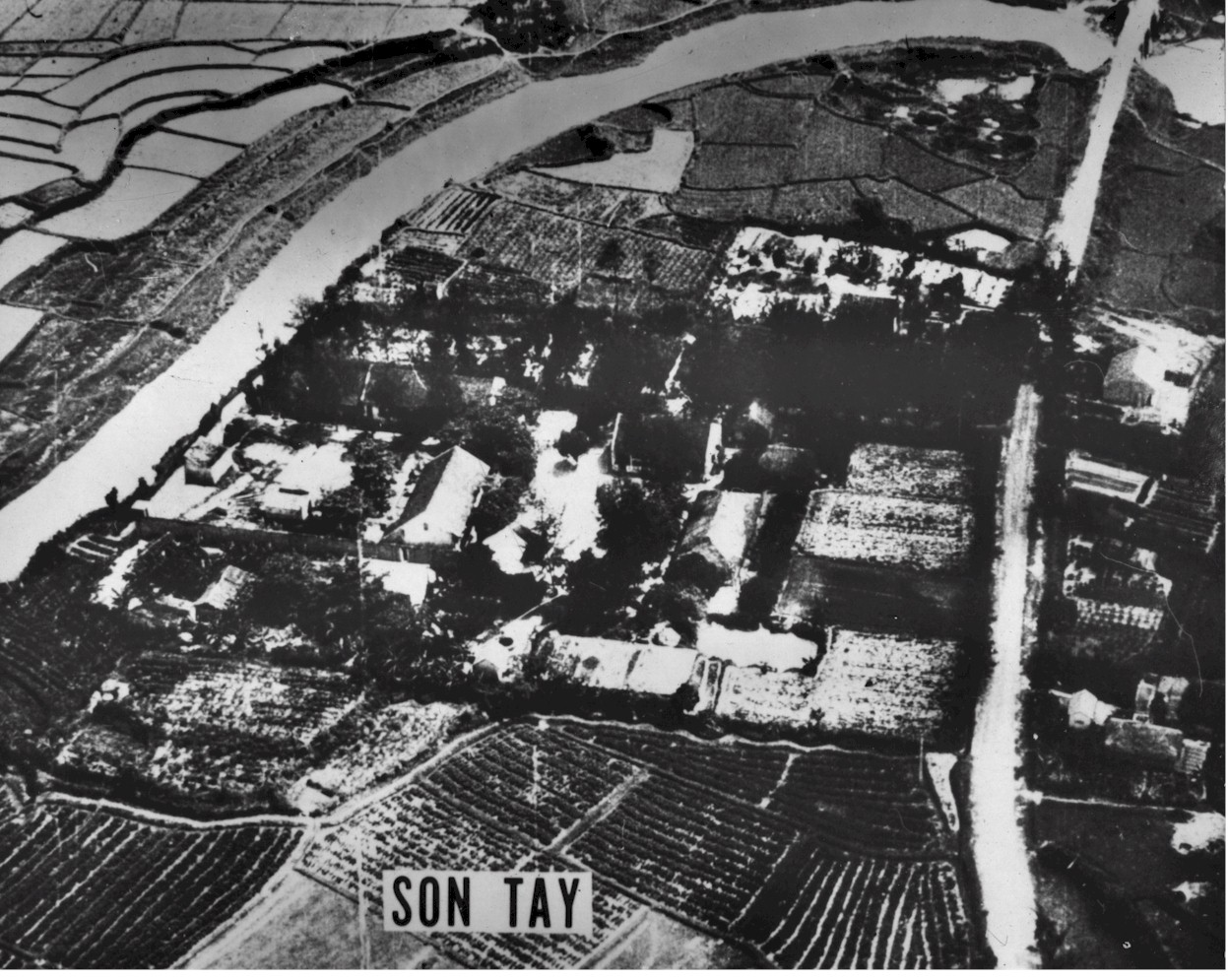
On 21 November 1970, a joint United States Air Force and United States Army force commanded by Air Force Brigadier General LeRoy J. Manor and Army Colonel Arthur D. "Bull" Simons landed 56 U.S. Army Special Forces soldiers by helicopter at the Sơn Tây prisoner-of-war camp, which was located 23 miles (37 km) west of Hanoi, North Vietnam. The objective of the operation was the recovery of 61 American prisoners of war thought to be held at the camp. It was found during the raid that the camp contained no prisoners as they had recently been moved to another camp.
Despite the absence of prisoners, the raid's execution was nearly flawless, with only two casualties and two aircraft losses (one of the aircraft losses was due to a planned crash landing during the assault on the prisoner compound). Criticism of the failure to detect the removal of the POWs prior to the raid, both public and within the administration of Richard Nixon, led to a major reorganization of the United States intelligence community a year later.
The concept of a rescue mission inside North Vietnam began on 9 May 1970. An Air Force intelligence unit concluded through analysis of aerial photography that a compound near Sơn Tây, suspected since late 1968 of being a prisoner of war camp, contained 55 American POWs and that at least six were in urgent need of rescue. 12,000 North Vietnamese troops were stationed within 5 miles (8.0 km) of the camp. After validation of their findings, Brigadier General (BG) James R. Allen, the deputy director for plans and policy at Headquarters USAF, met in the Pentagon on 25 May with Army BG Donald Blackburn, Special Assistant for Counterinsurgency and Special Activities (SACSA). Blackburn reported directly to the Chairman of the Joint Chiefs of Staff and had also been the first commander of the covert Studies and Observation Group in Vietnam.
Blackburn immediately met with General Earle G. Wheeler, the outgoing JCS Chairman, to recommend a rescue of all the POWs at Son Tây. To study the feasibility of a raid, Wheeler authorized a 15-member planning group under the codename Polar Circle that convened on June 10. One of its members was an officer who would actually participate in the raid as a rescue helicopter pilot. The study group, after a review of all available intelligence, concluded that Sơn Tây contained 61 POWs.
When Blackburn's recommendation that he lead the mission himself was turned down, he asked Colonel Arthur D. Simons on 13 July to command the Army's personnel. Eglin Air Force Base was selected as the joint training site for the prospective force. Personnel selection proceeded over the objections of the Marine Corps, which was excluded from participation, but selection and planning was performed by Special Operations "operators", not by the JCS, to avoid service parochialism, resulting in a force chosen for mission needs, highlighting combat experience in Southeast Asia and operational specialty skills, and not rank or branch of service.
The second phase, Operation Ivory Coast, began on 8 August 1970, when Admiral Thomas H. Moorer, the new JCS Chairman, designated Manor as commander and Simons as deputy commander of the mission task force. Ivory Coast was the organization, planning, training, and deployment phase of the operation. Manor set up an Air Force training facility at Eglin's Duke Field and brought together a 27-member planning staff that included 11 from the prior feasibility study.
Simons chose 103 personnel from interviews of 500 volunteers, most were Special Forces personnel of the 6th and 7th Special Forces Groups at Fort Bragg, North Carolina. USAF planners selected key Air Force commanders, who then picked personnel for their crews. Helicopter and A-1 Skyraider crews were put together from instructors at Eglin and personnel returned from Southeast Asia. Two crews for C-130E(I) Combat Talons were assembled from squadrons in West Germany and North Carolina. All were then asked to volunteer for a temporary duty assignment without additional pay and without being told the nature of the mission. 103 Army and 116 USAF personnel were selected for the project, including ground force members, aircrewmen, support members and planners. The 219-man task force planned, trained, and operated under the title of the "Joint Contingency Task Group" (JCTG).
Operation Ivory Coast
Operation Ivory Coast was a mission conducted by United States Special Operations Forces and other American military elements to rescue U.S. prisoners of war during the Vietnam War. It was also the first joint military operation in United States history conducted under the direct control of the Chairman of the Joint Chiefs of Staff. The specially selected raiders extensively trained and rehearsed the operation at Eglin Air Force Base, Florida, while planning and intelligence gathering continued from 25 May to 20 November 1970.
On 21 November 1970, a joint United States Air Force and United States Army force commanded by Air Force Brigadier General LeRoy J. Manor and Army Colonel Arthur D. "Bull" Simons landed 56 U.S. Army Special Forces soldiers by helicopter at the Sơn Tây prisoner-of-war camp, which was located 23 miles (37 km) west of Hanoi, North Vietnam. The objective of the operation was the recovery of 61 American prisoners of war thought to be held at the camp. It was found during the raid that the camp contained no prisoners as they had recently been moved to another camp.
Despite the absence of prisoners, the raid's execution was nearly flawless, with only two casualties and two aircraft losses (one of the aircraft losses was due to a planned crash landing during the assault on the prisoner compound). Criticism of the failure to detect the removal of the POWs prior to the raid, both public and within the administration of Richard Nixon, led to a major reorganization of the United States intelligence community a year later.
The concept of a rescue mission inside North Vietnam began on 9 May 1970. An Air Force intelligence unit concluded through analysis of aerial photography that a compound near Sơn Tây, suspected since late 1968 of being a prisoner of war camp, contained 55 American POWs and that at least six were in urgent need of rescue. 12,000 North Vietnamese troops were stationed within 5 miles (8.0 km) of the camp. After validation of their findings, Brigadier General (BG) James R. Allen, the deputy director for plans and policy at Headquarters USAF, met in the Pentagon on 25 May with Army BG Donald Blackburn, Special Assistant for Counterinsurgency and Special Activities (SACSA). Blackburn reported directly to the Chairman of the Joint Chiefs of Staff and had also been the first commander of the covert Studies and Observation Group in Vietnam.
Blackburn immediately met with General Earle G. Wheeler, the outgoing JCS Chairman, to recommend a rescue of all the POWs at Son Tây. To study the feasibility of a raid, Wheeler authorized a 15-member planning group under the codename Polar Circle that convened on June 10. One of its members was an officer who would actually participate in the raid as a rescue helicopter pilot. The study group, after a review of all available intelligence, concluded that Sơn Tây contained 61 POWs.
When Blackburn's recommendation that he lead the mission himself was turned down, he asked Colonel Arthur D. Simons on 13 July to command the Army's personnel. Eglin Air Force Base was selected as the joint training site for the prospective force. Personnel selection proceeded over the objections of the Marine Corps, which was excluded from participation, but selection and planning was performed by Special Operations "operators", not by the JCS, to avoid service parochialism, resulting in a force chosen for mission needs, highlighting combat experience in Southeast Asia and operational specialty skills, and not rank or branch of service.
The second phase, Operation Ivory Coast, began on 8 August 1970, when Admiral Thomas H. Moorer, the new JCS Chairman, designated Manor as commander and Simons as deputy commander of the mission task force. Ivory Coast was the organization, planning, training, and deployment phase of the operation. Manor set up an Air Force training facility at Eglin's Duke Field and brought together a 27-member planning staff that included 11 from the prior feasibility study.
Simons chose 103 personnel from interviews of 500 volunteers, most were Special Forces personnel of the 6th and 7th Special Forces Groups at Fort Bragg, North Carolina. USAF planners selected key Air Force commanders, who then picked personnel for their crews. Helicopter and A-1 Skyraider crews were put together from instructors at Eglin and personnel returned from Southeast Asia. Two crews for C-130E(I) Combat Talons were assembled from squadrons in West Germany and North Carolina. All were then asked to volunteer for a temporary duty assignment without additional pay and without being told the nature of the mission. 103 Army and 116 USAF personnel were selected for the project, including ground force members, aircrewmen, support members and planners. The 219-man task force planned, trained, and operated under the title of the "Joint Contingency Task Group" (JCTG).
Recent media
Recent media