



Community hub
Recent from talks
Knowledge base stats:
Talk channels stats:
Members stats:
Operation Tailwind
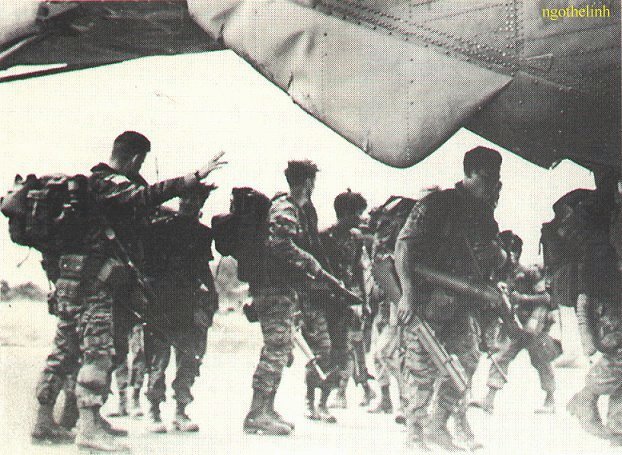
Operation Tailwind was a covert incursion by a small unit of United States Army and allied Montagnard forces into southeastern Laos during the Vietnam War, conducted from 11 to 14 September 1970. Its purpose was to create a diversion for a Royal Lao Army offensive and to exert pressure on the occupation forces of the People's Army of Vietnam (PAVN). A company-sized element of US Army Special Forces and Montagnard commando (Hatchet Force) of the Military Assistance Command, Vietnam Studies and Observations Group (MACV-SOG or SOG) conducted the operation.
Nearly 30 years later, CNN/Time magazine jointly developed an investigative report that was both broadcast and published in June 1998 about Operation Tailwind. The TV segment was produced by April Oliver, Jack Smith, Pam Hill, and others. It was narrated by Peter Arnett, noted for war reporting, who had received a 1966 Pulitzer Prize for his work from Vietnam and who had worked with CNN for 18 years.
Entitled Valley of Death, the report claimed that US air support had used sarin nerve agent against opponents, and that other war crimes had been committed by US forces during Tailwind. In response the Pentagon conducted an investigation, as did CNN; the news organizations together ultimately retracted the report, and fired the producers responsible. April Oliver and Jack Smith sued CNN in a challenge of their dismissals and reached separate settlements with the network. After being reprimanded by CNN, Arnett resigned from the organization.
Several individuals who were sources for the reports, whose images were shown in the reports, or who were otherwise identified with the reports, brought other legal actions against CNN and Time Warner. A decision by the Ninth Circuit Court of Appeals in one of the cases states that the Tailwind reports did not defame the plaintiff who was a source for the reports. It noted that the plaintiff, in his interviews with CNN, "admitted the truth of each of the three facts he now challenges."
During late 1970 the overall US-supported military effort in the covert war in the Kingdom of Laos was floundering. Operation Gauntlet, a multi-battalion Royal Lao Army offensive intended to protect Paksong and the strategic Bolovens Plateau, was failing. They appealed to headquarters of Military Assistance Command, Vietnam – Studies and Observations Group (MACV-SOG or SOG) in Saigon requesting aid from the highly classified unit; specifically, they asked for a unit to enter near Chavane and disrupt PAVN defenses. Colonel John Sadler, SOG's commander, agreed to undertake the mission. However, none of his cross-border reconnaissance teams had ever operated so deep in Laos, and the target area was 20 miles (30 km) beyond the unit's authorized area of operations.
The mission was launched by three platoons of Command and Control Central's (Kontum) Hatchet Company B and two United States Air Force Pathfinder Teams. The 110 Montagnards and 16 Americans, under the command of Captain Eugene McCarley, were heli-lifted from a launch site at Dak To to a landing zone (LZ) in a valley 60 miles (97 km) to the west, near Chavane. The distance to the target was so great that the men were lifted by three United States Marine Corps (USMC) Sikorsky CH-53 Sea Stallion helicopters from HMH-463, escorted by 12 USMC and Army Bell AH-1 Cobra gunships.
On the morning of the third day, the Americans overran a PAVN bivouac and killed 54 troops. They questioned why the Vietnamese had not fled the area, but members of the Hatchet Force discovered a bunker buried beneath 12 feet (3.7 m) of earth. Inside they found a huge cache of PAVN maps and documents. They had overrun the PAVN logistical headquarters that controlled all of Laotian Route 165. The forces quickly filled two footlockers with the intelligence haul and the Hatchet Force began to seek a way out. The PAVN were closing in, but McCarley dropped off elements at three separate (and smaller) landing zones, catching the PAVN unprepared.[citation needed]
Casualties incurred during the operation amounted to three Montagnards killed in action and 33 wounded, while all 16 Americans were wounded. Two CH-53s were shot down during the operation. The efforts of SOG medic Sergeant Gary Michael Rose were considered critical to the survival of many of the Hatchet Force. He was recommended for the Medal of Honor for his actions. He instead received the Distinguished Service Cross. This was later upgraded to the Medal of Honor, which President Donald Trump presented to him on October 23, 2017.
Hub AI
Operation Tailwind AI simulator
(@Operation Tailwind_simulator)
Operation Tailwind
Operation Tailwind was a covert incursion by a small unit of United States Army and allied Montagnard forces into southeastern Laos during the Vietnam War, conducted from 11 to 14 September 1970. Its purpose was to create a diversion for a Royal Lao Army offensive and to exert pressure on the occupation forces of the People's Army of Vietnam (PAVN). A company-sized element of US Army Special Forces and Montagnard commando (Hatchet Force) of the Military Assistance Command, Vietnam Studies and Observations Group (MACV-SOG or SOG) conducted the operation.
Nearly 30 years later, CNN/Time magazine jointly developed an investigative report that was both broadcast and published in June 1998 about Operation Tailwind. The TV segment was produced by April Oliver, Jack Smith, Pam Hill, and others. It was narrated by Peter Arnett, noted for war reporting, who had received a 1966 Pulitzer Prize for his work from Vietnam and who had worked with CNN for 18 years.
Entitled Valley of Death, the report claimed that US air support had used sarin nerve agent against opponents, and that other war crimes had been committed by US forces during Tailwind. In response the Pentagon conducted an investigation, as did CNN; the news organizations together ultimately retracted the report, and fired the producers responsible. April Oliver and Jack Smith sued CNN in a challenge of their dismissals and reached separate settlements with the network. After being reprimanded by CNN, Arnett resigned from the organization.
Several individuals who were sources for the reports, whose images were shown in the reports, or who were otherwise identified with the reports, brought other legal actions against CNN and Time Warner. A decision by the Ninth Circuit Court of Appeals in one of the cases states that the Tailwind reports did not defame the plaintiff who was a source for the reports. It noted that the plaintiff, in his interviews with CNN, "admitted the truth of each of the three facts he now challenges."
During late 1970 the overall US-supported military effort in the covert war in the Kingdom of Laos was floundering. Operation Gauntlet, a multi-battalion Royal Lao Army offensive intended to protect Paksong and the strategic Bolovens Plateau, was failing. They appealed to headquarters of Military Assistance Command, Vietnam – Studies and Observations Group (MACV-SOG or SOG) in Saigon requesting aid from the highly classified unit; specifically, they asked for a unit to enter near Chavane and disrupt PAVN defenses. Colonel John Sadler, SOG's commander, agreed to undertake the mission. However, none of his cross-border reconnaissance teams had ever operated so deep in Laos, and the target area was 20 miles (30 km) beyond the unit's authorized area of operations.
The mission was launched by three platoons of Command and Control Central's (Kontum) Hatchet Company B and two United States Air Force Pathfinder Teams. The 110 Montagnards and 16 Americans, under the command of Captain Eugene McCarley, were heli-lifted from a launch site at Dak To to a landing zone (LZ) in a valley 60 miles (97 km) to the west, near Chavane. The distance to the target was so great that the men were lifted by three United States Marine Corps (USMC) Sikorsky CH-53 Sea Stallion helicopters from HMH-463, escorted by 12 USMC and Army Bell AH-1 Cobra gunships.
On the morning of the third day, the Americans overran a PAVN bivouac and killed 54 troops. They questioned why the Vietnamese had not fled the area, but members of the Hatchet Force discovered a bunker buried beneath 12 feet (3.7 m) of earth. Inside they found a huge cache of PAVN maps and documents. They had overrun the PAVN logistical headquarters that controlled all of Laotian Route 165. The forces quickly filled two footlockers with the intelligence haul and the Hatchet Force began to seek a way out. The PAVN were closing in, but McCarley dropped off elements at three separate (and smaller) landing zones, catching the PAVN unprepared.[citation needed]
Casualties incurred during the operation amounted to three Montagnards killed in action and 33 wounded, while all 16 Americans were wounded. Two CH-53s were shot down during the operation. The efforts of SOG medic Sergeant Gary Michael Rose were considered critical to the survival of many of the Hatchet Force. He was recommended for the Medal of Honor for his actions. He instead received the Distinguished Service Cross. This was later upgraded to the Medal of Honor, which President Donald Trump presented to him on October 23, 2017.