Hubbry Logo
OrcadiansOrcadiansMain
Open search
Orcadians
Community hub
Orcadians
logo
8 pages, 0 posts
0 subscribers
Be the first to start a discussion here.
Orcadians
Orcadians
from Wikipedia

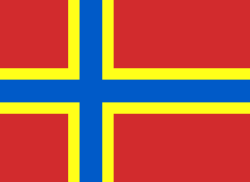
Orcadians, also known as Orkneymen,[2] are an ethnic group native to the Orkney Islands, who speak an Orcadian dialect of the Scots language, a West Germanic language, and share a common history, culture and ancestry.[3] Speaking Norn, a native North Germanic language into the 19th or 20th century,[4] Orcadians descend significantly from North Germanic peoples, with around a third of their ancestry derived from Scandinavia, including a majority of their patrilineal line.[5] According to anthropological study, the Orcadian ethnic composition is similar to that of Icelandic people; a comparable islander ethnicity of North Germanic origin.[5]

Key Information

Historically, they are also descended from the Picts,[6][a] Norse,[8] and Lowland Scots.[9]

Background

[edit]

Orcadian ethnic group formation

[edit]

An Orcadian ethnicity has developed since around 900 AD. Goethe University's historian, Daniel Föller, describes the Orcadian ethnic group's early ethnogenesis occurring between the 10th and 12th centuries, during the same period in which the Swedish, Norwegian, Danish, and Manx ethnicities emerged.[10] According to historian James Hunter, the "ethnic composition" of Orcadians was then significantly impacted by colonisation from Lowland Scots people between 1494 and 1659.[9]

Anthropologist Agnar Helgason's research in 2001 found that the mtDNA ancestry of Orcadians is around 36 percent "Scandinavian", suggesting an ethnic composition comparable to Icelanders, a modern North Germanic ethnic group. 2003 research found that the majority of Orcadians can trace their patrilineality to Scandinavia, with 55% of Y chromosome DNA relating to migrating North Germanic peoples.[5] In research analysing different European ethnic groups, physician Lars Klareskog and geneticist Peter K. Gregersen have compared the Orcadian ethnicity in relation to other European island-based ethnicities, such as Sardinian people.[11]

Orcadian identity, governance, and nationalism

[edit]

Orcadians have a range of ethnic or national identities, including Orcadian, Scottish, and British.[12] Swedish artist, Gunnie Moberg, suggests that within the Orkney Islands, "People are Orcadian first, then Scots or British".[13] Historian Hugh Kearney has written that Orkney's historical connection with the North Sea Empire has allowed Orcadians to remain "ethnically distinctive".[13] With regards to self-governance, Laurentian University's historian Daniel Travers has written that Orkney Islands Council has "considerably more influence over insular matters than other counties" in the United Kingdom.[13]

Researcher, James B. Minahan, has described the Orcadian people as a stateless nation, noting their history of seeking independence from Scotland, their opposition to the 1979 Scottish devolution referendum, and a history of seeking "political status that the Channel Islands, the Isle of Man, and the Faroese Islands" have in relationship with the sovereign states of the UK and Denmark, respectively.[14]

Colonial era migration

[edit]

During the colonial era, Orcadians have been documented migrating in search of opportunity. York University historian, Carolyn Podruchny, notes that "freemen" (as opposed to "voyageurs"), involved in the North American fur trade up until the early 19th-century came from a range of disparate ethnic groups and "could be métis, Orcadians, other Scots, English, and Iroquoians from the St. Lawrence valley".[15] Emigrants to London and York, England, also found inland posts related to the fur trade. According to ethnohistorian Jennifer S. H. Brown, "at least twenty-eight Orkneymen became either governors, chief factors, chief traders, or district master between the early 1700s and the mid-1800s".[2]

Notable Orcadians

[edit]

People associated with Orkney

[edit]

See also

[edit]

Footnotes

[edit]

References

[edit]
Revisions and contributorsEdit on WikipediaRead on Wikipedia
from Grokipedia
Orcadians are the inhabitants of the Orkney Islands, an of about 70 islands located off the northeast coast of . The islands, of which around 20 are inhabited, have a of approximately 22,000. Their is profoundly shaped by nearly 600 years of Norse rule, beginning with Viking settlements in the late and ending in 1472 when the islands were annexed by as part of a royal . This Scandinavian legacy endures in the , a form of incorporating vocabulary and structures from the extinct spoken until the 18th century. Genetic analyses reveal that Norse ancestry accounts for roughly 25% of modern Orcadian DNA, overlaid on substantial pre-Viking Pictish and other indigenous components. Traditionally reliant on farming, , and , Orcadians have adapted to contemporary economic shifts, including significant contributions to offshore renewables and tourism centered on their rich prehistoric and Viking archaeological heritage. This resilient community maintains a strong sense of local and cultural distinctiveness, often prioritizing practical over external influences.

Origins and History

Pre-Norse Foundations

The earliest evidence of human presence in dates to the period, around 7000 BC, with scattered lithic artifacts, microliths, and charred hazelnut remains indicating activity focused on coastal resources. Sea-level rise following the last submerged many potential sites, rendering Mesolithic occupation archaeologically sparse compared to later eras. The era, from approximately 3500 BC to 2500 BC, marked a transformative phase with the arrival of farming communities who constructed monumental stone , including chambered tombs, stone circles, and villages. Key sites within the World Heritage area include , a well-preserved village occupied circa 3100–2500 BC featuring stone furniture and drainage systems; Maes Howe, a built around 2800 BC; the , a ceremonial dating to 2500–2000 BC; and the Standing Stones of Stenness, erected by 3000 BC. These structures reflect advanced communal organization, agricultural practices with crops like and , and ritualistic traditions, evidencing a dense population that exploited Orkney's and resources. Subsequent Bronze Age (circa 2500–800 BC) and (circa 800 BC–800 AD) periods saw continuity in settlement with developments like burials, forts, and brochs—tall, dry-stone towers such as those at Gurness and Midhowe, indicative of fortified communities. By the early historic period, Pictish tribes dominated, leaving symbol stones and artifacts until the late AD, when Norse incursions began displacing them. Pictish society in featured hierarchical structures and trade networks, but archaeological traces were largely overwritten by later Norse activity, with evidence of coexistence or conflict persisting into the .

Norse Settlement and the Earldom of Orkney

Norse raiders from began targeting in the late 8th century, with the first recorded Viking attacks on British shores occurring in the 780s AD, escalating into systematic incursions by the 790s. These expeditions transitioned from seasonal plundering to permanent settlement around 800 AD, as Norse groups established farms, traded, and integrated into the islands' economy, likely displacing or absorbing the preexisting Pictish inhabitants through a combination of violence and opportunistic land-taking. Archaeological evidence, including Norse-style longhouses and pagan burials at sites like the Brough of Birsay, supports this shift, indicating organized colonization rather than mere raiding bases. Genetic analyses of modern Orcadian populations reveal substantial Norse paternal lineages, with Y-chromosome haplogroups like I1 predominant, confirming descent from these 8th- and 9th-century migrants who prioritized agriculture and fishing over continued warfare once settled. By the mid-9th century, Norwegian kings asserted control over to regulate Viking activities emanating from the islands, formalizing it as an earldom (jarldom) under their oversight around 875 AD, when reportedly granted the title to after consolidating power in . The earls, such as the Mighty (d. 892 AD, slain after a victory over a king whose tooth reportedly caused his death via infection) and his nephew Thorfinn Skullsplitter (r. c. 963–1065 AD), expanded the earldom's influence southward into and even participated in campaigns, amassing wealth through raiding, tolls, and alliances while nominally paying tribute to . Thorfinn's reign marked a peak, with the — a 13th-century Norwegian-Icelandic —depicting him as a Christian ruler who built churches and maintained a of sufficient splendor to host papal legates, though accounts blend historical events with legendary embellishments corroborated unevenly by . Successive earls, including the co-rulers Paul and Erlend Thorfinsson (d. early ), faced internal strife, exemplified by the 1117 martyrdom of their nephew Erlendsson at the hands of his cousin Haakon Paulsson; 's shrine in , , became a pilgrimage site, underscoring the earldom's role in early Norse Christianity. The earldom's autonomy waxed and waned under Norwegian overlordship, with earls like Harald Maddadson (r. 1139–1206) rebelling against King Sverre in the 1190s, culminating in Harald's surrender in 1195 AD and 's deeper integration into the Norwegian realm as a taxable . By the , the Sinclair family—descended from earlier earls—held the title, with Henry Sinclair (d. c. 1400 AD) allegedly voyaging to and [North America](/page/North America) per the controversial Zeno narrative, though primary evidence limits confirmation to his Scottish mainland holdings. Norwegian control persisted until the of 1397 subordinated Denmark-Norway, straining finances; in 1468 AD, King Christian I pledged to as security for 50,000 Rhenish guilders (part of his daughter Margaret's 60,000-guilder to James III), with the islands' annual revenues earmarked for redemption. The pledge went unredeemed due to Denmark's fiscal woes, leading Earl William Sinclair to surrender his rights to James III in 1470 AD; 's formally annexed in 1472 AD, dissolving the earldom and integrating it as a Scottish lordship under the Sinclairs. This transfer ended six centuries of Norse dominance, though linguistic and cultural Norse traces endured in Orcadian Norn dialect and traditions until the .

Acquisition by Scotland and Early Modern Period

In 1468, Christian I of Denmark-Norway pledged the to as security for the unpaid 50,000 Rhenish florins of his daughter Margaret's dowry, following their marriage treaty formalized in the Treaty of Copenhagen on September 8. The pledge covered royal revenues and rights in Orkney, with the islands to revert to Denmark-Norway upon repayment, but Christian I's financial difficulties prevented redemption. With the debt outstanding, the Scottish Parliament enacted annexation on February 20, 1472, incorporating Orkney directly into the Scottish Crown and extinguishing Norse claims, though James III pledged not to alienate the islands further. This shift ended over six centuries of Norwegian suzerainty, transitioning administrative control to Edinburgh while the local Orcadian population—largely of Norse descent—retained customary practices. In the , Scottish governance imposed feudal structures on Orkney's udal (allodial) system, inherited from Norse settlers, which emphasized communal inheritance and lacked . Norse law, including udal rights, was formally abolished by in 1611 amid efforts to consolidate authority and facilitate land grants to lowland lairds, though udal practices endured in rural holdings until the 18th-century enclosures. The reached in the 1560s, aligning the islands with the Presbyterian and eroding Catholic-Norse ecclesiastical ties, with Cathedral repurposed as a parish church by 1566. Orcadian society, centered on subsistence farming, fishing, and peat extraction, saw influxes of Scottish settlers and officials, diluting but not erasing Norse cultural elements like the Norn dialect, which persisted into the late 17th century before yielding to Scots English. Lairds, often absentees, dominated through tacksman leases, exacerbating tenant hardships amid periodic famines and the 17th-century witch persecutions, which claimed over 100 lives in Orkney trials between 1590 and 1660. Despite these impositions, Orcadians preserved a hybrid identity, with sagas and folklore transmitting Norse heritage orally until antiquarian revivals in the 18th century.

Industrial Era and 20th-Century Developments

The late 18th and 19th centuries marked a transition for Orcadians toward extractive industries supplementing traditional , with processing emerging as a significant employer amid high wartime demand for in and ; this industry peaked during the but collapsed post-1815 due to cheaper imported alternatives, leading to economic hardship and emigration. then drove a boom from the , transforming coastal communities as larger vessels like fifies and zulus landed catches at ports such as Stronsay, which became Orkney's primary station, supporting curing stations and drawing seasonal workers; peak activity around 1900-1913 saw millions of barrels processed annually across , with Orkney contributing substantially through local boats and labor. production also developed, utilizing local , though it remained secondary to and farming, where fertile soils and 19th-century innovations like improved grasses and clovers boosted arable output despite ongoing subsistence patterns. The early 20th century brought mixed fortunes, as the herring industry's decline after —exacerbated by overfishing, shifting stocks, and reduced demand—prompted diversification into whitefish and lobster, while agriculture faced stagnation from overseas competition. elevated Orkney's strategic role, with serving as the Royal Navy's main base for the Grand Fleet from 1914, hosting over 100 warships and injecting economic activity through supply demands, though the 1919 scuttling of 74 interned German vessels created environmental hazards and salvage opportunities. World War II intensified militarization, with again anchoring the ; the sinking of HMS Royal Oak on October 14, 1939, by German U-47, resulting in 834 deaths, exposed vulnerabilities and spurred construction of the —four concrete causeways linking Orkney's eastern islands—built between 1940 and 1944 primarily by 1,200 Italian prisoners of war from Camp 60, who also erected the iconic . Peak wartime presence reached approximately 40,000 service personnel, straining local resources but fostering infrastructure like airfields and defenses; post-1945 decommissioning of in 1956 shifted focus back to agriculture and fishing, with lingering naval salvage and barriers enabling road connections that aided and .

Demographics and Genetic Heritage

Population and Settlement Patterns

The population of the Islands stood at 21,958 according to the 2022 , reflecting a 2.85% increase from 21,349 in 2011 but a slowdown from the 11% growth seen between 2001 and 2011. Mid-year estimates from the National Records of Scotland indicate a slight decline to 22,000 by June 2023, with stability around 22,000 into 2024 amid broader concerns over aging demographics and net outmigration. The remains low at approximately 22 inhabitants per square kilometer across 990 square kilometers of land, supporting a predominantly rural character. Settlement is heavily concentrated on , which hosted 17,779 residents or about 81% of the total in 2022, while the remaining 70 islands include around 101 with permanent habitation. The principal urban centers are , the administrative hub with roughly 9,000 residents, and , a smaller port town of about 2,200; these account for much of the non-rural population. Beyond these, patterns feature dispersed farmsteads and crofts, often clustered near fertile coastal lowlands, reflecting historical agricultural adaptations to the archipelago's low-lying terrain and maritime influences rather than dense inland villages. Outer islands exhibit sparser distribution, with ferry-linked isles like Hoy and experiencing a collective 5.2% population drop between 2011 and 2022, exacerbating service challenges. This uneven pattern underscores a reliance on Mainland connectivity for employment and amenities, contributing to centralized growth despite overall stagnation.

Ethnic Composition and Genetic Studies

The population of Orkney exhibits high ethnic homogeneity, with 21,602 individuals (approximately 98.5% of the total) identifying as in the 2022 census, alongside small minorities including 108 Asian, 56 mixed/multiple, 42 African/Caribbean, and 146 other ethnic groups residents. This composition reflects limited recent , with the overwhelming majority tracing ancestry to longstanding European settler groups rather than diverse global origins. Genetic studies of Orcadians, drawing on cohorts like the Orkney Complex Disease Study (ORCADES), reveal a blended heritage dominated by pre-Norse Insular populations—likely Pictish or related groups—and medieval Norse settlers. Analyses indicate modern Orcadians carry roughly 20-25% genome-wide Norse ancestry, alongside 25-30% Norse-derived Y-chromosomes, reflecting patrilineal Viking influence during the Earldom period. Matrilineal mtDNA profiles show approximately 35.5% Scandinavian lineages (95% CI: 13.0–64.5%), with the remainder attributed to Gaelic or other pre-Viking sources, underscoring female-mediated continuity from earlier inhabitants. Ancient DNA research demonstrates substantial genetic persistence from Pictish-era Orcadians to the present, with high identity-by-descent (IBD) segment sharing—particularly segments >1–6 cM—between early medieval Orcadian genomes and modern samples, exceeding affinities to mainland British populations. This continuity, marked by regional differentiation and founder effects (e.g., elevated components in some lineages), highlights isolation-driven drift rather than wholesale replacement by Norse incomers, distinguishing Orcadian from broader Scottish profiles.

Culture and Traditions

Language and Dialect

The predominant language historically spoken by Orcadians was Norn, an Insular Scandinavian tongue derived from Old West Norse, introduced by Viking settlers around the and persisting as the vernacular for over a millennium. Norn featured grammatical structures akin to other , including alongside singular and plural, three genders, and four cases (nominative, accusative, dative, genitive), though it evolved regionally with substrate influences from pre-Norse Pictish or Celtic elements. By the late 18th century, Norn had largely become extinct in , with reports from indicating only fragmentary recollections among locals, and purported last speakers in the likely representing passive knowledge rather than fluency; its decline accelerated post-Scottish annexation in 1472, as Lowland Scots immigration and administrative use supplanted it. The emerged as a variety of Lowland Scots from the onward, incorporating substantial Norse lexical and phonological substrate from Norn, though less pronounced than in dialects due to earlier and more complete in . Distinct features include retained Norse-derived vocabulary (e.g., peerie for small, from piri; muckle for large, akin to Icelandic mikill), vowel shifts influenced by Scandinavian prosody, and occasional syntactic patterns like verb-second echoes, though these are diminishing. Early documentation, such as John Ben's 1529 accounts, shows Scots already diverging into local forms with Norse admixture, separating from northern English dialects. In contemporary usage, Orcadians are largely bi-dialectal, employing Orcadian Scots in informal rural settings and among older speakers, while dominates formal, urban, and media contexts; the dialect retains vitality in , , and place names but faces erosion from and migration. Efforts to document and promote it, such as through the Scots Language Centre and local museums, highlight its Norse-Scots hybridity, with prosodic traits like elongated vowels and glottal reinforcements distinguishing it from mainland Scots varieties.

Folklore, Customs, and Social Norms

Orcadian draws heavily from and maritime superstitions, featuring shape-shifting selkies—seals that shed their skins to become human on land, often central to tales of forbidden romances between seal-folk and islanders. Other prominent figures include trows, mischievous troll-like beings dwelling in ancient mounds or "howes," who lure humans into underground realms, reflecting the islands' and Viking heritage. Sea monsters such as the stoor worm and finfolk—enigmatic paddlers in skin boats associated with abduction myths—underscore the perilous relationship with the , with finmen sightings documented as late as the in eyewitness accounts from Stronsay. Traditional customs emphasize communal participation and seasonal rites, exemplified by the Ba', an inter-parish mass football game played annually on December 25 and January 1 since at least the , pitting "Uppies" (from the town center) against "Doonies" (from the harbor end) in a chaotic contest without fixed goals, symbolizing rivalry and endurance. At weddings, the cog—a quaich filled with spiced ale, whisky, and sugar—is passed among guests for shared toasts, a practice rooted in 18th-century communal bonding to invoke prosperity and ward off misfortune. observances retain Norse elements, including feasting and around the hearth, while midsummer customs like blessing fishing boats trace to Viking sea-god rituals, adapted to Christian saints like , whose martyrdom in 1117 inspires annual commemorations blending piety and local lore. Social norms among Orcadians foster self-reliance and communal solidarity, shaped by the islands' isolation and harsh environment, where mutual aid in farming, fishing, and storm survival remains a core expectation, as evidenced by historical accounts of neighbors sharing resources during 19th-century crofting hardships. This manifests in a pragmatic ethos prioritizing practical skills over external dependencies, with pride in seafaring resilience and a distinct identity that assimilates newcomers through adherence to unwritten codes of discretion and hard work, rather than overt hierarchy. Community events reinforce these norms, enforcing participation to maintain social cohesion, though modernization has tempered stricter Victorian-era conventions like Sabbath observance, documented in 20th-century ethnographies as yielding to economic necessities like oil-related shifts since the 1970s.

Distinct Identity and Self-Perception

Orcadians maintain a strong sense of distinct identity rooted in their Norse heritage, viewing themselves as separate from mainland culture despite formal integration into since 1472. This perception emphasizes Scandinavian influences in language, , and social character, with islanders often describing themselves as self-reliant, rugged individuals shaped by Viking seafaring traditions rather than Highland or Lowland Scottish norms. Public expressions of this identity include enthusiasm for Viking festivals and archaeological sites like the , which reinforce a of Nordic continuity over Celtic or purely Scottish ties. Anthropological studies highlight how Orcadians prioritize these Norse elements to assert cultural autonomy, contrasting with perceptions of mainland Scots as more centralized and less insular. Census data from 2022 shows that most residents self-identify their as , aligning with broader national trends where 77.7% claim Scottish identity, though local frequently qualifies this with Orcadian particularism. Recent political actions underscore this self-perception of marginalization within . On July 4, 2023, voted 11-0 to explore "greater and ," citing chronic underfunding, poor ferry services, and neglect by Holyrood and Westminster as evidence of incompatible models. This non-binding motion, echoing similar debates in 1967 and 1986, reflects a pragmatic desire for driven by geographic isolation and economic self-reliance rather than outright secessionism. A contemporaneous poll indicated 37% favored remaining part of the without status change, with only minority support for , suggesting identity assertions prioritize local control over radical separation.

Governance and Political Dynamics

Local Administration and Devolution

The (OIC) serves as the unitary local authority for the Orkney archipelago, responsible for delivering essential public services including , social care, , , , and economic development. Established on 16 May 1975 under the Local Government (Scotland) Act 1973, the OIC operates as a single-tier council with broad administrative powers tailored to island needs, largely unaffected by the 1996 Scottish local government reorganization that created similar structures elsewhere. The council is led by an elected convener and supported by a chief executive, currently Oliver Reid since January 2023, overseeing departments focused on community benefits, cultural preservation, and environmental management. Below the OIC, 13 community councils provide grassroots representation, bridging local concerns with council decisions on issues like land use and community facilities. Within the broader framework of Scottish devolution established by the Scotland Act 1998, the OIC exercises powers devolved from the Scottish Parliament, which handles areas such as local government funding, fisheries, and transport, while retaining fiscal dependencies like council tax and non-domestic rates. Orkney's residents voted decisively against the 1979 devolution referendum, with only 30.4% in favor, reflecting early skepticism toward diluted autonomy within Scotland. This structure has enabled the OIC to leverage legislation like the Islands (Scotland) Act 2018, which mandates island-specific policies, yet persistent challenges— including inadequate ferry services, funding shortfalls, and centralized control over oil revenues from the Verra Robbo field—have fueled demands for enhanced local powers. In response to these issues, the OIC voted on 4 July 2023 to explore alternative models, prompted by a notice of motion highlighting inequities in service delivery and economic opportunities compared to Nordic counterparts with greater fiscal . Studies examined precedents such as the Åland Islands' 1922 agreement with , the self-funding , and ' , aiming to secure direct control over revenues and health services. A similar push occurred in 2017, seeking expanded powers short of . By June 2025, however, the council concluded its broader investigation into departing the UK, citing constitutional barriers and resource limits, and pivoted to pursuing a "Single Authority Model" pledged by the on 6 May 2025, which would consolidate local services under OIC oversight to better address island vulnerabilities. This model emphasizes evolutionary within , facilitated by ongoing consultations, rather than radical separation.

Debates on Autonomy and Recent Secession Explorations

In July 2023, the Orkney Islands Council voted unanimously, with five abstentions, to commission a report exploring "alternative forms of governance" amid longstanding grievances over centralization of power in Edinburgh, inadequate infrastructure funding, unreliable ferry services, and demographic challenges such as youth outmigration. The motion, proposed by council leader James Stockan, explicitly referenced Orkney's historical Norse heritage—stemming from its cession as a pledge from Denmark-Norway to Scotland in 1468—and raised the prospect of greater subsidiarity, potential independence, or even becoming a self-governing territory under Norway. Proponents argued that these options could address perceived neglect by the Scottish National Party-led government, including disparities in oil revenue retention compared to Shetland's more favorable arrangements under the 1978 Zetland County Council Act. The initiative drew international attention, with media dubbing it "Orxit" in parallel to , but it lacked broad public endorsement among Orcadians, who had voted 67.4% against in the 2014 referendum—the highest No share of any Scottish council area. Historical precedents for such debates include grassroots campaigns invoking "return to Denmark" amid oil discoveries in the , and formal discussions in 1967 and 1986 questioning post-devolution constitutional ties, yet none progressed beyond exploratory rhetoric. Critics, including UK government officials, dismissed the 2023 proposal as symbolic protest rather than a viable path, emphasizing legal barriers under the , which vests in Westminster. Over the subsequent two years, the council's exploration involved consultations and legal advice, but concluded without substantive changes; on June 17, 2025, it formally accepted Orkney's status within the , citing insurmountable constitutional hurdles and insufficient support for drastic reconfiguration. This outcome reflected pragmatic realism, as Norwegian officials expressed polite interest in cultural ties but no appetite for territorial expansion, while Scottish ministers offered incremental promises on ferries and funding to placate island concerns. The episode underscored tensions between peripheral islands and mainland but did not catalyze a sustained movement, with local surveys indicating preference for enhanced within the UK over outright separation.

Economy and Livelihoods

Historical Industries

Agriculture and fishing formed the foundational livelihoods of Orcadians for centuries, with farming emphasizing livestock rearing—particularly sheep and cattle—and cultivation of hardy crops such as oats and bere barley on the islands' fertile soils. Peat cutting supplemented these by providing essential fuel in the treeless landscape, with systematic extraction leaving visible archaeological traces across the North Isles. Flagstone quarrying, leveraging the islands' thinly bedded sedimentary rocks, supplied high-quality paving and building stone; operations at sites like Fersness on Eday expanded in the mid-19th century, continuing intermittently until the 1950s, with stone exported for construction including Kirkwall Town Hall in 1905. From the late , kelp processing emerged as a major industry, involving the harvesting and burning of to produce ash rich in soda and for glassmaking, , and bleaching; Orkney crofters produced up to 3,000 tonnes annually at peak, earning £2 per tonne despite market values reaching £22. This boom, fueled by demand, temporarily overshadowed agricultural improvements but collapsed post-1815 with cheaper imported alternatives. Concurrently, intensified, transforming coastal communities through seasonal booms that supported curing stations and exports. Whaling contributed significantly from the 17th century, initially through opportunistic strandings and communal drives, evolving into organized Arctic expeditions; Stromness served as a key outfitting port from 1770 to 1870, with dozens of ships annually recruiting local crews for voyages yielding oil and baleen. Linen production also flourished in the same period, centered on estates like Graemeshall in Holm, where flax cultivation benefited from post-1750s land reforms abolishing inefficient runrig systems, yielding cloth for domestic and export markets. These industries, while providing prosperity, were vulnerable to external market shifts and environmental constraints, shaping patterns of boom, diversification, and eventual decline by the early 20th century.

Contemporary Economic Sectors

The Orkney economy remains anchored in primary industries, with , , and comprising a substantial portion of and activity. In 2023, supported 1,922 individuals, including 472 full-time occupiers and 698 employees, alongside holdings of 75,100 and 132,086 . These sectors benefit from fertile land suitable for , lamb, and production, with annual output reaching 12.2 million litres from 12 farms in 2023/24 and subsidies totaling £18.7 million. , , and together accounted for 19.2% of as of recent assessments, reflecting a traditional reliance that sustains rural communities but faces challenges from subsidy dependencies and market fluctuations. Fishing and aquaculture contribute around 5% to the economy, supporting approximately 90 businesses and ranking as Scotland's second-largest fishing employment base after Shetland. In 2022, 238 fishermen were recorded, with 155 in regular employment, and landings totaled 2,034 tonnes valued at £7.7 million, predominantly shellfish such as crab, lobster, and scallops. Aquaculture emphasizes salmon production, yielding about 20,000 tonnes annually, though the sector contends with regulatory pressures and environmental concerns over wild stocks. Renewable energy has emerged as a growth driver, leveraging Orkney's wind, wave, and tidal resources to employ around 300 people and generate 112,507 MWh from 1,405 installations—including 803 onshore wind turbines—with an installed capacity of 58.1 MW in 2023. The islands produce over 130% of their electricity needs, exceeding 650 turbines and incorporating more than 400 solar setups alongside marine prototypes at the European Marine Energy Centre. This sector facilitates innovations like hydrogen-powered ferries and the Orkney Research and Innovation Campus, aiding diversification from declining and gas activities at the Flotta terminal, which historically processed up to 400,000 barrels daily but now focuses on decommissioning. Tourism bolsters the economy with an estimated £114 million impact in 2023 from 247,540 staying visitors and 204,606 cruise passengers across 205 port calls, drawn to archaeological sites, wildlife, and cultural heritage. Complementary industries include food and drink—featuring global exports of local produce—and a public sector employing about 30% of the workforce, alongside construction tied to infrastructure like deep-water berths. Overall, with 1,545 active enterprises in 2023 (635 in primary sectors), the economy exhibits resilience through interlinked activities, though demographic aging and connectivity constraints pose ongoing risks.

Migration Patterns and Diaspora

18th- and 19th-Century Emigration Waves

In the early , the began recruiting laborers from the Orkney Islands to support its operations in , present-day . Initial shipments of Orkneymen occurred in the first decade of the 1700s, becoming a regular practice by the as the company sought hardy, seafaring workers familiar with harsh northern conditions from Orkney's fishing and industries. These emigrants, often young men from rural parishes, served as boat crews, traders, and post managers, contributing significantly to the company's expansion in the North-West territories; by the mid-18th century, Orkneymen comprised a substantial portion of HBC personnel, with many extending contracts or retiring in after 5–10 years of service. Economic pressures in Orkney, including post-Union subsistence farming and limited land inheritance under , incentivized such overseas employment, though return migration was common until permanent settlement incentives grew. The 19th century saw accelerated emigration waves triggered by agrarian disruptions akin to the , including evictions for sheep pastoralism and collapses in local industries like kelp harvesting amid French trade restrictions and poor harvests. From 1812 to 1819, thousands of crofters faced displacement as landlords converted communal lands to large-scale grazing, exacerbating poverty in an archipelago where arable farming supported over 32,000 residents by 1811. A stark instance unfolded in 1862 on , where 65 adults and 70 children—comprising most of the island's —were effectively cleared under the guise of assisted passage, departing for amid failed crops and debt; records indicate the voyage cost £1,500, funded by landowners and charity, but framed as voluntary to avoid clearance stigma. These outflows targeted (e.g., , where Orkneymen farmers bolstered settlements post-1811), , and , with Orkney's peaking at around 32,395 in 1861 before declining 20% by 1901 due to net exceeding 5,000 individuals in the latter half-century. Such patterns reflected causal drivers of land scarcity and wage disparities, with emigrants leveraging kinship networks and company recruitment for transatlantic relocation.

Overseas Settlements and Long-Term Impacts

Orcadian emigration to Canada was predominantly channeled through recruitment by the (HBC), with the first Orkneymen arriving in the early 18th century and recruitment becoming systematic from the 1730s onward. By 1800, approximately 400 Orcadians formed the bulk of the HBC's overseas workforce of around 524 employees, serving as laborers, boat builders, and traders in and other territories. Although most fulfilled five-year contracts and returned home, a notable portion settled permanently, particularly after the establishment of the in 1811–1812, where they joined country-born offspring and intermarried with Indigenous women, contributing to early communities. These Canadian settlements exerted lasting influence on the demographic and economic fabric of the Prairies and North, with Orcadian descendants dispersing across provinces but concentrating in , , and the . Figures such as William Tomison, who founded Edmonton House in 1795, and , Manitoba's premier from 1878 to 1888, exemplify their roles in exploration, governance, and settlement expansion. Genetic and cultural legacies persist, including rekindled ties between and First Nations groups through shared ancestry from HBC-era unions, as well as ongoing recognition of Orcadian contributions to the fur trade's and the transition to agricultural economies post-1870. In , waves of Orcadian migrants arrived in the from 1848 to 1914, drawn by opportunities in farming and labor amid Britain's assisted emigration schemes, forming clustered communities that adapted island-honed skills to pastoral and coastal economies. This "Orcadian odyssey," as termed in historical scholarship, involved families from parishes like Evie and Stenness, who established footholds in regions such as and Southland, though exact numbers remain under-quantified in aggregate records. Long-term effects include hybridized cultural practices, such as retention of Scots elements in local speech, and contributions to New Zealand's , with descendants maintaining ancestral links through genealogical research. Smaller outflows reached , highlighted by early incidents like the death of Orcadian sailor Forby Sutherland in 1770 near , but lacked the scale of organized settlements seen elsewhere, blending into broader Scottish migration patterns without distinct enclaves. Overall, these outposts have sustained Orcadian identity transnationally, evidenced by and events like the 2000 Orkney Homecoming, which attracted over 150 Canadian descendants for ancestral reconnection, fostering bidirectional cultural exchanges and economic remittances back to into the 20th century.

Notable Figures

John Rae (1813–1893), born on 30 September 1813 at the Hall of Clestrain in Orphir, , was a surgeon and explorer employed by the who mapped over 1,000 miles of coastline and, in 1854, learned from sources that the crew of Sir John Franklin's lost expedition had perished from starvation and , providing the first definitive evidence of their fate. His practical methods, including adoption of technologies like snowshoes and kayaks, contrasted with the more rigid European approaches of contemporaries, enabling greater efficiency in harsh conditions. George Mackay Brown (1921–1996), born on 17 October 1921 in , , was a , , and dramatist whose writings centered on Orcadian life, Norse heritage, and rural traditions, as seen in works like Greenvoe (1972) and Beside the Ocean of Time (1994). He remained tied to throughout his life, drawing inspiration from its landscapes and folklore while critiquing modern industrialization's impact on island communities. William Balfour Baikie (1825–1864), born on 27 August 1825 in , , was a , naturalist, and explorer who led expeditions up the in 1854 and 1857, during which no expedition members died of after he mandated daily doses of prophylaxis—a pioneering measure. His efforts collected over 2,400 plant species and facilitated British trade expansion in without armed conquest, earning him recognition as a key figure in non-violent colonial outreach. Stanley Cursiter (1887–1976), born on 29 April 1887 in , , was a painter appointed Queen's Painter in in 1948, known for post-impressionist landscapes of Orkney's coasts and portraits of Scottish figures, influencing the introduction of modernist styles to Scottish art through his role as director of the National Galleries of from 1930 to 1948. His works, such as depictions of Orkney seascapes, captured the islands' light and isolation, blending local subjects with experimental techniques learned in .

References

Add your contribution
Related Hubs
User Avatar
No comments yet.