
Recent from talks
Oregon State Penitentiary
Knowledge base stats:
Talk channels stats:
Members stats:
Oregon State Penitentiary
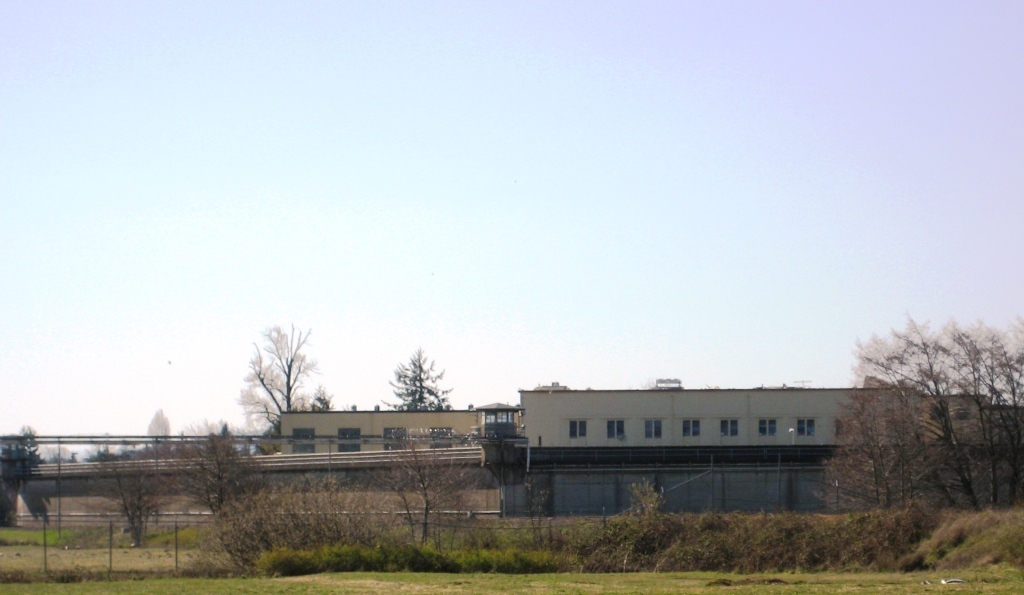
Oregon State Penitentiary (OSP), also known as Oregon State Prison, is a maximum security prison in the northwestern United States in Salem, Oregon. Originally opened in Portland 174 years ago in 1851, it relocated to Salem fifteen years later. The 2,242-capacity prison is the oldest in the state; the all-male facility is operated by the Oregon Department of Corrections (ODOC). OSP contains an intensive management wing, which is being transformed into a psychiatric facility for mentally ill prisoners throughout Oregon.
Prior to the construction of prisons in Oregon, many convicted of crimes were either hanged or pardoned. Oregon State Penitentiary was originally built in Portland in 1851. Operating this facility proved difficult because it spanned two blocks, with a city street running through the middle. In 1859, the facility was leased to private contractors (Robert Newell and L. N. English), who instituted a system of prison labor. This new system led to many escapes.
In 1866, the state officially moved the penitentiary to a 26-acre (11 ha) site in Salem, enclosed by a reinforced concrete wall averaging fourteen feet (4.3 m) in height. The prison also began using a device called the "Gardner shackle" (later called the "Oregon Boot"), a heavy metal device attached to prisoners' legs to impede movement.
Escapes continued at the new facility, despite the wall and the Boot. The most famous of these occurred in 1902, when Harry Tracy and David Merrill killed three guards with a gun. Details about this period can be read in Thirteen Years in Oregon State Penitentiary, a book written by Joseph "Bunko" Kelly. Kelly describes scenes of extreme brutality, particularly floggings, which he recounts happening to white people, black people, Native Americans, and a Chinese "half boy and half woman". He describes negligent doctors and a lack of mental health care, and complains that whiskey drinking affects the behavior of the guards. He also identifies a five-year period in which the warden stopped newspaper deliveries to prevent convicts from learning of pardons. The prison announced in 1904 that it would end the use of flogging, and instead punish prisoners by spraying them with cold water from a garden hose.
The prison experimented briefly in 1917–1918 with an "honor system" in which 130 prisoners were paroled with certain conditions. The prisoners were released into jobs outside the prison during the daytime. After 66 of these absconded, Governor James Withycombe announced that he would find a way for them to work jobs within the prison facility.
In the 1920s, the Penitentiary created a flax plant which employed more than half of its inmates. Inmates worked on construction and in the fields, and were paid $0.50–$1.00 per day. The plant was touted nationally as a way to make the prison financially self-sustaining, and to rehabilitate prisoners by giving them something to do and preparing them to work. In 1925, OSP had the largest flax scutching mill in the world, with 175 workers producing 100–150 tons of flax per day.
With assistance from the Federal Bureau of Education, OSP ran a unique and successful adult education program during the same era. With Prohibition in effect, 80 of the prison's 575 inmates at this time were moonshiners. Nine prisoners were shot in a 1926 riot beginning in the prison cafeteria.
Seven hundred inmates were involved in a riot on August 1, 1936, in response to a court ruling that made it more difficult for prisoners to be released after serving their minimum sentence. The riot was put down by armed guards; one prisoner, Thomas Baughn, was killed and two more were wounded. After being deprived of their weapons (and of food, in punishment), prisoners began to break windows and throw projectiles from their cells. Inmates at OSP attempted a mass escape in December 1951, after receiving weapons from a sympathetic guard. The plan was foiled by an informant, John Edward Ralph, who was quickly transferred to Folsom Prison for his own protection. Unrest continued through 1952 with civil disobedience and more escape attempts. Over 1300 prisoners conducted an eight-day hunger strike in August to protest alleged brutality of a guard named Morris Race. In October 1952, an escape attempt involving armed conflict with guards was suppressed with gunfire. On January 1, 1953, prison officials announced the discovery of an escape tunnel being dug by prisoner Robert Green. The tunnel was 12 feet underground and 50 feet long, reaching within 15 feet of the world outside OSP walls.
Hub AI
Oregon State Penitentiary AI simulator
(@Oregon State Penitentiary_simulator)
Oregon State Penitentiary
Oregon State Penitentiary (OSP), also known as Oregon State Prison, is a maximum security prison in the northwestern United States in Salem, Oregon. Originally opened in Portland 174 years ago in 1851, it relocated to Salem fifteen years later. The 2,242-capacity prison is the oldest in the state; the all-male facility is operated by the Oregon Department of Corrections (ODOC). OSP contains an intensive management wing, which is being transformed into a psychiatric facility for mentally ill prisoners throughout Oregon.
Prior to the construction of prisons in Oregon, many convicted of crimes were either hanged or pardoned. Oregon State Penitentiary was originally built in Portland in 1851. Operating this facility proved difficult because it spanned two blocks, with a city street running through the middle. In 1859, the facility was leased to private contractors (Robert Newell and L. N. English), who instituted a system of prison labor. This new system led to many escapes.
In 1866, the state officially moved the penitentiary to a 26-acre (11 ha) site in Salem, enclosed by a reinforced concrete wall averaging fourteen feet (4.3 m) in height. The prison also began using a device called the "Gardner shackle" (later called the "Oregon Boot"), a heavy metal device attached to prisoners' legs to impede movement.
Escapes continued at the new facility, despite the wall and the Boot. The most famous of these occurred in 1902, when Harry Tracy and David Merrill killed three guards with a gun. Details about this period can be read in Thirteen Years in Oregon State Penitentiary, a book written by Joseph "Bunko" Kelly. Kelly describes scenes of extreme brutality, particularly floggings, which he recounts happening to white people, black people, Native Americans, and a Chinese "half boy and half woman". He describes negligent doctors and a lack of mental health care, and complains that whiskey drinking affects the behavior of the guards. He also identifies a five-year period in which the warden stopped newspaper deliveries to prevent convicts from learning of pardons. The prison announced in 1904 that it would end the use of flogging, and instead punish prisoners by spraying them with cold water from a garden hose.
The prison experimented briefly in 1917–1918 with an "honor system" in which 130 prisoners were paroled with certain conditions. The prisoners were released into jobs outside the prison during the daytime. After 66 of these absconded, Governor James Withycombe announced that he would find a way for them to work jobs within the prison facility.
In the 1920s, the Penitentiary created a flax plant which employed more than half of its inmates. Inmates worked on construction and in the fields, and were paid $0.50–$1.00 per day. The plant was touted nationally as a way to make the prison financially self-sustaining, and to rehabilitate prisoners by giving them something to do and preparing them to work. In 1925, OSP had the largest flax scutching mill in the world, with 175 workers producing 100–150 tons of flax per day.
With assistance from the Federal Bureau of Education, OSP ran a unique and successful adult education program during the same era. With Prohibition in effect, 80 of the prison's 575 inmates at this time were moonshiners. Nine prisoners were shot in a 1926 riot beginning in the prison cafeteria.
Seven hundred inmates were involved in a riot on August 1, 1936, in response to a court ruling that made it more difficult for prisoners to be released after serving their minimum sentence. The riot was put down by armed guards; one prisoner, Thomas Baughn, was killed and two more were wounded. After being deprived of their weapons (and of food, in punishment), prisoners began to break windows and throw projectiles from their cells. Inmates at OSP attempted a mass escape in December 1951, after receiving weapons from a sympathetic guard. The plan was foiled by an informant, John Edward Ralph, who was quickly transferred to Folsom Prison for his own protection. Unrest continued through 1952 with civil disobedience and more escape attempts. Over 1300 prisoners conducted an eight-day hunger strike in August to protest alleged brutality of a guard named Morris Race. In October 1952, an escape attempt involving armed conflict with guards was suppressed with gunfire. On January 1, 1953, prison officials announced the discovery of an escape tunnel being dug by prisoner Robert Green. The tunnel was 12 feet underground and 50 feet long, reaching within 15 feet of the world outside OSP walls.
Recent media