
Recent from talks
Orhan
Knowledge base stats:
Talk channels stats:
Members stats:
Orhan
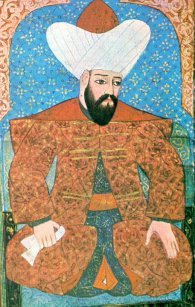
Orhan Ghazi (Ottoman Turkish: اورخان غازی; Turkish: Orhan Gazi, also spelled Orkhan; died 1362) was the second sultan of the Ottoman Empire from 1323/4 to 1362. He was born in Söğüt, as the son of Osman I.
In the early stages of his reign, Orhan focused his energies on conquering most of northwestern Anatolia. The majority of these areas were under Byzantine rule and he won his first battle at Pelekanon against the Byzantine Emperor Andronikos III Palaiologos. Orhan also occupied the lands of the Karasids of Balıkesir and the Ahis of Ankara.
A series of civil wars surrounding the ascension of the nine-year-old Byzantine emperor John V Palaiologos greatly benefited Orhan.[citation needed] In the Byzantine civil war of 1341–1347, the regent John VI Kantakouzenos married his daughter Theodora to Orhan and employed Ottoman warriors against the rival forces of the empress dowager, allowing them to loot Thrace. In the Byzantine civil war of 1352–1357, Kantakouzenos used Ottoman forces against John V, granting them the use of a European fortress at Çimpe around 1352. A major earthquake devastated Gallipoli (modern Gelibolu) two years later, after which Orhan's son, Süleyman Pasha, occupied the town, giving the Ottomans a strong bridgehead into mainland Europe.
According to Muslim scholar Ibn Battuta, Orhan was "the greatest of the Turcoman kings and the richest in wealth, lands, and military forces".
Osman Gazi died in either 1323 or 1324, and Orhan succeeded him. According to Ottoman tradition, when Orhan succeeded his father, he proposed to his brother, Alaeddin, that they should share the emerging empire. The latter refused on the grounds that their father had designated Orhan as sole successor, and that the empire should not be divided. He only accepted as his share the revenues of a single village near Bursa.
According to some authorities, it was in Alaeddin's time, and by his advice, that the Ottomans ceased acting like vassals to the Seljuk ruler: they no longer stamped money with his image or used his name in public prayers. These changes are attributed by others to Osman himself, but the vast majority of the oriental writers concur in attributing to Alaeddin the introduction of laws respecting the costume of the various subjects of the empire, and the creation and funding of a standing army of regular troops. It was by his advice and that of a contemporary Turkish statesman that the celebrated corps of Janissaries was formed, an institution which European writers erroneously [citation needed] fix at a later date, and ascribe to Murad I.
Alaeddin, by his military legislation, may be truly said to have organized victory for the Ottoman dynasty. He organised for the Ottoman Beylik a standing army of regularly paid and disciplined infantry and horses, a full century before Charles VII of France established his fifteen permanent companies of men-at-arms, which are generally regarded as the first modern standing army.
Orhan's predecessors, Ertuğrul and Osman I, had made war at the head of the armed vassals and volunteers. This army rode on horseback to their prince's banner when summoned for each expedition, and were disbanded as soon as the campaign was over. Alaeddin determined to ensure any future success by forming a corps of paid infantry, which was to be kept in constant readiness for service. These troops were called Yaya, or piyade. They were divided into tens, hundreds, and thousands with their commanders. Their pay was high, and their pride soon caused their sovereign some anxiety. Orhan wished to provide a check to them, and he took counsel for this purpose with his brother Alaeddin and Kara Khalil Çandarlı (of House of Candar), who was connected with the royal house by marriage. Çandarlı laid before his master and the vizier a project. Out of this arose the renowned corps of Janissaries, which was considered the scourge of the Balkans and Central Europe for a long time, until it was abolished by Sultan Mahmud II in 1826.
Hub AI
Orhan AI simulator
(@Orhan_simulator)
Orhan
Orhan Ghazi (Ottoman Turkish: اورخان غازی; Turkish: Orhan Gazi, also spelled Orkhan; died 1362) was the second sultan of the Ottoman Empire from 1323/4 to 1362. He was born in Söğüt, as the son of Osman I.
In the early stages of his reign, Orhan focused his energies on conquering most of northwestern Anatolia. The majority of these areas were under Byzantine rule and he won his first battle at Pelekanon against the Byzantine Emperor Andronikos III Palaiologos. Orhan also occupied the lands of the Karasids of Balıkesir and the Ahis of Ankara.
A series of civil wars surrounding the ascension of the nine-year-old Byzantine emperor John V Palaiologos greatly benefited Orhan.[citation needed] In the Byzantine civil war of 1341–1347, the regent John VI Kantakouzenos married his daughter Theodora to Orhan and employed Ottoman warriors against the rival forces of the empress dowager, allowing them to loot Thrace. In the Byzantine civil war of 1352–1357, Kantakouzenos used Ottoman forces against John V, granting them the use of a European fortress at Çimpe around 1352. A major earthquake devastated Gallipoli (modern Gelibolu) two years later, after which Orhan's son, Süleyman Pasha, occupied the town, giving the Ottomans a strong bridgehead into mainland Europe.
According to Muslim scholar Ibn Battuta, Orhan was "the greatest of the Turcoman kings and the richest in wealth, lands, and military forces".
Osman Gazi died in either 1323 or 1324, and Orhan succeeded him. According to Ottoman tradition, when Orhan succeeded his father, he proposed to his brother, Alaeddin, that they should share the emerging empire. The latter refused on the grounds that their father had designated Orhan as sole successor, and that the empire should not be divided. He only accepted as his share the revenues of a single village near Bursa.
According to some authorities, it was in Alaeddin's time, and by his advice, that the Ottomans ceased acting like vassals to the Seljuk ruler: they no longer stamped money with his image or used his name in public prayers. These changes are attributed by others to Osman himself, but the vast majority of the oriental writers concur in attributing to Alaeddin the introduction of laws respecting the costume of the various subjects of the empire, and the creation and funding of a standing army of regular troops. It was by his advice and that of a contemporary Turkish statesman that the celebrated corps of Janissaries was formed, an institution which European writers erroneously [citation needed] fix at a later date, and ascribe to Murad I.
Alaeddin, by his military legislation, may be truly said to have organized victory for the Ottoman dynasty. He organised for the Ottoman Beylik a standing army of regularly paid and disciplined infantry and horses, a full century before Charles VII of France established his fifteen permanent companies of men-at-arms, which are generally regarded as the first modern standing army.
Orhan's predecessors, Ertuğrul and Osman I, had made war at the head of the armed vassals and volunteers. This army rode on horseback to their prince's banner when summoned for each expedition, and were disbanded as soon as the campaign was over. Alaeddin determined to ensure any future success by forming a corps of paid infantry, which was to be kept in constant readiness for service. These troops were called Yaya, or piyade. They were divided into tens, hundreds, and thousands with their commanders. Their pay was high, and their pride soon caused their sovereign some anxiety. Orhan wished to provide a check to them, and he took counsel for this purpose with his brother Alaeddin and Kara Khalil Çandarlı (of House of Candar), who was connected with the royal house by marriage. Çandarlı laid before his master and the vizier a project. Out of this arose the renowned corps of Janissaries, which was considered the scourge of the Balkans and Central Europe for a long time, until it was abolished by Sultan Mahmud II in 1826.
Recent media