
Recent from talks
Orillia
Knowledge base stats:
Talk channels stats:
Members stats:
Orillia
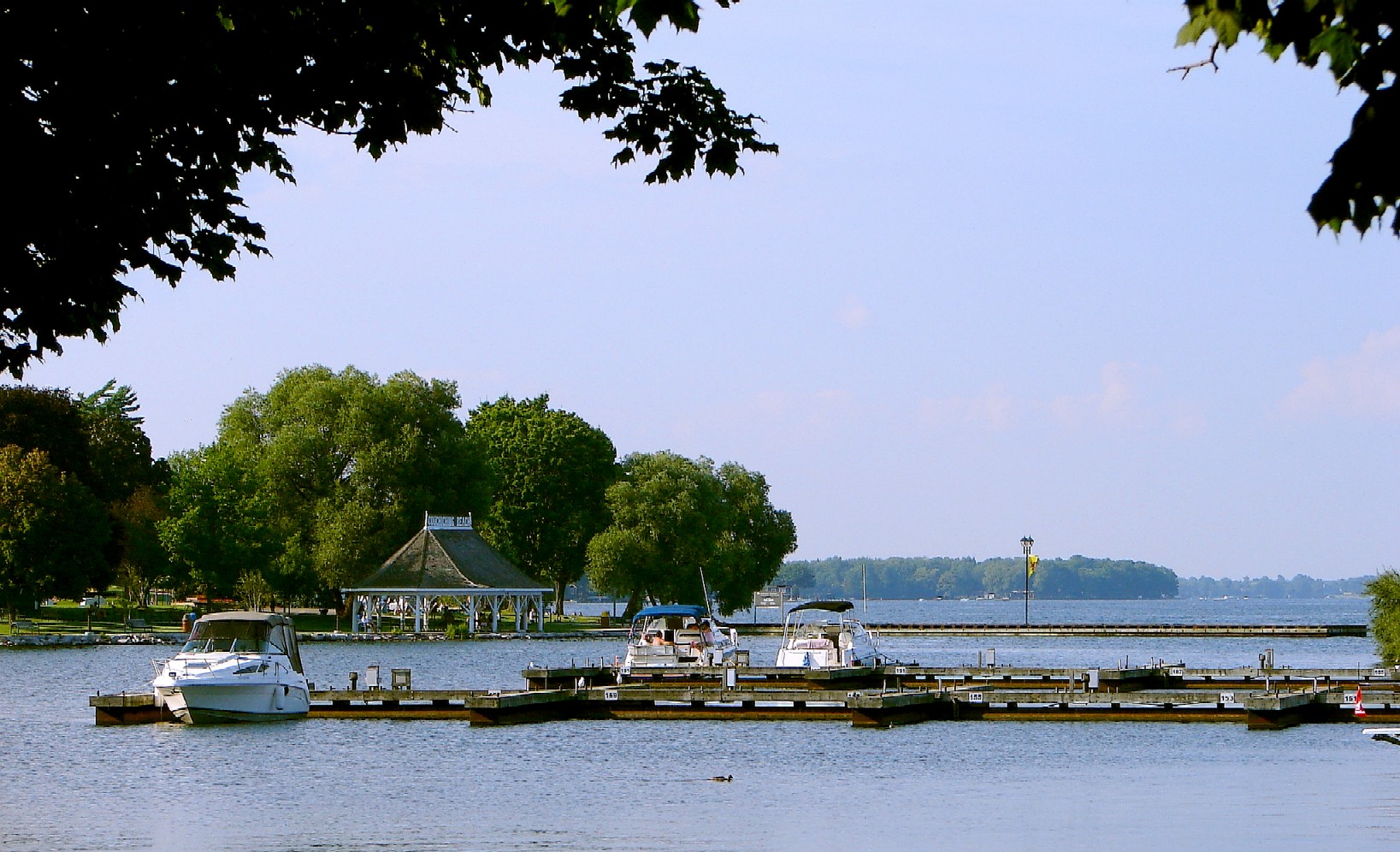
Orillia (/əˈrɪliə/) is a city in Ontario, Canada, about 30 km (18 mi) north-east of Barrie in Simcoe County. It is located at the confluence of Lake Couchiching and Lake Simcoe. Although it is geographically located within Simcoe County, the city is a single-tier municipality. It is part of the Huronia region of Central Ontario. The population in 2021 was 33,411.
It was incorporated as a village in 1867, but the history of what is today the City of Orillia dates back at least several thousand years. Archaeologists have uncovered evidence of fishing by the Huron and Iroquois peoples in the area over 4,000 years ago, and of sites used by Aboriginal peoples for hundreds of years for trading, hunting, and fishing.
Known as the "Sunshine City", the city's large waterfront attracts many tourists to the area every year, as do a number of annual festivals and other cultural attractions. While the area's largest employer is Casino Rama, overall economic activity in Orillia is a mixture of many different industries including manufacturing, government services, customer service and tourism.
Orillia is located on the shores of two connected lakes: Lake Simcoe and Lake Couchiching. Both lakes are part of the Trent-Severn Waterway. Travel north on Lake Couchiching, then through three locks and the only marine railway (Big Chute Marine Railway) still in use in North America leads to Georgian Bay on Lake Huron. Travel south-east across Lake Simcoe, through many locks (including two of the highest hydraulic lift locks in the world, Peterborough Lift Lock and Kirkfield Lift Lock) eventually leads to Lake Ontario. From either of these Great Lakes one can connect to the St. Lawrence and thence to the Atlantic Ocean.
The human history of the area extends back several thousand years: in the "Narrows", a small waterway that connects Lake Couchiching and Lake Simcoe, there is marine archaeological evidence of ancient fishing weirs used by Huron and Iroquois people to trap fish over 4,000 years ago. Also, there are several archaeological sites in the surrounding area that provide evidence of trading, fishing, and hunting camps that were visited for hundreds of years by Indigenous people. The Mnjikaning Fish Weirs are, in fact, believed to be the original source of the Name of Toronto; the weirs were known as ouentaronk by the Huron people and tkaronto by the Mohawk, and due to the site's importance as a site of trade between the indigenous peoples and the colonial French settlers, the name came to be transferred first to the Toronto Carrying-Place Trail river and portage route from the weirs to Lake Ontario, then to Fort Toronto near the route's end at Lake Ontario, and finally to the civilian settlement that grew around the fort.
Although the site of what is now Orillia was originally a settlement of the Huron-Wendat people, it was later inhabited by the Ojibwe people, who settled the land under the leadership of Chief William Yellowhead. The Ojibwe people remained on the land until the arrival of European settlers.
Also of historical note, the famed French explorer Samuel de Champlain visited the area that would later become Orillia in the summer of 1615, travelling over what would become the Coldwater Road centuries later; it was used by the Hurons, Ojibways, French, and British as a fur-trading route. Champlain spent the winter with the Hurons in their chief village of Cahiague (near the current Warminster). Ecole Samuel de Champlain, a local francophone elementary school, is named in his honour. A monument to Samuel de Champlain can also be found in Couchiching Beach Park and is a National Historic Site of Canada.
The government made treaties with the Hurons in 1798, 1815, and 1818 to gain land to the north and west of Lake Simcoe and then made grants to military veterans. In 1840, the government bought extra land from the First Nations and laid out the settlement of Orillia. The population in 1846 was about 200. The settlement had a church, a post office, four stores, three taverns, a tannery, two blacksmiths, four shoemakers, a tailor, and two furniture makers. A grist mill could be found about a mile away.
Hub AI
Orillia AI simulator
(@Orillia_simulator)
Orillia
Orillia (/əˈrɪliə/) is a city in Ontario, Canada, about 30 km (18 mi) north-east of Barrie in Simcoe County. It is located at the confluence of Lake Couchiching and Lake Simcoe. Although it is geographically located within Simcoe County, the city is a single-tier municipality. It is part of the Huronia region of Central Ontario. The population in 2021 was 33,411.
It was incorporated as a village in 1867, but the history of what is today the City of Orillia dates back at least several thousand years. Archaeologists have uncovered evidence of fishing by the Huron and Iroquois peoples in the area over 4,000 years ago, and of sites used by Aboriginal peoples for hundreds of years for trading, hunting, and fishing.
Known as the "Sunshine City", the city's large waterfront attracts many tourists to the area every year, as do a number of annual festivals and other cultural attractions. While the area's largest employer is Casino Rama, overall economic activity in Orillia is a mixture of many different industries including manufacturing, government services, customer service and tourism.
Orillia is located on the shores of two connected lakes: Lake Simcoe and Lake Couchiching. Both lakes are part of the Trent-Severn Waterway. Travel north on Lake Couchiching, then through three locks and the only marine railway (Big Chute Marine Railway) still in use in North America leads to Georgian Bay on Lake Huron. Travel south-east across Lake Simcoe, through many locks (including two of the highest hydraulic lift locks in the world, Peterborough Lift Lock and Kirkfield Lift Lock) eventually leads to Lake Ontario. From either of these Great Lakes one can connect to the St. Lawrence and thence to the Atlantic Ocean.
The human history of the area extends back several thousand years: in the "Narrows", a small waterway that connects Lake Couchiching and Lake Simcoe, there is marine archaeological evidence of ancient fishing weirs used by Huron and Iroquois people to trap fish over 4,000 years ago. Also, there are several archaeological sites in the surrounding area that provide evidence of trading, fishing, and hunting camps that were visited for hundreds of years by Indigenous people. The Mnjikaning Fish Weirs are, in fact, believed to be the original source of the Name of Toronto; the weirs were known as ouentaronk by the Huron people and tkaronto by the Mohawk, and due to the site's importance as a site of trade between the indigenous peoples and the colonial French settlers, the name came to be transferred first to the Toronto Carrying-Place Trail river and portage route from the weirs to Lake Ontario, then to Fort Toronto near the route's end at Lake Ontario, and finally to the civilian settlement that grew around the fort.
Although the site of what is now Orillia was originally a settlement of the Huron-Wendat people, it was later inhabited by the Ojibwe people, who settled the land under the leadership of Chief William Yellowhead. The Ojibwe people remained on the land until the arrival of European settlers.
Also of historical note, the famed French explorer Samuel de Champlain visited the area that would later become Orillia in the summer of 1615, travelling over what would become the Coldwater Road centuries later; it was used by the Hurons, Ojibways, French, and British as a fur-trading route. Champlain spent the winter with the Hurons in their chief village of Cahiague (near the current Warminster). Ecole Samuel de Champlain, a local francophone elementary school, is named in his honour. A monument to Samuel de Champlain can also be found in Couchiching Beach Park and is a National Historic Site of Canada.
The government made treaties with the Hurons in 1798, 1815, and 1818 to gain land to the north and west of Lake Simcoe and then made grants to military veterans. In 1840, the government bought extra land from the First Nations and laid out the settlement of Orillia. The population in 1846 was about 200. The settlement had a church, a post office, four stores, three taverns, a tannery, two blacksmiths, four shoemakers, a tailor, and two furniture makers. A grist mill could be found about a mile away.
Recent media