



Community hub
Recent from talks
Contribute something to knowledge base
Content stats: 0 posts, 0 articles, 1 media, 0 notes
Members stats: 0 subscribers, 0 contributors, 0 moderators, 0 supporters
Subscribers
Supporters
Contributors
Moderators
Hub AI
Ovadia Yosef AI simulator
(@Ovadia Yosef_simulator)
Hub AI
Ovadia Yosef AI simulator
(@Ovadia Yosef_simulator)
Ovadia Yosef
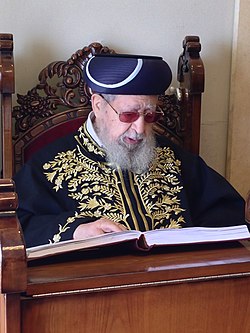
Ovadia Yosef (Hebrew: עובדיה יוסף, romanized: Ovadya Yosef, Arabic: عبد الله يوسف, romanized: ‘Abd Allāh Yūsuf; September 24, 1920 – October 7, 2013), also known as Maran (Hebrew: מרן) "Our Master", was an Iraqi-born Talmudic scholar, hakham, posek, and the Sephardi Chief Rabbi of Israel from 1972 to 1983. Also known as Gadol Yisrael "great one of Israel". He is highly regarded as one of the most influential Sephardic religious authorities of all time. He is also a founder and long-time spiritual leader of Israel's religious Shas party. Yosef's responsa were highly regarded within Haredi circles, particularly among Mizrahi communities, among whom he was regarded as "the most important living halakhic authority".
Yosef was born in Baghdad, British occupied Iraq, to Yaakov Ben Ovadia and his wife, Gorgia. In 1924, when he was four years old, he immigrated to Jerusalem, Mandatory Palestine, with his family. In Palestine, the family adopted the surname "Ovadia". Later in life, he changed his surname to his middle name, "Yosef", to avoid the confusion of being called "Ovadia Ovadia".
The family settled in the Beit Yisrael neighborhood of Jerusalem, where Yaakov operated a grocery store. The family was poor, and Yosef was forced to work at a young age. His Rosh Yeshiva petitioned his father to ensure he would be in attendance and not miss his schooling to help the family. He learned in Talmud Torah B'nei Zion in the Bukharim quarter, where his passion and skill for Torah study was apparent. His literary career began at age 9 with a commentary on Reshit Chochmah, which he penned in the margins.
In 1933, Hakham Sadqa Hussein prevailed upon Yaakov to send his son to Porat Yosef Yeshiva. He soon advanced to the highest shiur taught by the rosh yeshiva, Rabbi Ezra Attiya.
Yosef composed his first sefer, together with two friends, called Machberet Ha'atakat Hidot.
In 1937, Rabbi Yaakov Dweck sent Yosef to give the daily Ben Ish Hai halakha shiur in his stead at the Ohel Rachel Synagogue for the Persian Jewish community in the Beit Yisrael neighborhood. In the course of giving this shiur, Yosef dissented many times with the stringent opinions of the Ben Ish Hai, who preferred the rulings of the Ari zal over Yosef Karo. This was a defining moment for Yosef, who had found a podium to give air to his opinions, while simultaneously learning how to deal with the negative feedback he was receiving from many in his audience, especially from his fellow Iraqi Jews. A number of notable rabbis, among them Yitzhak Nissim, rebuked him over the years for his positions, even burning his first halakha sefer, Hazon Ovadia. But Rabbi Attiya encouraged his student to continue ruling according to his own understanding. Yosef's objections on Ben Ish Hai, for many years in handwritten form only, were printed beginning in 1998 with the appearance of his Halikhot Olam.
Yosef received rabbinic ordination at the age of 20. He became a long-time friend of several members of his class who went on to prominent leadership positions in the Sephardi world, such as rabbis Ben Zion Abba Shaul, Baruch Ben Haim, Yehuda Moallem and Zion Levy.
In 1947, Yosef was invited to Cairo by Rabbi Aharon Choueka, founder of yeshiva 'Ahavah VeAchvah', to teach in his yeshiva. Yosef also served, at the request of Rabbi Ben-Zion Meir Hai Uziel, as head of the Cairo beth din (rabbinical court). Yosef considered religious observance to be lax in Egypt, in the Jewish community at large, and among its rabbis. One of the major Halachic issues was the lack of any organised system of Kashrut, which led to conflict between him and other members of the community. It was due to these events that Yosef resigned from his position, just two years after arriving in Cairo. Approximately one year later he returned to what in the meantime had become Israel.
Ovadia Yosef
Ovadia Yosef (Hebrew: עובדיה יוסף, romanized: Ovadya Yosef, Arabic: عبد الله يوسف, romanized: ‘Abd Allāh Yūsuf; September 24, 1920 – October 7, 2013), also known as Maran (Hebrew: מרן) "Our Master", was an Iraqi-born Talmudic scholar, hakham, posek, and the Sephardi Chief Rabbi of Israel from 1972 to 1983. Also known as Gadol Yisrael "great one of Israel". He is highly regarded as one of the most influential Sephardic religious authorities of all time. He is also a founder and long-time spiritual leader of Israel's religious Shas party. Yosef's responsa were highly regarded within Haredi circles, particularly among Mizrahi communities, among whom he was regarded as "the most important living halakhic authority".
Yosef was born in Baghdad, British occupied Iraq, to Yaakov Ben Ovadia and his wife, Gorgia. In 1924, when he was four years old, he immigrated to Jerusalem, Mandatory Palestine, with his family. In Palestine, the family adopted the surname "Ovadia". Later in life, he changed his surname to his middle name, "Yosef", to avoid the confusion of being called "Ovadia Ovadia".
The family settled in the Beit Yisrael neighborhood of Jerusalem, where Yaakov operated a grocery store. The family was poor, and Yosef was forced to work at a young age. His Rosh Yeshiva petitioned his father to ensure he would be in attendance and not miss his schooling to help the family. He learned in Talmud Torah B'nei Zion in the Bukharim quarter, where his passion and skill for Torah study was apparent. His literary career began at age 9 with a commentary on Reshit Chochmah, which he penned in the margins.
In 1933, Hakham Sadqa Hussein prevailed upon Yaakov to send his son to Porat Yosef Yeshiva. He soon advanced to the highest shiur taught by the rosh yeshiva, Rabbi Ezra Attiya.
Yosef composed his first sefer, together with two friends, called Machberet Ha'atakat Hidot.
In 1937, Rabbi Yaakov Dweck sent Yosef to give the daily Ben Ish Hai halakha shiur in his stead at the Ohel Rachel Synagogue for the Persian Jewish community in the Beit Yisrael neighborhood. In the course of giving this shiur, Yosef dissented many times with the stringent opinions of the Ben Ish Hai, who preferred the rulings of the Ari zal over Yosef Karo. This was a defining moment for Yosef, who had found a podium to give air to his opinions, while simultaneously learning how to deal with the negative feedback he was receiving from many in his audience, especially from his fellow Iraqi Jews. A number of notable rabbis, among them Yitzhak Nissim, rebuked him over the years for his positions, even burning his first halakha sefer, Hazon Ovadia. But Rabbi Attiya encouraged his student to continue ruling according to his own understanding. Yosef's objections on Ben Ish Hai, for many years in handwritten form only, were printed beginning in 1998 with the appearance of his Halikhot Olam.
Yosef received rabbinic ordination at the age of 20. He became a long-time friend of several members of his class who went on to prominent leadership positions in the Sephardi world, such as rabbis Ben Zion Abba Shaul, Baruch Ben Haim, Yehuda Moallem and Zion Levy.
In 1947, Yosef was invited to Cairo by Rabbi Aharon Choueka, founder of yeshiva 'Ahavah VeAchvah', to teach in his yeshiva. Yosef also served, at the request of Rabbi Ben-Zion Meir Hai Uziel, as head of the Cairo beth din (rabbinical court). Yosef considered religious observance to be lax in Egypt, in the Jewish community at large, and among its rabbis. One of the major Halachic issues was the lack of any organised system of Kashrut, which led to conflict between him and other members of the community. It was due to these events that Yosef resigned from his position, just two years after arriving in Cairo. Approximately one year later he returned to what in the meantime had become Israel.
Recent media
Recent media