Hubbry Logo
P107P107Main
Open search
P107
Community hub
P107
logo
8 pages, 0 posts
0 subscribers
Be the first to start a discussion here.
P107
P107
from Wikipedia

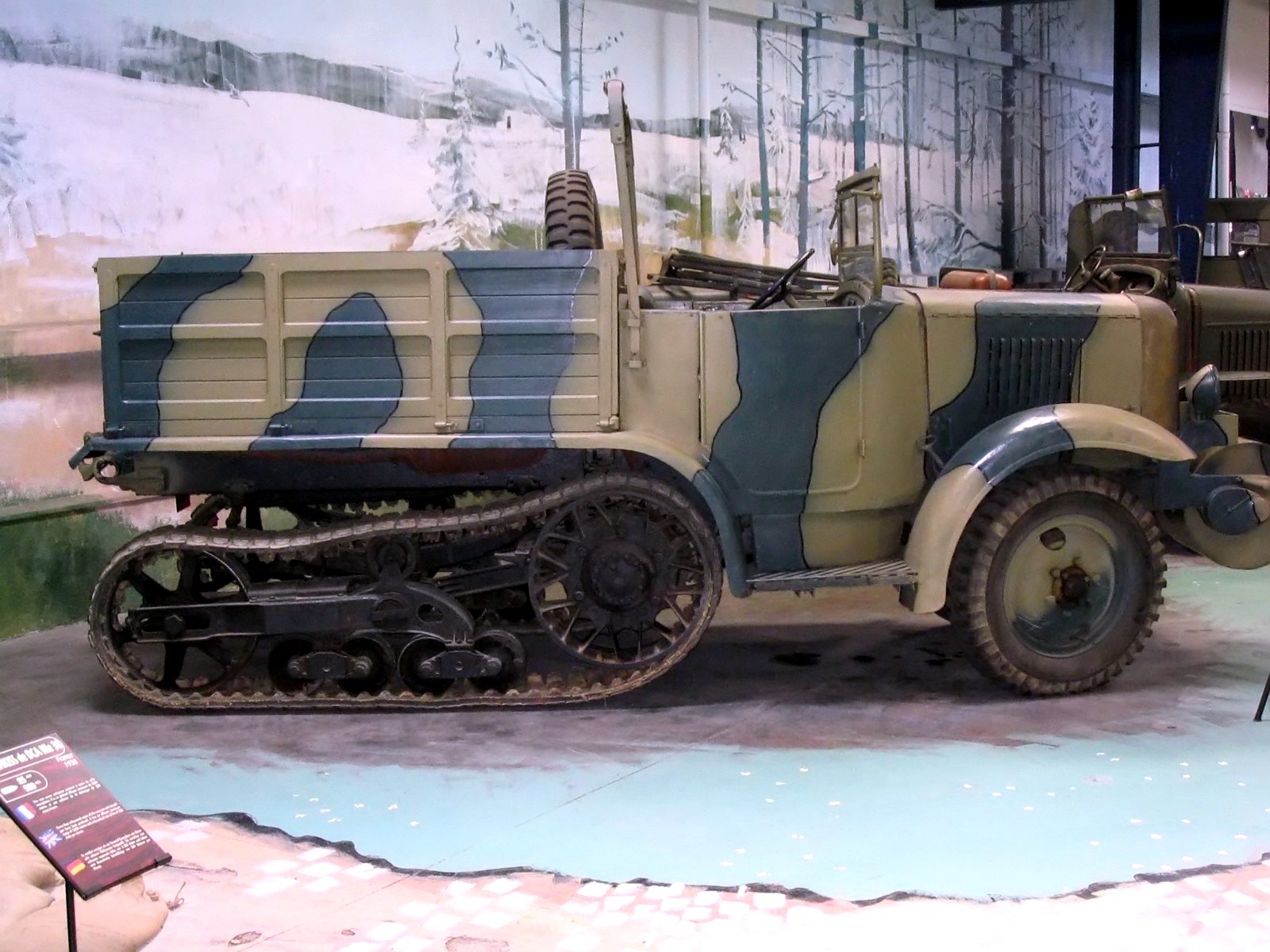
The P107 was a World War II French half-track.

Key Information

History

[edit]

In the 1920s and 1930s Citroën developed a long line of half-tracks based on the Kégresse patent. In 1934, the company introduced its newest and more powerful P107 model as a successor to the Citroën-Kégresse P17. But before mass production could take place, Citroën went bankrupt and its new owner, Michelin, chose to focus on the civilian markets. Unic was therefore able to acquire a license for the Kégresse patent, and took over the production of the P107.[2] From 1937, the vehicles built by Unic received various designations, such as P 107 B, P 107 BU or P 107 U1.[3]

The first order was made in 1935.[4] Two main variants of the P107 were accepted in French military service: a light prime mover for the 75 mm, short 105 mm Bourges and short 105 mm Schneider guns,[5] and a platform cargo transport for engineer units.[6] A third version was also delivered to transmission units.[7] 1,274 examples were delivered before the war[4] and 1,896 more were delivered until June 1940.[8]

Foreign use

[edit]

60 P 107s were ordered by Poland on 27 August 1939 but on 22 September they were recalled to France while en route to Poland.[1]

During World War II, the Germans used these captured half-tracks extensively under the name leichter Zugkraftwagen 37 U304(f) to tow various anti-tank guns.[9] With German half-tracks in short supply, Major Alfred Becker of the 21. Panzerdivision (which in 1944 was stationed near Caen in Normandy) suggested converting captured French vehicles. He ordered the conversion of available Unic half-tracks into leichter Schützenpanzerwagen (light armoured personnel carriers).[9]

References

[edit]

Sources

[edit]
  • Vauvillier, François; Touraine, Jean-Michel (1992). L'automobile sous l'uniforme 1939-40 (in French). Massin. ISBN 2-7072-0197-9.
[edit]
Revisions and contributorsEdit on WikipediaRead on Wikipedia
from Grokipedia
The Unic P107 was a French half-track vehicle developed in the 1930s as a light artillery tractor, primarily designed to tow anti-tank guns and field artillery pieces while also serving as a troop transport and cargo carrier. Originating from Citroën's P17 prototype in 1934, which incorporated the innovative Kégresse rubber-track system for improved off-road mobility, the design was acquired by the Unic truck manufacturer following Citroën's bankruptcy later that year. Production of the P107 commenced in the late 1930s, with approximately 3,300 units built before the fall of France in 1940. It featured a Unic P39 four-cylinder liquid-cooled gasoline engine producing 62 horsepower, enabling a top speed of 45 km/h (28 mph) on roads. The vehicle's dimensions measured roughly 4.85 meters in length, 1.8 meters in width, and 2.3 meters in height, with a curb weight of around 4,000 kg, accommodating a crew of 5 to 7 personnel. During World War II, the French Army employed the P107 extensively from 1939 onward to haul 75 mm and 105 mm artillery, leveraging its half-track configuration for enhanced traction in varied terrain. Following the German invasion in 1940, large numbers were captured and redesignated as the Leichter Zugkraftwagen U 304(f), repurposed by the Wehrmacht for logistics, engineering tasks, and even armored conversions mounting anti-aircraft guns. Variants included open-top cargo models for equipment transport and specialized engineering vehicles, underscoring its versatility in both French and German service until the war's end. Today, surviving examples are preserved in museums, such as the Musée des Blindés in Saumur, France, highlighting its role in interwar and wartime mechanized operations.

Development

Origins

The development of the P107 half-track originated in 1934, when began designing it as a light to meet the French Army's requirements for enhanced cross-country mobility in towing operations. This initiative drew directly from 's extensive experience with vehicles, which had evolved since the by adapting civilian truck chassis—such as the P17 series—for military purposes through integration of the Kégresse rubber-band track system. The French Army specified the P107 for towing light artillery, including 75 mm field guns and short-barreled 105 mm howitzers, emphasizing its role as a versatile prime mover capable of navigating rough terrain. Initial prototypes were constructed and tested in 1934 to assess their performance in cross-country conditions, validating the design's suitability for artillery support and engineering tasks. Citroën's sudden bankruptcy later that year prompted the handover of the P107 project, including the Kégresse track patent, to Unic under the oversight of Michelin, Citroën's new parent company; however, the core conceptual framework had already been finalized by Citroën's original engineering team.

Design features

The Unic P107 employed a hybrid half-track system, integrating conventional steerable front wheels with Kégresse rubber-band tracks fitted to the rear axle, which provided superior traction over soft or uneven terrain while preserving road-handling capabilities typical of wheeled vehicles. This configuration, rooted in Adolphe Kégresse's patented flexible track design, allowed the vehicle to navigate muddy or sandy conditions more effectively than fully wheeled trucks, making it suitable for towing artillery in varied environments. The vehicle's chassis was developed as a successor to Citroën's P17 half-track prototype and adapted for production by Unic, featuring an open-top cargo body that accommodated a crew of five to seven personnel along with provisions for equipment storage and a rear towing hook to haul light anti-tank guns or field artillery pieces. The suspension incorporated leaf springs on the front wheels for stability on paved surfaces and articulated rubber tracks at the rear, collectively enabling a maximum road speed of 45 km/h despite the added complexity of the half-track setup. This design choice reflected the vehicle's primary role as an unarmored prime mover, balancing mobility and utility over heavy protection.

Production

Manufacturer and process

Following Citroën's bankruptcy in 1934, production rights for the P107 half-track were acquired by Unic Automobiles Industriels, which obtained a manufacturing license from Citroën's new parent company, Michelin. Unic utilized its existing facilities originally designed for the P39 truck at the company's plant in Puteaux, near Paris, to adapt the assembly line for the half-track's requirements. The assembly process at Unic involved fabricating the body from stamped steel panels for durability and ease of production, followed by the attachment of rubber-based continuous tracks produced under license from Kégresse patentees. These tracks, featuring a flexible rubber belt reinforced with metal cables, were integrated with the front wheels to enable the vehicle's half-track configuration. The powertrain incorporated a Delahaye four-cylinder gasoline engine, with components assembled to ensure compatibility with the chassis derived from the Citroën prototype. During the pre-war buildup in the late 1930s, Unic implemented quality control measures that included rigorous field trials to verify the P107's performance in muddy and soft terrain conditions prevalent in Western Europe. These tests focused on track adhesion, suspension reliability, and overall mobility under load, contributing to refinements in the vehicle's design before full-scale deployment.

Output figures

Production of the Unic P107 totaled 3,276 units between 1935 and 1940, with the bulk manufactured by Unic following Citroën's bankruptcy. Of this number, 1,274 vehicles were completed in the pre-war period from 1935 to 1939, while an additional 1,896 were delivered before the French armistice in June 1940. The French Army placed its initial order for the P107 in 1935, which was subsequently expanded amid accelerated rearmament in the late 1930s. In 1939, Poland ordered 60 units on August 27, but these were recalled to France en route and never delivered. The two main variants were configured as prime movers for light artillery, such as 75 mm and 105 mm guns, and as cargo transports. Production ceased abruptly after the German occupation in June 1940, with several unfinished chassis seized by occupying forces for potential completion or repurposing.

Specifications

Dimensions and capacity

The Unic P107 half-track measured 4.85 meters in length, 1.80 meters in width, and 2.28 meters in height to the top of the cab. Its empty weight was 3,500 kg, while the gross vehicle weight reached 5,000 kg when fully loaded. The standard configuration accommodated a crew of two—a driver and a commander—along with up to five passengers or ammunition handlers in the open rear compartment. The vehicle's payload capacity was up to 1,500 kg for general cargo transport. In its primary role as an artillery prime mover, it provided towing capacity for light field guns such as the 75 mm Canon de 75 modèle 1897 (approximately 1,140 kg in firing position) and short-barreled 105 mm howitzers.

Engine and performance

The Unic P107 was powered by a P39 liquid-cooled, 4-cylinder inline petrol engine with a displacement of 3,450 cc, producing 62 hp at 3,200 rpm. This engine featured a carburetor and overhead valve (OHV) configuration, providing reliable propulsion for its artillery towing and engineering roles. The fuel system included a 160-liter tank, enabling an operational range of approximately 200 km on roads under typical loads. The vehicle achieved a top speed of 45 km/h on paved surfaces, suitable for accompanying motorized infantry units. The drivetrain employed a 4x4 configuration with steered front wheels and rear half-tracks based on the Kégresse design, which enhanced traction in soft terrain without compromising road mobility. Power was transmitted through a manual 4-speed gearbox with one reverse gear, supplemented by a 2-speed auxiliary transmission for varied conditions. Certain variants included an optional winch for self-recovery in challenging off-road environments.

Operational history

French service in World War II

The Unic P107 half-track served primarily as a light artillery tractor within French infantry divisions during the initial phases of World War II. It was tasked with towing key field artillery pieces, including the Canon de 75 modèle 1897 and 105 mm howitzers, enhancing the mobility of gun batteries during the Phoney War period from September 1939 to May 1940. This role proved essential for repositioning artillery in defensive positions along the Maginot Line and border sectors, where the vehicle's half-track design offered superior cross-country performance compared to wheeled alternatives. In the Battle of France from May to June 1940, P107 units supported rapid retreats through the Ardennes forest and along the Loire Valley, hauling artillery amid the chaos of the German Blitzkrieg. However, they incurred heavy losses from relentless Luftwaffe air attacks, which targeted slow-moving columns, as well as mechanical failures caused by overloaded suspensions and deep mud that bogged down the tracks. By the campaign's end, the vehicle's vulnerability in open terrain contributed to the abandonment of many units during the French Army's disorganized withdrawal. Over 3,000 P107s had entered production by 1940, enabling their widespread distribution to artillery regiments for frontline duties. Operationally, the half-track faced challenges from rapid wear on its rubber tracks, leading to frequent breakdowns under sustained use, though crews appreciated its agility and low silhouette for navigating uneven ground. After the June 1940 armistice, a limited number continued in service with Free French forces in North Africa, drawn from Vichy stocks and Allied supplies.

German capture and use

Following the Franco-German armistice in June 1940, Nazi Germany captured a substantial portion of the French Army's Unic P107 half-track fleet, with total production reaching 3,276 units by that time, the majority of which were impressed into Wehrmacht service. These vehicles were redesignated as the leichter Zugkraftwagen U304(f) and repurposed primarily for logistics and towing roles within German armored and motorized units. The U304(f) saw deployment on both the Eastern and Western Fronts, where it towed light anti-tank guns such as the 3.7 cm Pak 36 and supported engineer operations, including in the Normandy campaign of 1944 and the Ardennes Offensive later that year. It was integrated into several Panzer divisions, notably the 21st Panzer Division, which employed dozens in its panzergrenadier regiments for troop transport and fire support during the Normandy battles around Caen and the Falaise Pocket. Some examples were modified by Baustab Becker with added armor plating and mounted weapons, including the 20 mm Flak 38 for anti-aircraft duties, enhancing their versatility in combined arms operations. By 1944, the U304(f) began to be phased out in favor of more standardized German half-tracks like the Sd.Kfz. 10, as production shortages eased and maintenance issues with captured foreign vehicles mounted; many were abandoned during retreats on both fronts, contributing to heavy overall attrition rates among the captured stock.

Variants

Artillery prime mover

The Unic P107 half-track was primarily configured as an artillery prime mover, serving as the standard towing vehicle for light French field artillery pieces during the late 1930s and early World War II era. It featured a rear-mounted towing hook and pintle hitch designed to haul guns such as the Canon de 75 modèle 1897 field gun, weighing approximately 1,970 kg in travel configuration, and the Canon de 105 modèle 1913 Schneider howitzer, weighing about 2,650 kg when prepared for transport. These capabilities made it well-suited for mobile artillery units, enabling the rapid deployment of direct and indirect fire support in dynamic battlefield conditions. In this role, the P107 included provisions for the gun detachment, accommodating a crew of 7 (driver plus 2 up front and 5 in the rear compartment), along with space for ammunition transport to sustain ongoing operations. The open-topped rear body allowed for secure stowage of shells and equipment, ensuring the vehicle could support a full artillery section without compromising mobility across varied terrain thanks to its Kégresse rubber-band track system. Specific adaptations for towing included a reinforced chassis to handle the stresses of pulling artillery over rough ground. This configuration emphasized reliability and versatility, with the vehicle's 4.85-meter length and 1.80-meter width providing a compact footprint for integration into mechanized formations.

Cargo transport

The cargo transport variant of the P107 half-track was designed to support general logistics and engineer operations, providing versatile rear-area mobility for the French Army during World War II. This adaptation utilized the vehicle's robust base chassis to carry essential supplies and personnel, distinguishing it from more specialized towing roles. The open cargo bed incorporated side benches to seat up to five troops, allowing for the simultaneous transport of personnel and equipment, or alternatively, up to 1,000 kg of supplies such as tools for bridging or mine-laying units. An engineer-specific sub-variant further enhanced this capability by including provisions for specialized transmission gear, enabling the carriage of signal corps equipment or pontoon bridge components to support combat engineering tasks. Load securing was facilitated by integrated tie-down points throughout the bed, with optional canvas covers available to provide weather protection for cargo and occupants during extended marches. These units were primarily allocated to rear-echelon supply functions within divisions to ensure timely delivery of materials away from forward combat zones.

Preserved examples

In France

Several preserved examples of the Unic P107 half-track are located in France, primarily in public museums that maintain them as historical artifacts from World War II. One unrestored example is housed at the Musée des Blindés in Saumur, preserved in its original French Army configuration as an artillery tractor (BU variant). This vehicle exemplifies the P107's role in towing light field guns and transporting crews, with its Kégresse rubber-band tracks and Delahaye engine intact but showing period-appropriate wear. Another significant specimen is on display at the MM Park France museum in La Wantzenau, near Strasbourg, configured as the German leichter Zugkraftwagen U304(f) anti-aircraft variant. This P107-based vehicle has been restored to its 1944 operational condition, complete with a mounted 20 mm Flak 38 cannon for self-propelled air defense duties after capture by German forces. In private collections, two SPW U304(f) examples modified by "Commando Becker"—one with an armoured rear hull and 2 cm Flak, the other fully armoured as a radio/command vehicle from the 21st Panzer Division—are preserved.

Outside France

A captured and German-modified Unic P107, designated as the U304(f) variant, is preserved and displayed at the Museum of the Great Patriotic War in Victory Park, Moscow, Russia, serving as a trophy from the Eastern Front campaigns. Another U304(f) example, originally a standard Unic P107 from Norway that was captured and repurposed by German forces with added Flak armament, is exhibited at the Royal Tank Museum in Amman, Jordan; it was acquired by the museum after years in a private UK collection. In the United Kingdom, a unrestored wreck of a transport-configured Unic P107, recovered from a farm roadside in Normandy where it was abandoned in 1944, is maintained in the private Rex & Rod Cadman collection, with original components preserved for future restoration efforts. No confirmed preserved Unic P107 examples exist in public museums in the United States or the United Kingdom, though the vehicle occasionally features in traveling exhibits loaned from European institutions. Although Poland ordered 60 Unic P107 half-tracks in August 1939 for its armed forces, the shipment was recalled en route amid the outbreak of war, and no verified survivals from this order are documented in Polish collections. The Unic P107 maintains ongoing international appeal in historical reenactments and media, appearing in World War II documentaries like the 2005 German production Hundert Jahre Deutschland, where authentic or restored examples illustrate captured French equipment in Wehrmacht service. Replicas have also been fabricated to enhance accuracy in educational exhibits and film productions depicting early half-track designs.

References

Add your contribution
Related Hubs
User Avatar
No comments yet.