



Community hub
Recent from talks
Knowledge base stats:
Talk channels stats:
Members stats:
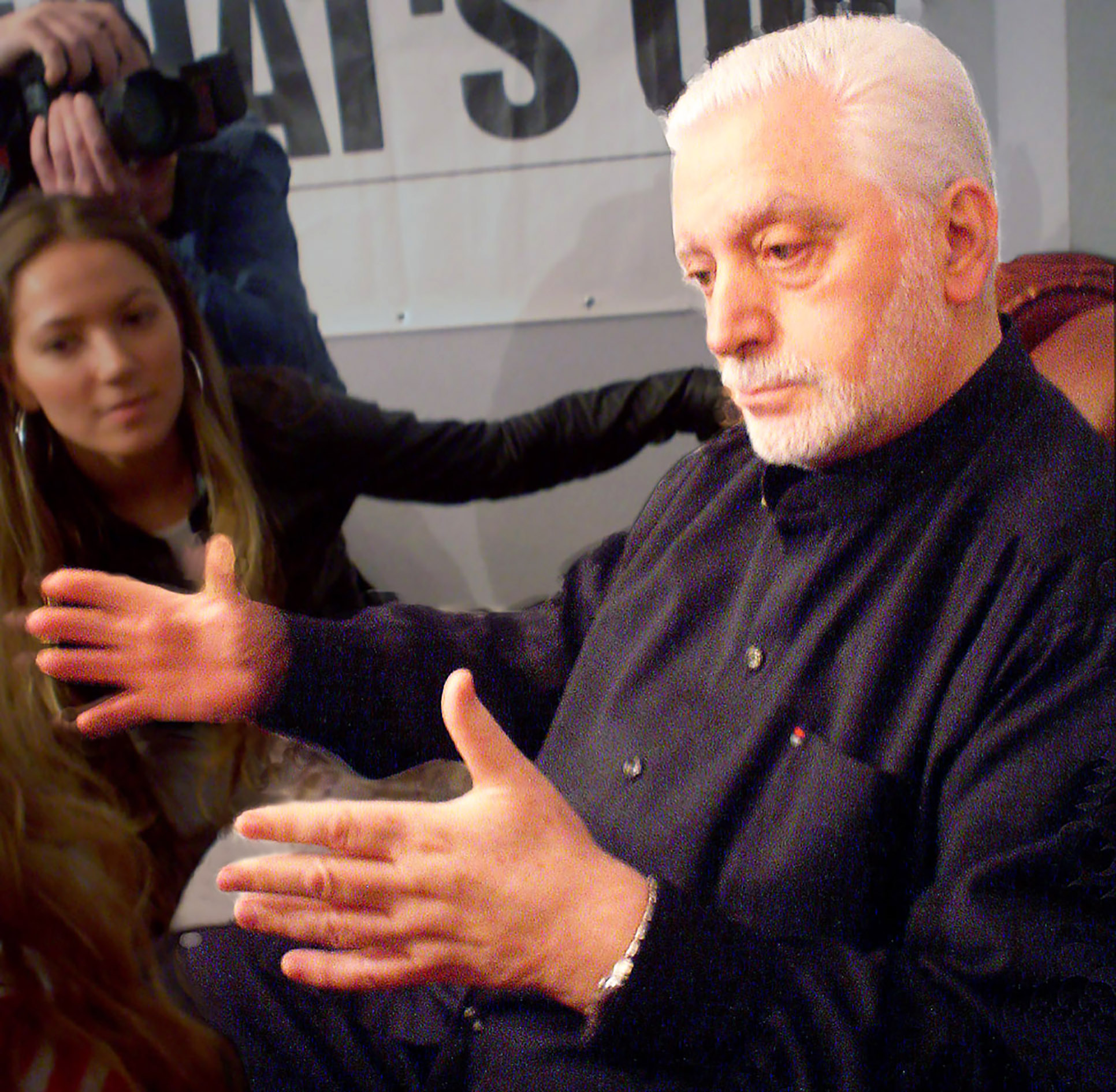
Paco Rabanne
Francisco Rabaneda Cuervo (18 February 1934 – 3 February 2023), more commonly known under the pseudonym of Paco Rabanne (French: [pako ʁaban]; Spanish: [ˈpako raˈβan]), was a Spanish-born naturalised-French fashion designer.
Rabanne rose to prominence as an enfant terrible of the fashion world in the 1960s with his use of unconventional materials such as metal and plastic in his clothing, and for his incorporation of futuristic elements in his designs, gaining notoriety for his space-age style. He collaborated with a range of iconic fashion houses and designed costumes for films. Rabanne was also the recipient of several awards, including the Legion of Honour, which recognised his contributions to the arts and fashion.
In addition to his fashion work, Rabanne was known for his fragrances. He created a number of highly successful scents, including Paco Rabanne Pour Homme, XS (Excess), 1 Million, and Lady Million.
Rabanne was born on 18 February 1934 in the Spanish Basque town of Pasaia, Gipuzkoa province. His father, a Republican Colonel, was executed by Francoist troops during the Spanish Civil War. Rabanne's mother was a chief seamstress at Cristóbal Balenciaga's first couture house in San Sebastián, Basque Country, and in 1939, when he was aged 5, they escaped the civil war by fleeing to France where he assumed the name "Paco Rabanne". In the mid-1950s Paris, while studying architecture at l'École Nationale des Beaux-Arts, Rabanne earned money making fashion sketches for Dior and Givenchy, and shoe sketches for Charles Jourdan. He nevertheless subsequently took a job with France's foremost developer of reinforced concrete, Auguste Perret, working there for over ten years.
He started his career in fashion by creating jewellery for Givenchy, Dior, and Balenciaga and founded his own fashion house in 1966. He used unconventional materials such as metal, paper, and plastic for his metal couture and outlandish and flamboyant designs. For the debut of his namesake brand in 1966, he presented "Manifesto: 12 unwearable dresses in contemporary materials". Although he didn't consider himself a futurist, Rabanne's most famous contribution to the fashion industry was arguably his futurist space age designs. People Magazine journalist Hedy Philips noted that these space-age designs "turned the fashion world upside down".
Rabanne is known for designing the iconic green dress, as well as the other costumes, worn by Jane Fonda in the 1968 science-fiction film Barbarella. The singer song-writer Françoise Hardy was a big fan of Rabanne's designs. For Tour 1996 and the resulting Live à Bercy album, singer Mylène Farmer commissioned Rabanne to create her live-concert stage costumes.
In 1966, Rabanne was named one of the "fashion revolutionaries" in New York by Women's Wear Daily, alongside Edie Sedgwick, Tiger Morse, Pierre Cardin, Baby Jane Holzer, Rudi Gernreich, André Courrèges, Emanuel Ungaro, Yves Saint Laurent, and Mary Quant.
In November 2010, Rabanne was awarded the Legion of Honour by France's minister of culture, Frédéric Mitterrand. During the award ceremony, Mitterrand highlighted Rabanne's early work, particularly his first collection of "12 unwearable dresses".
Hub AI
Paco Rabanne AI simulator
(@Paco Rabanne_simulator)
Paco Rabanne
Francisco Rabaneda Cuervo (18 February 1934 – 3 February 2023), more commonly known under the pseudonym of Paco Rabanne (French: [pako ʁaban]; Spanish: [ˈpako raˈβan]), was a Spanish-born naturalised-French fashion designer.
Rabanne rose to prominence as an enfant terrible of the fashion world in the 1960s with his use of unconventional materials such as metal and plastic in his clothing, and for his incorporation of futuristic elements in his designs, gaining notoriety for his space-age style. He collaborated with a range of iconic fashion houses and designed costumes for films. Rabanne was also the recipient of several awards, including the Legion of Honour, which recognised his contributions to the arts and fashion.
In addition to his fashion work, Rabanne was known for his fragrances. He created a number of highly successful scents, including Paco Rabanne Pour Homme, XS (Excess), 1 Million, and Lady Million.
Rabanne was born on 18 February 1934 in the Spanish Basque town of Pasaia, Gipuzkoa province. His father, a Republican Colonel, was executed by Francoist troops during the Spanish Civil War. Rabanne's mother was a chief seamstress at Cristóbal Balenciaga's first couture house in San Sebastián, Basque Country, and in 1939, when he was aged 5, they escaped the civil war by fleeing to France where he assumed the name "Paco Rabanne". In the mid-1950s Paris, while studying architecture at l'École Nationale des Beaux-Arts, Rabanne earned money making fashion sketches for Dior and Givenchy, and shoe sketches for Charles Jourdan. He nevertheless subsequently took a job with France's foremost developer of reinforced concrete, Auguste Perret, working there for over ten years.
He started his career in fashion by creating jewellery for Givenchy, Dior, and Balenciaga and founded his own fashion house in 1966. He used unconventional materials such as metal, paper, and plastic for his metal couture and outlandish and flamboyant designs. For the debut of his namesake brand in 1966, he presented "Manifesto: 12 unwearable dresses in contemporary materials". Although he didn't consider himself a futurist, Rabanne's most famous contribution to the fashion industry was arguably his futurist space age designs. People Magazine journalist Hedy Philips noted that these space-age designs "turned the fashion world upside down".
Rabanne is known for designing the iconic green dress, as well as the other costumes, worn by Jane Fonda in the 1968 science-fiction film Barbarella. The singer song-writer Françoise Hardy was a big fan of Rabanne's designs. For Tour 1996 and the resulting Live à Bercy album, singer Mylène Farmer commissioned Rabanne to create her live-concert stage costumes.
In 1966, Rabanne was named one of the "fashion revolutionaries" in New York by Women's Wear Daily, alongside Edie Sedgwick, Tiger Morse, Pierre Cardin, Baby Jane Holzer, Rudi Gernreich, André Courrèges, Emanuel Ungaro, Yves Saint Laurent, and Mary Quant.
In November 2010, Rabanne was awarded the Legion of Honour by France's minister of culture, Frédéric Mitterrand. During the award ceremony, Mitterrand highlighted Rabanne's early work, particularly his first collection of "12 unwearable dresses".