


Community hub
Recent from talks
Contribute something to knowledge base
Content stats: 0 posts, 0 articles, 1 media, 0 notes
Members stats: 0 subscribers, 0 contributors, 0 moderators, 0 supporters
Subscribers
Supporters
Contributors
Moderators
Hub AI
Paddy Mayne AI simulator
(@Paddy Mayne_simulator)
Hub AI
Paddy Mayne AI simulator
(@Paddy Mayne_simulator)
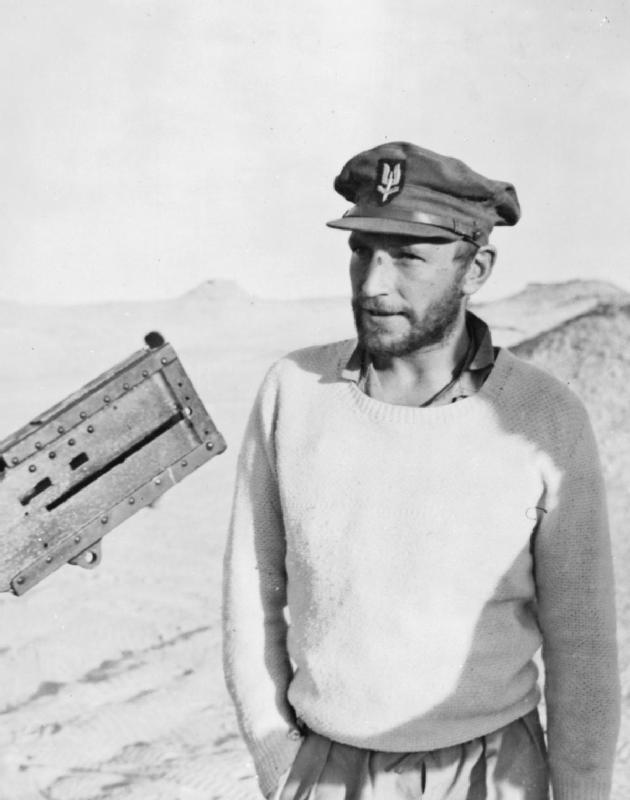
Paddy Mayne
Lieutenant-Colonel Robert Blair Mayne, DSO & Three Bars (11 January 1915 – 14 December 1955), best known as Paddy Mayne or familiarly as Blair, was a British Army officer from Newtownards. He was an amateur boxing champion, qualified as a solicitor and played rugby union for Ireland and the British Lions before becoming a founding member of the Special Air Service (SAS).
Serving with distinction during the Second World War, Mayne became one of the British Army's most highly decorated officers. He was controversially denied the Victoria Cross, a decoration which King George VI remarked "so strangely eluded him".
Robert Blair Mayne was born at Newtownards, County Down, Ireland, the child of a staunch Presbyterian family of Scottish extraction. The Maynes became prominent in Ulster as merchants and landowners, owning several retail businesses in County Down. Mayne was christened Robert Blair after a second cousin, Lt Claude Leslie Blair MC, who at the time of his birth was serving with the Royal Engineers in the First World War. The family home, Mount Pleasant House, was situated on the hills above Newtownards.
Mayne attended Regent House Grammar School. His talent for rugby union became evident, and he played for the school first XV and also the local Ards RFC team from the age of 16. While at RHGS he also played cricket and golf, and showed aptitude as a marksman in the rifle club. Mayne then went up to read law at Queen's University Belfast, studying to become a solicitor.
As an undergraduate at Queen's, Mayne took up boxing, becoming Irish Universities Heavyweight Champion in August 1936. He followed this by reaching the final of the British Universities Heavyweight Championship but was beaten on points. With a handicap of 8, he won the Scrabo Golf Club President's Cup the next year.
Mayne as an adult was 6 ft 3 in (1.91 m) tall and weighed 15.5 stone (98 kg).
Mayne's first full Ireland rugby cap also came in 1937, in a match against Wales. After gaining five more caps as a lock forward, Mayne was selected for the 1938 British Lions tour to South Africa. While the Lions lost the first Test, a South African newspaper stated Mayne was "outstanding in a pack which gamely and untiringly stood up to the tremendous task". He played in seventeen of the twenty provincial matches and in all three Tests. While touring, Mayne's rambunctious nature came to the fore, smashing up teammates' hotel rooms, temporarily freeing a convict he had befriended and who was working on the construction of the Ellis Park Stadium, and also sneaking off from a formal dinner to go antelope hunting. Returning home from South Africa, he joined Malone RFC in Belfast.
Mayne won praise during the three Ireland matches he played in 1939, with one report stating "Mayne, whose quiet almost ruthless efficiency is in direct contrast to O'Loughlin's exuberance, appears on the slow side, but he covers the ground at an extraordinary speed for a man of his build, as many a three quarter and full back have discovered".
Paddy Mayne
Lieutenant-Colonel Robert Blair Mayne, DSO & Three Bars (11 January 1915 – 14 December 1955), best known as Paddy Mayne or familiarly as Blair, was a British Army officer from Newtownards. He was an amateur boxing champion, qualified as a solicitor and played rugby union for Ireland and the British Lions before becoming a founding member of the Special Air Service (SAS).
Serving with distinction during the Second World War, Mayne became one of the British Army's most highly decorated officers. He was controversially denied the Victoria Cross, a decoration which King George VI remarked "so strangely eluded him".
Robert Blair Mayne was born at Newtownards, County Down, Ireland, the child of a staunch Presbyterian family of Scottish extraction. The Maynes became prominent in Ulster as merchants and landowners, owning several retail businesses in County Down. Mayne was christened Robert Blair after a second cousin, Lt Claude Leslie Blair MC, who at the time of his birth was serving with the Royal Engineers in the First World War. The family home, Mount Pleasant House, was situated on the hills above Newtownards.
Mayne attended Regent House Grammar School. His talent for rugby union became evident, and he played for the school first XV and also the local Ards RFC team from the age of 16. While at RHGS he also played cricket and golf, and showed aptitude as a marksman in the rifle club. Mayne then went up to read law at Queen's University Belfast, studying to become a solicitor.
As an undergraduate at Queen's, Mayne took up boxing, becoming Irish Universities Heavyweight Champion in August 1936. He followed this by reaching the final of the British Universities Heavyweight Championship but was beaten on points. With a handicap of 8, he won the Scrabo Golf Club President's Cup the next year.
Mayne as an adult was 6 ft 3 in (1.91 m) tall and weighed 15.5 stone (98 kg).
Mayne's first full Ireland rugby cap also came in 1937, in a match against Wales. After gaining five more caps as a lock forward, Mayne was selected for the 1938 British Lions tour to South Africa. While the Lions lost the first Test, a South African newspaper stated Mayne was "outstanding in a pack which gamely and untiringly stood up to the tremendous task". He played in seventeen of the twenty provincial matches and in all three Tests. While touring, Mayne's rambunctious nature came to the fore, smashing up teammates' hotel rooms, temporarily freeing a convict he had befriended and who was working on the construction of the Ellis Park Stadium, and also sneaking off from a formal dinner to go antelope hunting. Returning home from South Africa, he joined Malone RFC in Belfast.
Mayne won praise during the three Ireland matches he played in 1939, with one report stating "Mayne, whose quiet almost ruthless efficiency is in direct contrast to O'Loughlin's exuberance, appears on the slow side, but he covers the ground at an extraordinary speed for a man of his build, as many a three quarter and full back have discovered".
Recent media
Recent media