Hubbry Logo
PampushkaPampushkaMain
Open search
Pampushka
Community hub
Pampushka
logo
8 pages, 0 posts
0 subscribers
Be the first to start a discussion here.
Pampushka
Pampushka
from Wikipedia
Pampushka
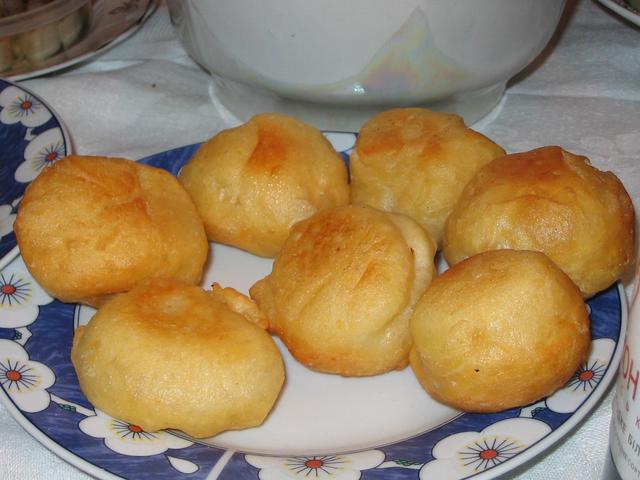
Seven pampushky on a plate
Plain pampushky
Place of originUkraine
  •   Media: Pampushka

Pampushka (Ukrainian: пампушка [pɐmˈpuʃkɐ], pl. пампушки pampushky; diminutive of pampukh or pampukha[1][2]) is a small savory or sweet yeast-raised bun or doughnut typical for Ukrainian cuisine.[3][4][5][6]

Etymology

[edit]

The Ukrainian word pampukh comes via Polish pampuch (a kind of thick dumpling or steamed doughnut) from German Pfannkuchen ("pancake").[2] Similarly to English "pancake", the latter derives from Pfanne ("pan") and Kuchen ("cake"). The diminutive form pampushka is used more frequently than the basic form.

Varieties

[edit]

Pampushky are made of yeast dough from wheat, rye or buckwheat flour. Traditionally they are baked, but may also be fried.[3][4][5][6] Savoury pampushky have no filling. They are usually seasoned with garlic sauce and often served as a side dish with red borscht or yushka.[3][5][6] Sweet pampushky may be filled with fruits, berries, varenye, povydlo, or poppy seeds, and topped with powdered sugar.[4]

History

[edit]

According to William Pokhlyobkin, the technology of making pampushky points to German cuisine, and these buns were possibly created by German colonists in Ukraine. They spread through the country in the second half of the 19th century and later reached the status of a Ukrainian traditional dish.[6]

[edit]

Since 2008, yearly Pampukh Festivals have been organised around Orthodox Christmas time (in January) in Lviv.[7][8] During the festival in 2012, a Guinness world record was set by building the world's largest mosaic made of doughnuts.[9]

See also

[edit]

References

[edit]
[edit]
Revisions and contributorsEdit on WikipediaRead on Wikipedia
from Grokipedia
A pampushka (Ukrainian: пампушка), plural pampushky, is a small, round, yeast-raised or that is a staple of , available in both savory and sweet preparations. The savory variety consists of soft, fluffy rolls typically brushed with a mixture of minced , , fresh , and , which are traditionally served warm alongside , Ukraine's iconic beet soup, to enhance its flavors and provide a comforting . In contrast, sweet pampushky are often filled with poppy seeds, fruit jam, or cherries, resulting in a light, flaky texture that makes them a associated with major Ukrainian holidays and events, such as , where they are paired with beverages like uzvar (a ). Originating as a traditional element of Ukrainian culinary heritage, pampushky reflect the country's historical role as the "breadbasket" of the , emphasizing and as everyday staples, and they continue to symbolize comfort, festivity, and in modern Ukrainian culture.

Introduction

Definition and Characteristics

A pampushka is a small, round, yeast-raised or doughnut-like typical of . It features a soft, fluffy interior; savory varieties have a slightly crisp exterior achieved through baking, while sweet varieties are often fried. The buns are often golden-brown in color and served warm to enhance their appealing texture and aroma. Pampushky exhibit an airy crumb structure resulting from fermentation, which causes the dough to double in volume during proofing. This process yields a light, pillowy quality that distinguishes them from denser breads. Their neutral base flavor allows them to absorb toppings or fillings effectively, making them versatile as either savory or sweet items, such as those with or fruit, as explored in later sections. In traditional contexts, pampushky are commonly paired with soups like , where they serve as an absorbent accompaniment, or enjoyed independently as a . This serving practice highlights their role in Ukrainian meals, emphasizing warmth and freshness for optimal sensory enjoyment.

Basic Ingredients

Pampushka dough is primarily made from , which forms the structural base through development during and rising. Typical recipes use about 400 grams of strong white or all-purpose . serves as the , producing gas that creates the light, fluffy texture characteristic of pampushka; fresh (15 grams) or active dry (7 grams) is commonly used per 400 grams of to ensure proper . Liquids such as warm water or provide hydration to activate the and develop the dough's elasticity, with 225-250 milliliters typically sufficient for 400 grams of to achieve a soft, pliable consistency. , added in a small amount like 1 , feeds the to promote initial activation and contributes to subtle sweetness and browning via the . Salt, around 1 per 400 grams of , enhances flavor, strengthens the network for better structure, and regulates activity to prevent over-fermentation. Oil or butter, incorporated at 2-3 tablespoons, adds richness and tenderness by coating flour proteins, resulting in a softer crumb without compromising rise. For variations, rye flour can replace part of the wheat flour, imparting a nuttier flavor and denser texture while maintaining the yeast-leavened base. In enriched versions suitable for sweet pampushka, eggs act as binders to improve dough cohesion and add moisture for a more luxurious . This neutral ingredient profile allows the dough to serve as a versatile canvas, adaptable for savory toppings like garlic-infused or sweet fillings such as .

Etymology and Historical Origins

Linguistic Etymology

The term pampushka in Ukrainian is a form derived from the singular pampukh, with the -ka indicating a small or endearing version of the bun-like .
The root pampukh was borrowed into Ukrainian from Polish pampuch, a word denoting a thick or steamed .
This Polish term originates from the German Pfannkuchen, literally meaning "pan cake" and referring to preparations.
In 19th-century , such forms like pampushka commonly evolved to describe compact, appealing variants of larger baked goods, reflecting linguistic adaptations in the region.
The plural form pampushky is standard in Ukrainian for everyday usage, emphasizing the buns' typical small-batch preparation.
This etymological path highlights broader German linguistic influences on Eastern European culinary terminology.

Introduction to Ukrainian Cuisine

The pampushka possibly entered Ukrainian cuisine via German colonists who settled in the southern Black Sea region of Ukraine during the late 18th and 19th centuries. These settlers, invited by Russian Empress Catherine the Great to develop agriculture, may have adapted the traditional German Pfannkuchen—a fried yeast dough pancake—to local conditions by incorporating available grains such as wheat and buckwheat, aligning with Ukraine's fertile steppe landscapes and culinary preferences. The term "pampushka" derives from the German "Pfannkuchen" through the intermediary Polish "pampuch," a thick steamed , illustrating the linguistic pathway influenced by the historical overlaps of the with Ukrainian territories. Pampushky became popular across in the second half of the , evolving into a widespread everyday by the early . Regional adaptations during this period included subtle dough variations, such as blending in , which reflected imperial-era resource availability and local farming practices while solidifying the dish's integration into Ukrainian culinary identity.

Preparation and Varieties

Dough Preparation and Cooking Methods

The preparation of pampushka dough begins with activating the by dissolving it in warm liquid, such as or at around 100°F (38°C), along with a small amount of ; this mixture is left to proof for approximately 10 minutes until frothy. To this activated , the remaining ingredients—typically 400 grams of strong white or bread , salt, eggs or oil for enrichment, and additional liquid—are gradually incorporated to form a soft . The is then kneaded by hand or with a mixer for 5 to 10 minutes until smooth, elastic, and no longer sticky, taking care to avoid over-kneading which can result in a tough texture. Once kneaded, the dough is placed in a lightly oiled , covered, and allowed to rise in a warm place for 1 to 2 hours, or until it has doubled in volume; some recipes incorporate an initial overnight proof in the for enhanced flavor development. After the first rise, the dough is gently punched down to release air, divided into 12 to 15 equal portions (yielding about 12-15 pieces from a basic 400-gram recipe), and shaped into smooth balls with gentle handling to promote even rising. The shaped balls are arranged closely together in a greased round ovenproof dish or pan, covered, and given a second rise for 30 to 45 minutes until nearly doubled and touching. Pampushka can be cooked via or deep-frying, each yielding distinct textures. For , which produces a softer, bread-like result, the is preheated to 180-200°C (350-400°F), and the rolls are baked for 20-30 minutes until golden brown, often brushed with an beforehand for a glossy crust. Alternatively, deep-frying at 170-190°C (340-375°F) for 2-3 minutes per side creates a crispier, doughnut-like exterior, with the fried pieces drained on paper towels to remove excess oil. These methods form the neutral base suitable for later adaptations in savory or sweet profiles.

Savory Varieties

Savory pampushky are small, yeast-raised buns without internal fillings, distinguished by their post-baking enhancements that impart aromatic, herbaceous flavors suitable for accompanying hearty dishes. Unlike sweet varieties, these focus on simple, savory toppings or plain presentations that highlight the soft, fluffy texture of the base . The classic pampushky involves brushing the freshly baked buns with a mixture of minced , , salt, and chopped fresh herbs such as or , creating a pungent, aromatic coating that infuses the rolls with bold flavor. A representative preparation uses 2-3 minced cloves combined with 3 tablespoons of , a pinch of salt, and finely chopped or , applied immediately after baking to allow the warm buns to absorb the mixture. This method, rooted in traditional Ukrainian , enhances the rolls' crusty exterior while keeping the interior tender. Plain savory pampushky, without any toppings, are commonly served alongside soups such as or yushka, where the buns absorb the to develop a richer, enhanced taste that complements the meal's liquid elements. These unadorned versions emphasize the neutral dough's versatility as a sopping in everyday Ukrainian dining. Serving customs for savory pampushky typically involve 3-5 small buns per person as a , presented hot to preserve their softness and warmth, often in a shared to encourage communal eating during meals. This portion size allows the rolls to complement rather than overshadow main courses like soups or stews.

Sweet Varieties

Sweet pampushky feature a variety of internal fillings that distinguish them as standalone treats, often prepared by enclosing the around the sweet mixture before the final proofing stage. Common fruit-based fillings include , a thick Ukrainian jam typically made from cherries, apples, or berries, which provides a tart-sweet contrast to the yeasted . Another popular option is povydlo, a dense preserve achieved by slowly cooking down fresh plums until they form a spreadable pulp, offering a rich, caramelized flavor. These fillings are incorporated by placing a small amount in the center of a portion, pinching the edges to seal securely, and allowing the filled pieces to undergo a second rise, which helps maintain integrity during deep-frying and prevents leakage. A particularly cherished sweet variety uses poppy seeds, where the dough is stuffed with a mixture of finely ground sweetened with or , sometimes enhanced with nuts or raisins for added texture and depth. This filling draws from traditional Eastern European baking techniques, evoking the nutty, mildly floral notes of the seeds when combined with the dough's subtle richness. Poppy seed pampushky are especially prevalent in holiday preparations, reflecting their role in festive Ukrainian baking customs. Once fried to a golden crispness—which yields a denser, more indulgent texture compared to baked savory versions—these pampushky are finished with simple yet elegant toppings after cooling. They are frequently dusted with for a delicate sweetness, or coated in a thin icing made from confectioners' sugar and . In some cases, a glaze of diluted is brushed on for a glossy sheen that complements the fillings inside. These sweet pampushky serve as desserts or treats, commonly enjoyed during celebrations in .

Cultural Significance

Role in Traditional Ukrainian Meals

In traditional , pampushky—particularly the savory garlic-infused variety—serve as an essential accompanying red beet , a cornerstone of family meals. These soft, yeast-risen rolls are torn and used to absorb the soup's hearty , adding texture and flavor while fostering a sense of shared comfort during everyday dinners. This pairing is deeply embedded in Ukrainian dining customs, where offering with pampushky signifies warmth and care toward guests or loved ones. During holidays, pampushky take on heightened roles in ritualistic feasts. Sweet versions, filled with poppy seeds, prunes, or , feature prominently in the Sviatyi Vechir ( supper), one of twelve meatless dishes prepared after a day of to mark the end of Advent. These treats symbolize abundance and joy, providing a satisfying conclusion to the lean meal and embodying the transition to celebratory indulgence. Savory pampushky, meanwhile, often reappear in post-fasting contexts, offering a flavorful way to break the fast with familiar, nourishing bites. Regionally, pampushky integrate into diverse dietary practices across , reflecting local resources and lifestyles. In rural areas, they pair with fermented soups like kapusnyak, utilizing preserved vegetables for hearty, sustaining meals suited to agricultural communities. Urban adaptations position pampushky as convenient staples or quick accompaniments to soups, maintaining their cultural presence in fast-paced environments.

Festivals, Traditions, and Modern Adaptations

The Pampukh Festival, held annually in , , since 2008, celebrates the traditional Ukrainian during Orthodox festivities in late December or early January. The event features baking competitions, tastings of various pampushky varieties, and cultural performances such as (puppet theater shows), drawing thousands of participants and visitors to highlight Ukrainian culinary heritage. In 2012, the festival achieved a for the largest mosaic, assembled using 7,040 pampushky to form an image symbolizing Ukrainian unity. The festival continues to thrive, with the 2025 edition scheduled for at the Palace of Arts, incorporating pairings and workshops. Pampushky hold a central place in Ukrainian Christmas traditions, particularly on Sviatyi Vechir (), where they are baked as small yeast rolls and served alongside in every household. Families often prepare them collectively, kneading dough and infusing garlic-dill oil, fostering intergenerational bonding during the holiday rituals of the Twelve Dishes supper. Following Russia's full-scale invasion in 2022, pampushky have emerged as a symbol of resilience among communities in and , featured in solidarity events and home cooking to preserve cultural identity amid displacement. In modern adaptations, pampushky have evolved to accommodate dietary needs, with vegan versions substituting plant-based oils like sunflower or for traditional animal fats, as detailed in contemporary cookbooks emphasizing accessible Ukrainian recipes. Gluten-free variants use alternative flours such as or blends to replicate the soft texture, enabling broader participation in festive meals. Their global popularity has surged through Ukrainian restaurants abroad, particularly in and the , where post-2014 migration waves from conflict zones introduced them to menus; for instance, Saskatoon's Ukrainian Kitchen serves with pampushky as a staple. Recent developments up to 2025 reflect heightened interest in , with online recipes proliferating on platforms like iFoodReal and since 2022, alongside fusion innovations such as pampushka burgers—soft rolls encasing or patties—at eateries like Slava Resto in .

References

  1. https://en.wiktionary.org/wiki/%D0%BF%D0%B0%D0%BC%D0%BF%D1%83%D1%88%D0%BA%D0%B0
Add your contribution
Related Hubs
User Avatar
No comments yet.