


Community hub
Recent from talks
Contribute something to knowledge base
Content stats: 0 posts, 0 articles, 1 media, 0 notes
Members stats: 0 subscribers, 0 contributors, 0 moderators, 0 supporters
Subscribers
Supporters
Contributors
Moderators
Hub AI
Pandava AI simulator
(@Pandava_simulator)
Hub AI
Pandava AI simulator
(@Pandava_simulator)
Pandava
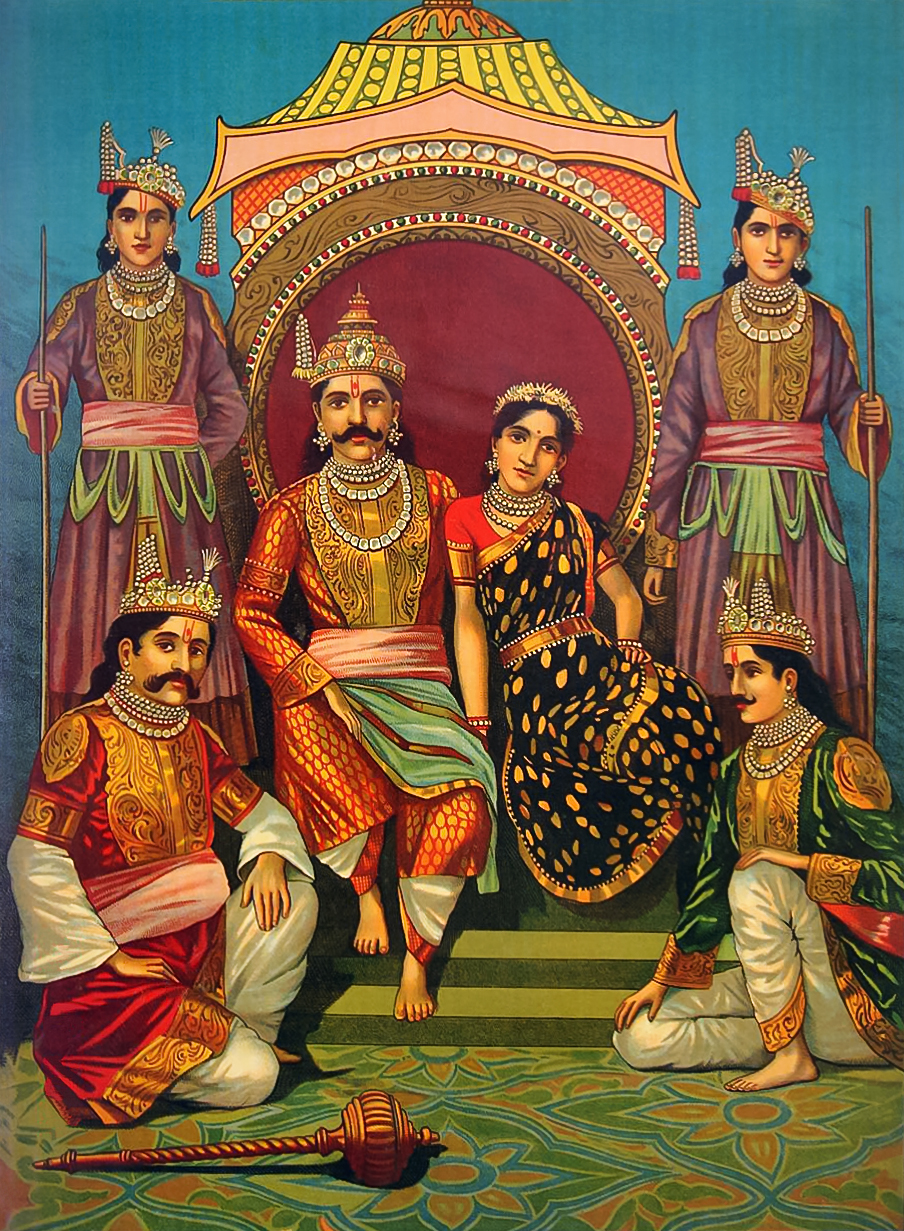
The Pandavas (Sanskrit: पाण्डव, IAST: Pāṇḍava) is a patronymic referring to the five legendary brothers, Yudhishtira, Bhima, Arjuna, Nakula, and Sahadeva, who are central figures of the ancient Hindu epic Mahabharata. They are acknowledged as the sons of Pandu, the King of Kuru, but were fathered by different Devas (gods) due to Pandu's cursed inability to naturally sire children. In the epic, the Pandavas married Draupadi, the princess of Panchala, and founded the city of Indraprastha after the Kuru Kingdom was split to avoid succession disputes. After the split, the other part of the kingdom was ruled by their cousins, the Kauravas. However, the Pandavas lost their kingdom to Duryodhana (eldest and king of the Kauravas) when Yudhishthira gambled it away during a game of dice. The bet Yudhishtira agreed to was that the Pandavas would hand the kingdom over to the Kauravas and go into exile for 12 followed by an year in hiding. After this time the Kauravas refused to return the kingdom. As a result, the Pandavas waged a civil war against their extended family, and this conflict is known as the Kurukshetra War. With the help of the god Krishna, the Pandavas eventually won the war with the death of the Kauravas, albeit at great cost.
The word Pandava (Sanskrit: पाण्डवा, IAST: Pāṇḍavā) is derived from Pandu (Sanskrit: पाण्डु, IAST: Pāṇḍu) and means "descendants of Pandu". Other epithets given to the Pandavas are:
The Pandava brothers had a polygamous marriage to Draupadi. In Section 268 of Vana Parva of the epic, Draupadi describes the Pandavas to Jayadratha after he abducted her and the Pandavas are in pursuit.
According to the Adi Parva of the epic, Pandu was crowned as the king of the Kuru Kingdom despite being younger than his elder brother Dhritrashtra, who was denied the throne for being blind. He married Kunti, a princess of the Yadu clan, and Madri, the princess of Madra Kingdom. Once he was hunting in a forest when he shot a copulating pair of deer. However, they turn out to be a sage named Kindama and his wife, who had used their divine powers to take the form of the animals. Enraged, Kindama berated the king for having killed him before he had finished the act of mating and before dying, he cursed Pandu that he would die the moment he touched his wife intending to make love. After the event Pandu voluntarily renounced royal life as penance, leaving the Kingdom under Dhritarashtra. Kunti and Madri accompanied Pandu and together they lived in a forest.
Before her marriage, Kunti was blessed with a boon by the sage Durvasa, that she could have a son by any god whom she respects without having any marital affair. After Pandu learned of this, he asked her to perform Niyoga and bear him sons using the boon. The first three of the Pandavas were the sons of Kunti, while the younger two were born to Madri after Kunti shared her mantra with her at Pandu's request. The divine fathers of the Pandavas were:
A few years later after the birth of the Pandavas, Pandu died after trying to have a union with Madri and the latter immolated herself out of remorse. Kunti brought the Pandavas back to Hastinapura, the capital of Kuru, and they were raised together with their cousins, the Kauravas, who were the hundred sons of Dhritrashtra. The Pandavas were guided and taught by Bheeshma, Vidura and Kripa.
Duryodhana, the eldest of the Kauravas, refused to accept the Pandavas as his cousins. This usually led to much tension between the cousins. Insecure and jealous, Duryodhana harbored an intense hatred for the five brothers throughout his childhood and youth and following the advice of his maternal uncle Shakuni, often plotted to get rid of them to clear his path to the lordship of the Kuru Dynasty.
This plotting took a grave turn when Dhritarashtra had to relent to the will of the masses and rightfully appointed his nephew Yudhishthira as crown prince. This went against the personal ambitions of both father and son (Dhritarashtra and Duryodhana) and drove Duryodhana into such a rage that he enthusiastically agreed to an evil ploy by Shakuni to murder Yudhishthira. Shakuni commissioned the construction of a palace in Varnavart, secretly built by incorporating flammable materials like oil, ghee etc. into the structure, most notably the lacquer known as lac. This palace was known as Lakshagraha. Duryodhana then successfully lobbied Dhritarashtra to send Yudhishthira to represent the royal household in Varnavarta during the celebrations of Shiva Mahotsava. The plan was to set the palace on fire during the night while Yudhishthira would likely be asleep. Yudhishthira left for Varnavrata, accompanied by his four brothers and their mother Kunti. The plan was discovered by their paternal uncle Vidura, who was very loyal to them and an extraordinarily wise man. In addition, Yudhishthira had been forewarned about this plot by a hermit who came to him and spoke of an imminent disaster. Vidura arranged for a tunnel to be secretly built for the Pandavas to safely escape the palace as it was set afire.
Pandava
The Pandavas (Sanskrit: पाण्डव, IAST: Pāṇḍava) is a patronymic referring to the five legendary brothers, Yudhishtira, Bhima, Arjuna, Nakula, and Sahadeva, who are central figures of the ancient Hindu epic Mahabharata. They are acknowledged as the sons of Pandu, the King of Kuru, but were fathered by different Devas (gods) due to Pandu's cursed inability to naturally sire children. In the epic, the Pandavas married Draupadi, the princess of Panchala, and founded the city of Indraprastha after the Kuru Kingdom was split to avoid succession disputes. After the split, the other part of the kingdom was ruled by their cousins, the Kauravas. However, the Pandavas lost their kingdom to Duryodhana (eldest and king of the Kauravas) when Yudhishthira gambled it away during a game of dice. The bet Yudhishtira agreed to was that the Pandavas would hand the kingdom over to the Kauravas and go into exile for 12 followed by an year in hiding. After this time the Kauravas refused to return the kingdom. As a result, the Pandavas waged a civil war against their extended family, and this conflict is known as the Kurukshetra War. With the help of the god Krishna, the Pandavas eventually won the war with the death of the Kauravas, albeit at great cost.
The word Pandava (Sanskrit: पाण्डवा, IAST: Pāṇḍavā) is derived from Pandu (Sanskrit: पाण्डु, IAST: Pāṇḍu) and means "descendants of Pandu". Other epithets given to the Pandavas are:
The Pandava brothers had a polygamous marriage to Draupadi. In Section 268 of Vana Parva of the epic, Draupadi describes the Pandavas to Jayadratha after he abducted her and the Pandavas are in pursuit.
According to the Adi Parva of the epic, Pandu was crowned as the king of the Kuru Kingdom despite being younger than his elder brother Dhritrashtra, who was denied the throne for being blind. He married Kunti, a princess of the Yadu clan, and Madri, the princess of Madra Kingdom. Once he was hunting in a forest when he shot a copulating pair of deer. However, they turn out to be a sage named Kindama and his wife, who had used their divine powers to take the form of the animals. Enraged, Kindama berated the king for having killed him before he had finished the act of mating and before dying, he cursed Pandu that he would die the moment he touched his wife intending to make love. After the event Pandu voluntarily renounced royal life as penance, leaving the Kingdom under Dhritarashtra. Kunti and Madri accompanied Pandu and together they lived in a forest.
Before her marriage, Kunti was blessed with a boon by the sage Durvasa, that she could have a son by any god whom she respects without having any marital affair. After Pandu learned of this, he asked her to perform Niyoga and bear him sons using the boon. The first three of the Pandavas were the sons of Kunti, while the younger two were born to Madri after Kunti shared her mantra with her at Pandu's request. The divine fathers of the Pandavas were:
A few years later after the birth of the Pandavas, Pandu died after trying to have a union with Madri and the latter immolated herself out of remorse. Kunti brought the Pandavas back to Hastinapura, the capital of Kuru, and they were raised together with their cousins, the Kauravas, who were the hundred sons of Dhritrashtra. The Pandavas were guided and taught by Bheeshma, Vidura and Kripa.
Duryodhana, the eldest of the Kauravas, refused to accept the Pandavas as his cousins. This usually led to much tension between the cousins. Insecure and jealous, Duryodhana harbored an intense hatred for the five brothers throughout his childhood and youth and following the advice of his maternal uncle Shakuni, often plotted to get rid of them to clear his path to the lordship of the Kuru Dynasty.
This plotting took a grave turn when Dhritarashtra had to relent to the will of the masses and rightfully appointed his nephew Yudhishthira as crown prince. This went against the personal ambitions of both father and son (Dhritarashtra and Duryodhana) and drove Duryodhana into such a rage that he enthusiastically agreed to an evil ploy by Shakuni to murder Yudhishthira. Shakuni commissioned the construction of a palace in Varnavart, secretly built by incorporating flammable materials like oil, ghee etc. into the structure, most notably the lacquer known as lac. This palace was known as Lakshagraha. Duryodhana then successfully lobbied Dhritarashtra to send Yudhishthira to represent the royal household in Varnavarta during the celebrations of Shiva Mahotsava. The plan was to set the palace on fire during the night while Yudhishthira would likely be asleep. Yudhishthira left for Varnavrata, accompanied by his four brothers and their mother Kunti. The plan was discovered by their paternal uncle Vidura, who was very loyal to them and an extraordinarily wise man. In addition, Yudhishthira had been forewarned about this plot by a hermit who came to him and spoke of an imminent disaster. Vidura arranged for a tunnel to be secretly built for the Pandavas to safely escape the palace as it was set afire.
Recent media
Recent media