
Recent from talks
Durvasa
Knowledge base stats:
Talk channels stats:
Members stats:
Durvasa
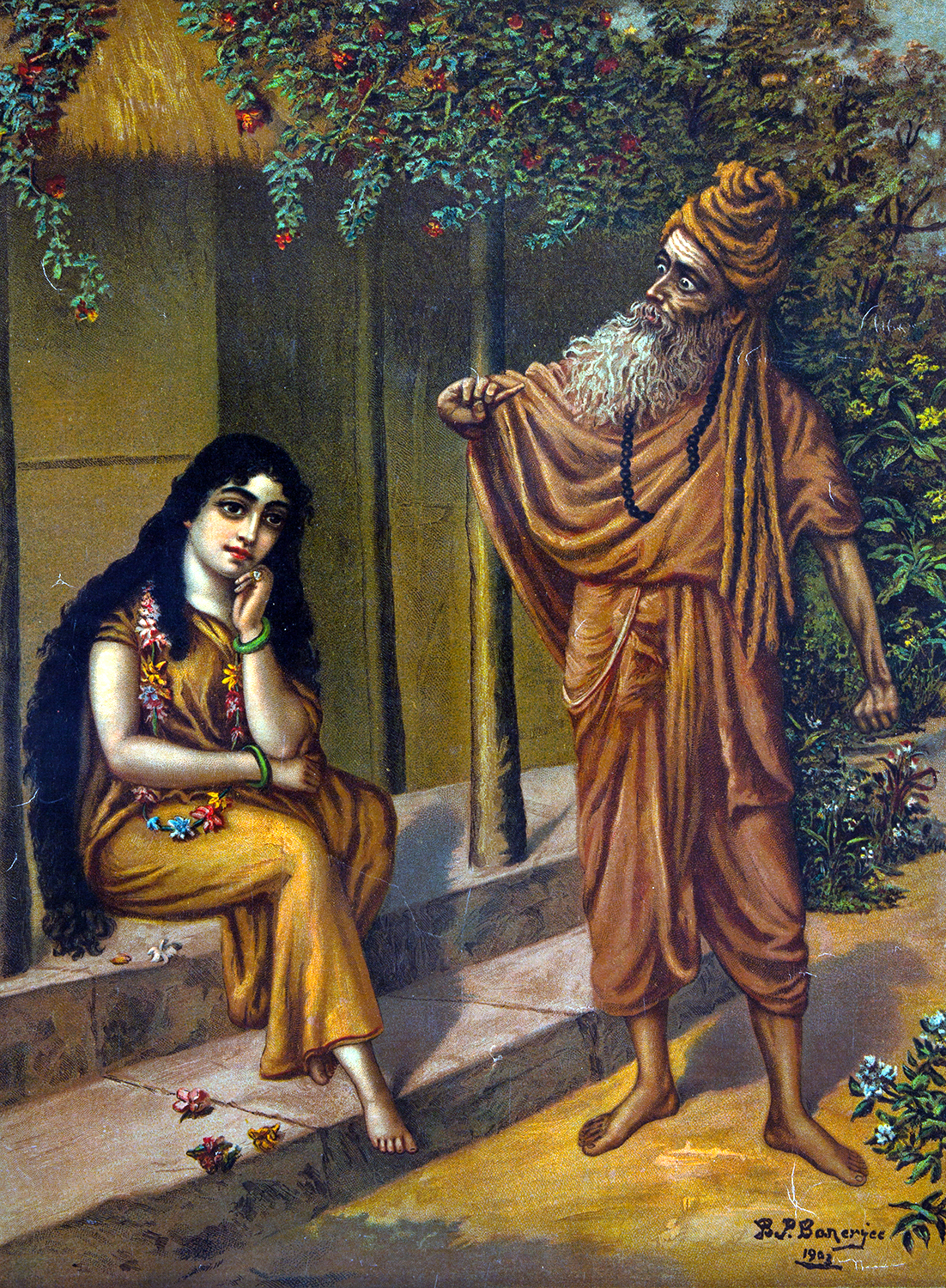
In Hindu scriptures, Durvasa (Sanskrit: दुर्वासा, IAST: Durvāsā lit."difficult to live with"), also known as Durvasas (Sanskrit: दुर्वासस्), is a legendary rishi (sage). He is the son of Anasuya and Atri. According to some Puranas, Durvasa is a partial avatar of Shiva, known for his irrascibility and short tempered behaviour. Wherever he goes, he is received with great reverence by humans and devas alike.
The rishi Durvasa, being short-tempered, is said to have both cursed and gifted boons to several notable deities and people in the Hindu scriptures. Some of them include:
Curses
Boons
According to Chapter 44 of the Brahmanda Purana, Brahma and Shiva got into a heated quarrel. Shiva became violently enraged when the devas fled from his presence in fear. His consort, Parvati, complained that Shiva is now impossible to live with. Realizing the chaos his anger had caused, Shiva deposited this anger into Anasuya, the wife of sage Atri. From this portion of Shiva deposited into Anasuya, a child is born, named 'Durvasa' (lit. one who is difficult to live with). Because he is born of Shiva's anger, he had an irascible nature.
In Vishnu Purana, Vayu Purana, and the Padma Purana, a curse that Durvasa laid upon Indra is described as the indirect reason for the Samudra Manthana. The Srimad Bhagavata and Agni Purana also mention Durvasa's involvement in the episode, without going into detail. Other sources for this story, such as Ramayana, Mahabharata, Harivamsa, and Matsya Purana, do not mention Durvasa's involvement at all and ascribe the incident to other causes, such as the devas' and asuras' desire for immortality.
According to a story in the Vishnu Purana, Durvasa, while wandering the earth in a state of ecstasy due to a vow he is observing, came by a Vidyadhari (nymph of the air) and demanded her heavenly wreath of flowers. The nymph respectfully gave the garland to the sage, whereupon he wore it on his brow. Resuming his wanderings, the Durvasa came across Indra riding his elephant, Airavata, attended by the gods. Still, in his state of frenzy, Durvasa threw the garland at Indra, who caught it and placed it on Airavata's head. The elephant is irritated by the fragrance of the nectar in the flowers, so it threw the garland to the ground with its trunk.
Durvasa is enraged to see his gift treated so callously and cursed Indra that he would be cast down from his position of dominion over the three worlds, just as the garland is cast down. Indra immediately begged Durvasa's forgiveness, but the sage refused to retract or soften his curse. Because of the curse, Indra and the devas were diminished in strength and stripped of their lustre. Seizing this opportunity, the asuras led by Bali waged war against the gods.
Hub AI
Durvasa AI simulator
(@Durvasa_simulator)
Durvasa
In Hindu scriptures, Durvasa (Sanskrit: दुर्वासा, IAST: Durvāsā lit."difficult to live with"), also known as Durvasas (Sanskrit: दुर्वासस्), is a legendary rishi (sage). He is the son of Anasuya and Atri. According to some Puranas, Durvasa is a partial avatar of Shiva, known for his irrascibility and short tempered behaviour. Wherever he goes, he is received with great reverence by humans and devas alike.
The rishi Durvasa, being short-tempered, is said to have both cursed and gifted boons to several notable deities and people in the Hindu scriptures. Some of them include:
Curses
Boons
According to Chapter 44 of the Brahmanda Purana, Brahma and Shiva got into a heated quarrel. Shiva became violently enraged when the devas fled from his presence in fear. His consort, Parvati, complained that Shiva is now impossible to live with. Realizing the chaos his anger had caused, Shiva deposited this anger into Anasuya, the wife of sage Atri. From this portion of Shiva deposited into Anasuya, a child is born, named 'Durvasa' (lit. one who is difficult to live with). Because he is born of Shiva's anger, he had an irascible nature.
In Vishnu Purana, Vayu Purana, and the Padma Purana, a curse that Durvasa laid upon Indra is described as the indirect reason for the Samudra Manthana. The Srimad Bhagavata and Agni Purana also mention Durvasa's involvement in the episode, without going into detail. Other sources for this story, such as Ramayana, Mahabharata, Harivamsa, and Matsya Purana, do not mention Durvasa's involvement at all and ascribe the incident to other causes, such as the devas' and asuras' desire for immortality.
According to a story in the Vishnu Purana, Durvasa, while wandering the earth in a state of ecstasy due to a vow he is observing, came by a Vidyadhari (nymph of the air) and demanded her heavenly wreath of flowers. The nymph respectfully gave the garland to the sage, whereupon he wore it on his brow. Resuming his wanderings, the Durvasa came across Indra riding his elephant, Airavata, attended by the gods. Still, in his state of frenzy, Durvasa threw the garland at Indra, who caught it and placed it on Airavata's head. The elephant is irritated by the fragrance of the nectar in the flowers, so it threw the garland to the ground with its trunk.
Durvasa is enraged to see his gift treated so callously and cursed Indra that he would be cast down from his position of dominion over the three worlds, just as the garland is cast down. Indra immediately begged Durvasa's forgiveness, but the sage refused to retract or soften his curse. Because of the curse, Indra and the devas were diminished in strength and stripped of their lustre. Seizing this opportunity, the asuras led by Bali waged war against the gods.
Recent media