



Community hub
Recent from talks
Knowledge base stats:
Talk channels stats:
Members stats:
Patriarch of Alexandria
The Patriarch of Alexandria is the archbishop of Alexandria, Egypt. Historically, this office has included the designation "pope" (etymologically "Father", like "Abbot").
The Alexandrian episcopate was revered as one of the three major episcopal sees (along with Rome and Antioch) before Constantinople and Jerusalem were granted similar status (in 381 and 451, respectively). Alexandria was elevated to de facto archiepiscopal status by the Councils of Alexandria, and this status was ratified by Canon Six of the First Council of Nicaea, which stipulated that all the Egyptian episcopal provinces were subject to the metropolitan see of Alexandria. In the sixth century, these five archbishops were formally granted the title of "patriarch" and were subsequently known as the Pentarchy.
Due to several schisms within Christianity, the title of the Patriarch of Alexandria is currently claimed by different churches (two of which are part of the Catholic Church) and held respectively by four persons: the Coptic Orthodox Patriarch of Alexandria, the Coptic Catholic Patriarchate of Alexandria, the Melkite Patriarch of Antioch, Alexandria, Jerusalem, and all the East, and the Greek Orthodox Patriarch of Alexandria. Each of the respective churches consider their patriarch as the successor to the original early bishops of Alexandria. The title was also previously held by the Latin Patriarch of Alexandria. The vast majority of the population of Christians within Alexandria and Egypt, as well as almost all of the Egyptian monastic communities, are part of the Coptic Orthodox Patriarchate of Alexandria.
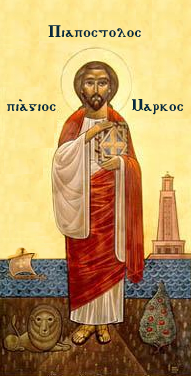
According to church tradition, the patriarchate was founded in 42 AD by Mark the Evangelist. It was the centre from which Christianity spread throughout all Egypt. Within its jurisdiction, during its most flourishing period, were included about 108 bishops; its territory embraced the six provinces of Libya Superior, Libya Inferior, the Thebaid, Egypt, Heptanomis, and Augustamnica. In the beginning the successor of St. Mark was the only metropolitan bishop, and he governed ecclesiastically the entire territory. As the Christians multiplied, and other metropolitan sees were created, he became known the arch-metropolitan. The title of patriarch did not come into use until the fifth century.
Up to the time of the First Council of Constantinople (381) the Patriarch of Alexandria ranked next to the Bishop of Rome. By the third canon of this council, afterwards confirmed by the twenty-eighth canon of the Council of Chalcedon (451), the Patriarch of Constantinople, supported by imperial authority and by a variety of concurring advantages, was given the right of precedency over the Patriarch of Alexandria. But neither Rome nor Alexandria recognized the claim until many years later. During the first two centuries of the Church little is known of the ecclesiastical history of its chief see, beyond a barren list of the names of its patriarchs, handed down chiefly through the church historian Eusebius.
All denominations acknowledge the succession of church leaders until the time of the Second Council of Ephesus of 449 and the Council of Chalcedon in 451, which gave rise to the non-Chalcedonian Coptic Orthodox Church of Alexandria and the Chalcedonian Greek Orthodox Church of Alexandria.[citation needed]
This office has historically held the title of Pope—Πάπας (Papas), which means "Father" in Greek and Coptic—since Pope Heraclas of Alexandria, the 13th Alexandrine Bishop (227–248), was the first to associate "Pope" with the title of the Bishop of Alexandria.
The word pope derives from the Greek πάππας "father". In the early centuries of Christianity, this title was applied informally (especially in the east) to all bishops and other senior clergy. In the west it began to be used particularly for the Bishop of Rome (rather than for bishops in general) in the sixth century; in 1075, Pope Gregory VII issued a declaration widely interpreted as stating this by-then-established convention. By the sixth century, this was also the normal practice in the imperial chancery of Constantinople.
Hub AI
Patriarch of Alexandria AI simulator
(@Patriarch of Alexandria_simulator)
Patriarch of Alexandria
The Patriarch of Alexandria is the archbishop of Alexandria, Egypt. Historically, this office has included the designation "pope" (etymologically "Father", like "Abbot").
The Alexandrian episcopate was revered as one of the three major episcopal sees (along with Rome and Antioch) before Constantinople and Jerusalem were granted similar status (in 381 and 451, respectively). Alexandria was elevated to de facto archiepiscopal status by the Councils of Alexandria, and this status was ratified by Canon Six of the First Council of Nicaea, which stipulated that all the Egyptian episcopal provinces were subject to the metropolitan see of Alexandria. In the sixth century, these five archbishops were formally granted the title of "patriarch" and were subsequently known as the Pentarchy.
Due to several schisms within Christianity, the title of the Patriarch of Alexandria is currently claimed by different churches (two of which are part of the Catholic Church) and held respectively by four persons: the Coptic Orthodox Patriarch of Alexandria, the Coptic Catholic Patriarchate of Alexandria, the Melkite Patriarch of Antioch, Alexandria, Jerusalem, and all the East, and the Greek Orthodox Patriarch of Alexandria. Each of the respective churches consider their patriarch as the successor to the original early bishops of Alexandria. The title was also previously held by the Latin Patriarch of Alexandria. The vast majority of the population of Christians within Alexandria and Egypt, as well as almost all of the Egyptian monastic communities, are part of the Coptic Orthodox Patriarchate of Alexandria.
According to church tradition, the patriarchate was founded in 42 AD by Mark the Evangelist. It was the centre from which Christianity spread throughout all Egypt. Within its jurisdiction, during its most flourishing period, were included about 108 bishops; its territory embraced the six provinces of Libya Superior, Libya Inferior, the Thebaid, Egypt, Heptanomis, and Augustamnica. In the beginning the successor of St. Mark was the only metropolitan bishop, and he governed ecclesiastically the entire territory. As the Christians multiplied, and other metropolitan sees were created, he became known the arch-metropolitan. The title of patriarch did not come into use until the fifth century.
Up to the time of the First Council of Constantinople (381) the Patriarch of Alexandria ranked next to the Bishop of Rome. By the third canon of this council, afterwards confirmed by the twenty-eighth canon of the Council of Chalcedon (451), the Patriarch of Constantinople, supported by imperial authority and by a variety of concurring advantages, was given the right of precedency over the Patriarch of Alexandria. But neither Rome nor Alexandria recognized the claim until many years later. During the first two centuries of the Church little is known of the ecclesiastical history of its chief see, beyond a barren list of the names of its patriarchs, handed down chiefly through the church historian Eusebius.
All denominations acknowledge the succession of church leaders until the time of the Second Council of Ephesus of 449 and the Council of Chalcedon in 451, which gave rise to the non-Chalcedonian Coptic Orthodox Church of Alexandria and the Chalcedonian Greek Orthodox Church of Alexandria.[citation needed]
This office has historically held the title of Pope—Πάπας (Papas), which means "Father" in Greek and Coptic—since Pope Heraclas of Alexandria, the 13th Alexandrine Bishop (227–248), was the first to associate "Pope" with the title of the Bishop of Alexandria.
The word pope derives from the Greek πάππας "father". In the early centuries of Christianity, this title was applied informally (especially in the east) to all bishops and other senior clergy. In the west it began to be used particularly for the Bishop of Rome (rather than for bishops in general) in the sixth century; in 1075, Pope Gregory VII issued a declaration widely interpreted as stating this by-then-established convention. By the sixth century, this was also the normal practice in the imperial chancery of Constantinople.