
Recent from talks
Paul Bogle
Knowledge base stats:
Talk channels stats:
Members stats:
Paul Bogle
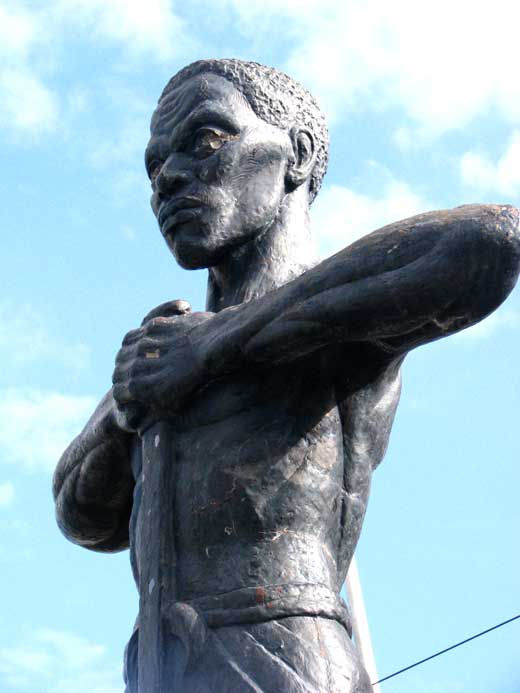
Paul Bogle (1822 – 24 October 1865) was a Jamaican Baptist deacon and activist. He is a National Hero of Jamaica. He was a leader of the 1865 Morant Bay protesters, who marched for justice and fair treatment for all the people in Jamaica. After leading the Morant Bay rebellion, Bogle was captured, tried and convicted by the colonial government (who had declared martial law), and hanged on 24 October 1865 in the Morant Bay court house.
Bogle had become a friend of a wealthy landowner and fellow Baptist George William Gordon, a bi-racial man who served in the Assembly as one of two representatives from St. Thomas-in-the-East parish. Gordon was instrumental in Bogle being appointed deacon of Stony Gut Baptist Church in 1864. Conditions were hard for black peasants, due to social discrimination, flooding and crop failure, and epidemics. The required payment of poll taxes prevented most of them from voting. In August 1865, Gordon criticised the governor of Jamaica, Edward John Eyre, for sanctioning "everything done by the higher class to the oppression of the negroes".
Bogle concentrated on improving the conditions of the poor. As awareness of social injustices and people's grievances grew, Bogle led a group of small farmers 45 miles to the capital, Spanish Town, hoping to meet with Governor Eyre to discuss their issues, but they were denied an audience. The people of Stony Gut lost confidence and trust in the Government, and Bogle's supporters grew in number in the parish.
On 7 October 1865, Bogle and some supporters attended a trial of two men from Stony Gut. One was convicted and sentenced to prison on charges of trespassing on a long abandoned plantation. A member of Bogle's group protested in court over the case, but was immediately arrested, angering the crowd further. He was rescued moments later when Bogle and his men took to the market square and retaliated. The police were severely beaten and forced to retreat.
On Monday, 9 October 1865, warrants were issued against Bogle and a number of others for riot and assault. The police arrived in Stony Gut to arrest Bogle but met with stiff resistance from the residents. They fought the police, forcing them to retreat to Morant Bay.
A few days later on 11 October 1865, there was a vestry meeting in the Court House. That day Bogle led hundreds of followers, armed with sticks and machetes, on a protest march to the court house. The authorities had mustered a volunteer militia, who fired into the protesters after stones were thrown, killing seven men. The protesters set fire to the Court House and nearby buildings. When officials tried to leave, several were killed by the angry mob outside; a total of 25 on both sides died that day.
Black peasants rose and took control of the parish for two days. The governor quickly retaliated, declaring martial law and ordering troops to capture the rebels and suppress the rebellion. The troops destroyed Stony Gut and Bogle's chapel, killing more than 400 persons outright across the parish, including women and children. They arrested more than 300 persons, including Bogle. Jamaican Maroons from Moore Town eventually captured Bogle and delivered him to the colonial government. He was tried under martial law and quickly executed, as were many others. Others, including women, and children were brought back to Morant Bay to be tried under martial law. Gordon was convicted of conspiracy and hanged on 23 October, and Bogle was hanged the following day.
Back in Britain there was public outcry, and increased opposition from liberals against Eyre's handling of the situation, with accusations against him of murder. Supporters praised the governor for acting quickly in the crisis to suppress a potentially larger rebellion.
Hub AI
Paul Bogle AI simulator
(@Paul Bogle_simulator)
Paul Bogle
Paul Bogle (1822 – 24 October 1865) was a Jamaican Baptist deacon and activist. He is a National Hero of Jamaica. He was a leader of the 1865 Morant Bay protesters, who marched for justice and fair treatment for all the people in Jamaica. After leading the Morant Bay rebellion, Bogle was captured, tried and convicted by the colonial government (who had declared martial law), and hanged on 24 October 1865 in the Morant Bay court house.
Bogle had become a friend of a wealthy landowner and fellow Baptist George William Gordon, a bi-racial man who served in the Assembly as one of two representatives from St. Thomas-in-the-East parish. Gordon was instrumental in Bogle being appointed deacon of Stony Gut Baptist Church in 1864. Conditions were hard for black peasants, due to social discrimination, flooding and crop failure, and epidemics. The required payment of poll taxes prevented most of them from voting. In August 1865, Gordon criticised the governor of Jamaica, Edward John Eyre, for sanctioning "everything done by the higher class to the oppression of the negroes".
Bogle concentrated on improving the conditions of the poor. As awareness of social injustices and people's grievances grew, Bogle led a group of small farmers 45 miles to the capital, Spanish Town, hoping to meet with Governor Eyre to discuss their issues, but they were denied an audience. The people of Stony Gut lost confidence and trust in the Government, and Bogle's supporters grew in number in the parish.
On 7 October 1865, Bogle and some supporters attended a trial of two men from Stony Gut. One was convicted and sentenced to prison on charges of trespassing on a long abandoned plantation. A member of Bogle's group protested in court over the case, but was immediately arrested, angering the crowd further. He was rescued moments later when Bogle and his men took to the market square and retaliated. The police were severely beaten and forced to retreat.
On Monday, 9 October 1865, warrants were issued against Bogle and a number of others for riot and assault. The police arrived in Stony Gut to arrest Bogle but met with stiff resistance from the residents. They fought the police, forcing them to retreat to Morant Bay.
A few days later on 11 October 1865, there was a vestry meeting in the Court House. That day Bogle led hundreds of followers, armed with sticks and machetes, on a protest march to the court house. The authorities had mustered a volunteer militia, who fired into the protesters after stones were thrown, killing seven men. The protesters set fire to the Court House and nearby buildings. When officials tried to leave, several were killed by the angry mob outside; a total of 25 on both sides died that day.
Black peasants rose and took control of the parish for two days. The governor quickly retaliated, declaring martial law and ordering troops to capture the rebels and suppress the rebellion. The troops destroyed Stony Gut and Bogle's chapel, killing more than 400 persons outright across the parish, including women and children. They arrested more than 300 persons, including Bogle. Jamaican Maroons from Moore Town eventually captured Bogle and delivered him to the colonial government. He was tried under martial law and quickly executed, as were many others. Others, including women, and children were brought back to Morant Bay to be tried under martial law. Gordon was convicted of conspiracy and hanged on 23 October, and Bogle was hanged the following day.
Back in Britain there was public outcry, and increased opposition from liberals against Eyre's handling of the situation, with accusations against him of murder. Supporters praised the governor for acting quickly in the crisis to suppress a potentially larger rebellion.
Recent media