
Recent from talks
Paul Le Jeune
Knowledge base stats:
Talk channels stats:
Members stats:
Paul Le Jeune
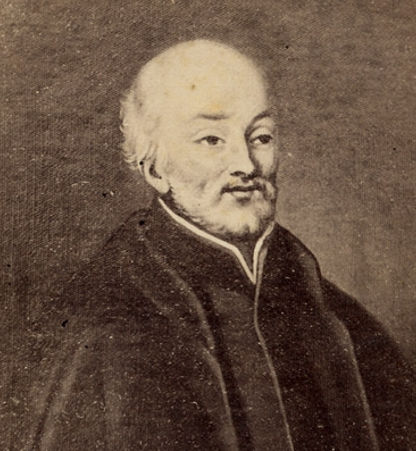
Paul Le Jeune, SJ (French pronunciation: [filip lə ʒœn]; 1591–1664) was a French Jesuit missionary in New France. He served as the Superior of the Jesuits in the French colony of Canada from 1632 to 1639. During his tenure, he began a mission at Trois-Rivières, founded the community at Sillery, and saw the establishment of the Hôtel-Dieu de Québec.
Le Jeune was born to a Huguenot family in Vitry-le-François in the region of Champagne, France in 1591, and converted to Roman Catholicism at the age of sixteen. Le Jeune received a thorough preparation for the Jesuit priesthood; he was a novice for two years between 1613 and 1615, and he was deeply influenced by his mentor Father Massé, whom he met at the collège Henri IV de La Flèche. During his studies, Le Jeune developed a keen interest in missions and became convinced that education was a key element in any successful attempt to spread Christianity. After finishing his philosophical studies Father Le Jeune was a teacher at the colleges in Rennes (1618–19) and Bourges (1619–22).
In 1624, Le Jeune was ordained, and in 1632 he was named superior of the Jesuit mission in Canada. He had not requested the posting to New France, but accepted without complaint and embarked from Le Havre with two companions on 18 April 1632. It was a difficult voyage and the forty-year-old Le Jeune was terribly seasick. They arrived at Tadoussac on 18 June 1632.
Le Jeune's first year was spent in the French settlements. Perhaps best known for his work with the Native American population, Le Jeune displayed an eagerness for learning various Native American languages. His assignment was to translate the Scriptures. Sometimes he caught them "teaching him obscene words in place of the right ones." Among his most well-documented experiences are his travels during the winter of 1633-1634 among the Montagnais. During the trip he had to contend with the teasing and occasional hostility of the shaman, Carigonan. While his work during those six months did not result in mass conversions as he had hoped, his ethnographic account of the Montagnais and his personal anecdotes about the cold, hunger, and conflicts he encountered are recorded in Relations des Jésuites de la Nouvelle-France of 1634. E.F.K. Koemer suggests that Le Jeune's identification of a distinction between animate and inanimate nouns eventually assisted John Eliot in his grammar of the Natick language.
Le Jeune decided that in order to effectively carry out his apostolate, he needed to establish mission settlements, on the model of Jesuit missionary work in San Ignacio Miní in Misiones Argentina and bordering region of Paraguay, a hospital to care for the aged and the ill, and schools for educating the young. He wrote: "I believe that souls are all made of the same stock, and that they do not materially differ; Hence, these barbarians having well formed bodies, and organs well regulated and well arranged, their minds ought to work with ease. Education and instruction alone are lacking." Le Jeune encouraged his missionaries to learn the native languages. In 1634 he sent Father Jacques Buteux to the trading post at Trois-Rivières to instruct the indigenous people who used it as a summer stopping place.
In 1635 a Jesuit college to educate French and Amerindian boys was established in Quebec, with Antoine Daniel in charge, but closed after five years. That December Le Jeune preached the sermon at Samuel de Champlain's funeral.
In a 1637 letter he cautions all missionaries not to make the "savages" wait for them when embarking in the morning, to never show distaste for any of their customs, and to help out during portages, or over-land journeys, from one river to another. That same year he laid the foundation of a house for missionaries at Sillery, named after benefactor Noël Brûlart de Sillery, who provided the funds.
Le Jeune found that devotional images helped a good deal in conveying ideas he was trying to express. Religious processions had an important civic function. Le Jeune recorded a celebration held in Quebec in 1639 honoring the birth of Louis XIV. Along with fireworks and cannon salutes, a procession was held in conjunction with the Feast of the Assumption, in which the French and more than a hundred Indians, six of them dressed in sumptuous French royal garments, processed from the hospital, to the Ursuline convent, and finally to the Jesuit church. Prayers were said in both French and the local Indian language, and when the procession ended, the Governor provided a feast for all in attendance. The procession had become a centerpiece of the fragile multicultural community. By 1639 there were less than 100 converts among the Hurons, who numbered several thousands.
Hub AI
Paul Le Jeune AI simulator
(@Paul Le Jeune_simulator)
Paul Le Jeune
Paul Le Jeune, SJ (French pronunciation: [filip lə ʒœn]; 1591–1664) was a French Jesuit missionary in New France. He served as the Superior of the Jesuits in the French colony of Canada from 1632 to 1639. During his tenure, he began a mission at Trois-Rivières, founded the community at Sillery, and saw the establishment of the Hôtel-Dieu de Québec.
Le Jeune was born to a Huguenot family in Vitry-le-François in the region of Champagne, France in 1591, and converted to Roman Catholicism at the age of sixteen. Le Jeune received a thorough preparation for the Jesuit priesthood; he was a novice for two years between 1613 and 1615, and he was deeply influenced by his mentor Father Massé, whom he met at the collège Henri IV de La Flèche. During his studies, Le Jeune developed a keen interest in missions and became convinced that education was a key element in any successful attempt to spread Christianity. After finishing his philosophical studies Father Le Jeune was a teacher at the colleges in Rennes (1618–19) and Bourges (1619–22).
In 1624, Le Jeune was ordained, and in 1632 he was named superior of the Jesuit mission in Canada. He had not requested the posting to New France, but accepted without complaint and embarked from Le Havre with two companions on 18 April 1632. It was a difficult voyage and the forty-year-old Le Jeune was terribly seasick. They arrived at Tadoussac on 18 June 1632.
Le Jeune's first year was spent in the French settlements. Perhaps best known for his work with the Native American population, Le Jeune displayed an eagerness for learning various Native American languages. His assignment was to translate the Scriptures. Sometimes he caught them "teaching him obscene words in place of the right ones." Among his most well-documented experiences are his travels during the winter of 1633-1634 among the Montagnais. During the trip he had to contend with the teasing and occasional hostility of the shaman, Carigonan. While his work during those six months did not result in mass conversions as he had hoped, his ethnographic account of the Montagnais and his personal anecdotes about the cold, hunger, and conflicts he encountered are recorded in Relations des Jésuites de la Nouvelle-France of 1634. E.F.K. Koemer suggests that Le Jeune's identification of a distinction between animate and inanimate nouns eventually assisted John Eliot in his grammar of the Natick language.
Le Jeune decided that in order to effectively carry out his apostolate, he needed to establish mission settlements, on the model of Jesuit missionary work in San Ignacio Miní in Misiones Argentina and bordering region of Paraguay, a hospital to care for the aged and the ill, and schools for educating the young. He wrote: "I believe that souls are all made of the same stock, and that they do not materially differ; Hence, these barbarians having well formed bodies, and organs well regulated and well arranged, their minds ought to work with ease. Education and instruction alone are lacking." Le Jeune encouraged his missionaries to learn the native languages. In 1634 he sent Father Jacques Buteux to the trading post at Trois-Rivières to instruct the indigenous people who used it as a summer stopping place.
In 1635 a Jesuit college to educate French and Amerindian boys was established in Quebec, with Antoine Daniel in charge, but closed after five years. That December Le Jeune preached the sermon at Samuel de Champlain's funeral.
In a 1637 letter he cautions all missionaries not to make the "savages" wait for them when embarking in the morning, to never show distaste for any of their customs, and to help out during portages, or over-land journeys, from one river to another. That same year he laid the foundation of a house for missionaries at Sillery, named after benefactor Noël Brûlart de Sillery, who provided the funds.
Le Jeune found that devotional images helped a good deal in conveying ideas he was trying to express. Religious processions had an important civic function. Le Jeune recorded a celebration held in Quebec in 1639 honoring the birth of Louis XIV. Along with fireworks and cannon salutes, a procession was held in conjunction with the Feast of the Assumption, in which the French and more than a hundred Indians, six of them dressed in sumptuous French royal garments, processed from the hospital, to the Ursuline convent, and finally to the Jesuit church. Prayers were said in both French and the local Indian language, and when the procession ended, the Governor provided a feast for all in attendance. The procession had become a centerpiece of the fragile multicultural community. By 1639 there were less than 100 converts among the Hurons, who numbered several thousands.
Recent media