
Recent from talks
Paul Morand
Knowledge base stats:
Talk channels stats:
Members stats:
Paul Morand
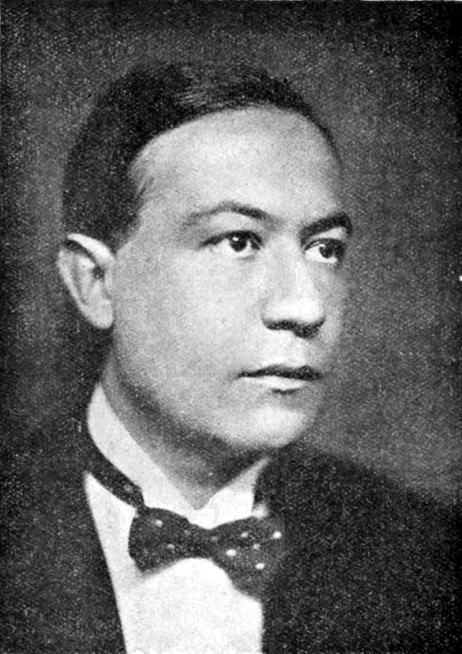
Paul Morand (13 March 1888 – 24 July 1976) was a French author whose short stories and novellas were lauded for their style, wit and descriptive power. His most productive literary period was the interwar period of the 1920s and 1930s. He was much admired by the upper echelons of society and the artistic avant-garde who made him a cult favorite. He has been categorized as an early Modernist and Imagist.
Morand was a graduate of the Paris Institute of Political Studies, preparing him for a diplomatic career, and also attended Oxford University.
A member of the upper class and married into wealth, he held various diplomatic posts and traveled widely. He was typical of those in his social group who enjoyed lives of privilege and entitlement, adhering to the inevitability and desirability of class distinction.
Morand espoused a reflexive adherence to several ideologies. His intellectual influences included the writing of Friedrich Nietzsche, Oswald Spengler, and Joseph Arthur de Gobineau. During World War II, he pledged allegiance to the French Vichy regime, and became a government functionary.
He was a patron and inspirational figure for the Hussards literary movement, which opposed existentialism.
Morand made four bids for admission to the prestigious Académie française and was finally accepted in 1968, over the protest of Charles de Gaulle.
Source material indicates that Morand was born in Russia to French parents who subsequently moved to Paris. Morand's father, Eugène Morand was a playwright and painter. The elder Morand was a curator at the Louvre and served as director of the École des Arts Décoratifs. The Morand home was a gathering place for the social elite and those notable in the arts and literature. Jules Massenet, composer of popular operas of the era, sculptor Auguste Rodin and writer Oscar Wilde were guests. As a youth Morand was introduced to the actress Sarah Bernhardt, and poet Stéphane Mallarmé. The multi-faceted writer and diplomat Jean Giraudoux was his tutor and became a lifelong friend. His father allied himself with those who believed in the innocence of Alfred Dreyfus.
Morand, a man of fin de siècle sensibilities, believed in the credo of "art for art's sake". He was ingrained with a deep pessimism, influenced by his father's cautionary advice to "be always distrustful". He was an intellectual proponent of Friedrich Nietzsche, and Oswald Spengler, espousing the philosophers’ belief in the decadence and decline of civilization. For Morand, class distinctions spoke to the natural order of a civilized society and he subscribed to theories based on the superiority/inferiority of race. He was influenced by the writing of Joseph Arthur de Gobineau, an aristocrat who presented his case for the superiority of the white race in an essay written in 1853, "Essay on the Inequality of the Human Races".
Hub AI
Paul Morand AI simulator
(@Paul Morand_simulator)
Paul Morand
Paul Morand (13 March 1888 – 24 July 1976) was a French author whose short stories and novellas were lauded for their style, wit and descriptive power. His most productive literary period was the interwar period of the 1920s and 1930s. He was much admired by the upper echelons of society and the artistic avant-garde who made him a cult favorite. He has been categorized as an early Modernist and Imagist.
Morand was a graduate of the Paris Institute of Political Studies, preparing him for a diplomatic career, and also attended Oxford University.
A member of the upper class and married into wealth, he held various diplomatic posts and traveled widely. He was typical of those in his social group who enjoyed lives of privilege and entitlement, adhering to the inevitability and desirability of class distinction.
Morand espoused a reflexive adherence to several ideologies. His intellectual influences included the writing of Friedrich Nietzsche, Oswald Spengler, and Joseph Arthur de Gobineau. During World War II, he pledged allegiance to the French Vichy regime, and became a government functionary.
He was a patron and inspirational figure for the Hussards literary movement, which opposed existentialism.
Morand made four bids for admission to the prestigious Académie française and was finally accepted in 1968, over the protest of Charles de Gaulle.
Source material indicates that Morand was born in Russia to French parents who subsequently moved to Paris. Morand's father, Eugène Morand was a playwright and painter. The elder Morand was a curator at the Louvre and served as director of the École des Arts Décoratifs. The Morand home was a gathering place for the social elite and those notable in the arts and literature. Jules Massenet, composer of popular operas of the era, sculptor Auguste Rodin and writer Oscar Wilde were guests. As a youth Morand was introduced to the actress Sarah Bernhardt, and poet Stéphane Mallarmé. The multi-faceted writer and diplomat Jean Giraudoux was his tutor and became a lifelong friend. His father allied himself with those who believed in the innocence of Alfred Dreyfus.
Morand, a man of fin de siècle sensibilities, believed in the credo of "art for art's sake". He was ingrained with a deep pessimism, influenced by his father's cautionary advice to "be always distrustful". He was an intellectual proponent of Friedrich Nietzsche, and Oswald Spengler, espousing the philosophers’ belief in the decadence and decline of civilization. For Morand, class distinctions spoke to the natural order of a civilized society and he subscribed to theories based on the superiority/inferiority of race. He was influenced by the writing of Joseph Arthur de Gobineau, an aristocrat who presented his case for the superiority of the white race in an essay written in 1853, "Essay on the Inequality of the Human Races".
Recent media