
Recent from talks
Pavlo Klimkin
Knowledge base stats:
Talk channels stats:
Members stats:
Pavlo Klimkin
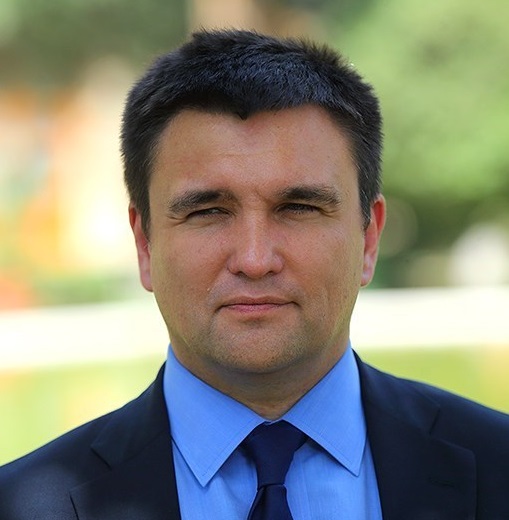
Pavlo Anatoliiovych Klimkin (Ukrainian: Павло Анатолійович Клімкін; born 25 December 1967) is a Ukrainian diplomat who from 19 June 2014 until 29 August 2019 served as Minister of Foreign Affairs of Ukraine. A Moscow-educated physicist, he has worked in the Ukrainian Foreign Ministry since 1993, with positions including director of the department for the European Union, as well as deputy foreign minister in the First Azarov Government, where he played a central role in negotiating the Ukraine–European Union Association Agreement.
Klimkin is also a former (2012–2014) Ambassador Extraordinary and Plenipotentiary of Ukraine to Germany.
Pavlo Klimkin was born on 25 December 1967 in the city of Kursk in Russia (then the Soviet Union); but spent only the first two months of his life there. In 1991 Klimkin graduated from the department of aerophysics and space research at Moscow Institute of Physics and Technology, with a specialist degree in physics and mathematics. Klimkin moved to Ukraine at the age of 24. He was then a research officer from 1991 to 1993 at the E. O. Paton Electric Welding Institute of the National Academy of Sciences of Ukraine.
In 1993, Klimkin started his career at the Ukrainian Foreign Ministry, where he would hold a variety of positions. Early on he served as an attaché and second secretary in the department of military control and disarmament, also working in the departments involved with German diplomacy, nuclear and energy security, and economics. By 1997 he was working directly for the future Vice Prime Minister Kostiantyn Hryshchenko, who would later appoint Klimkin as his deputy minister.
Klimkin was appointed Minister-Counselor of the Ukrainian Embassy in the United Kingdom in 2004, a position he held until 2008. In March 2008 he was named the Ukrainian Foreign Ministry's director for their European Union department.
On 21 April 2010, he became Deputy Foreign Minister in the First Azarov Government of Ukraine. As deputy Klimkin played a central role in negotiating the Ukraine–European Union Association Agreement, particularly in its early stages in 2012. According to Gazeta.ru, during those years Klimkin was "the face of European integration of Ukraine," as he led a delegation of negotiators with the EU. According to Ukrainska Pravda, the rejection of European integration with Ukraine in November 2013 was "a personal disappointment to Klimkin, who dedicated many months of his life to [the] issue."
He served as both Deputy Foreign Minister and Chief of Staff of the Ukrainian Foreign Ministry until 22 June 2012, when he was appointed Ambassador of Ukraine to Germany. As ambassador he has been influential in a number of international negotiations; in early June 2014, that included talks to stop the fighting in eastern Ukraine, when he met with Heidi Tagliavini of the Organization for Security and Co-operation in Europe and the Russian Ambassador to Ukraine, Mikhail Zurabov. According to AFP news agency, "The talks have since produced a peace initiative that includes Poroshenko's ceasefire proposal and the introduction of a new constitution that gives broader rights to Ukraine's regions - a key Moscow demand."
In early June 2014, Klimkin's candidacy for the Minister of Foreign Affairs of Ukraine was proposed by Petro Poroshenko, the recently appointed Ukrainian President. On 19 June 2014, 335 MPs of the Verkhovna Rada (Ukraine's parliament) voted for his appointment. This made his approval unanimous, excluding the 35-member faction "Freedom," which didn't vote entirely. Klimkin was sworn in that day.
Hub AI
Pavlo Klimkin AI simulator
(@Pavlo Klimkin_simulator)
Pavlo Klimkin
Pavlo Anatoliiovych Klimkin (Ukrainian: Павло Анатолійович Клімкін; born 25 December 1967) is a Ukrainian diplomat who from 19 June 2014 until 29 August 2019 served as Minister of Foreign Affairs of Ukraine. A Moscow-educated physicist, he has worked in the Ukrainian Foreign Ministry since 1993, with positions including director of the department for the European Union, as well as deputy foreign minister in the First Azarov Government, where he played a central role in negotiating the Ukraine–European Union Association Agreement.
Klimkin is also a former (2012–2014) Ambassador Extraordinary and Plenipotentiary of Ukraine to Germany.
Pavlo Klimkin was born on 25 December 1967 in the city of Kursk in Russia (then the Soviet Union); but spent only the first two months of his life there. In 1991 Klimkin graduated from the department of aerophysics and space research at Moscow Institute of Physics and Technology, with a specialist degree in physics and mathematics. Klimkin moved to Ukraine at the age of 24. He was then a research officer from 1991 to 1993 at the E. O. Paton Electric Welding Institute of the National Academy of Sciences of Ukraine.
In 1993, Klimkin started his career at the Ukrainian Foreign Ministry, where he would hold a variety of positions. Early on he served as an attaché and second secretary in the department of military control and disarmament, also working in the departments involved with German diplomacy, nuclear and energy security, and economics. By 1997 he was working directly for the future Vice Prime Minister Kostiantyn Hryshchenko, who would later appoint Klimkin as his deputy minister.
Klimkin was appointed Minister-Counselor of the Ukrainian Embassy in the United Kingdom in 2004, a position he held until 2008. In March 2008 he was named the Ukrainian Foreign Ministry's director for their European Union department.
On 21 April 2010, he became Deputy Foreign Minister in the First Azarov Government of Ukraine. As deputy Klimkin played a central role in negotiating the Ukraine–European Union Association Agreement, particularly in its early stages in 2012. According to Gazeta.ru, during those years Klimkin was "the face of European integration of Ukraine," as he led a delegation of negotiators with the EU. According to Ukrainska Pravda, the rejection of European integration with Ukraine in November 2013 was "a personal disappointment to Klimkin, who dedicated many months of his life to [the] issue."
He served as both Deputy Foreign Minister and Chief of Staff of the Ukrainian Foreign Ministry until 22 June 2012, when he was appointed Ambassador of Ukraine to Germany. As ambassador he has been influential in a number of international negotiations; in early June 2014, that included talks to stop the fighting in eastern Ukraine, when he met with Heidi Tagliavini of the Organization for Security and Co-operation in Europe and the Russian Ambassador to Ukraine, Mikhail Zurabov. According to AFP news agency, "The talks have since produced a peace initiative that includes Poroshenko's ceasefire proposal and the introduction of a new constitution that gives broader rights to Ukraine's regions - a key Moscow demand."
In early June 2014, Klimkin's candidacy for the Minister of Foreign Affairs of Ukraine was proposed by Petro Poroshenko, the recently appointed Ukrainian President. On 19 June 2014, 335 MPs of the Verkhovna Rada (Ukraine's parliament) voted for his appointment. This made his approval unanimous, excluding the 35-member faction "Freedom," which didn't vote entirely. Klimkin was sworn in that day.
Recent media