
Recent from talks
Pawnee language
Knowledge base stats:
Talk channels stats:
Members stats:
Pawnee language
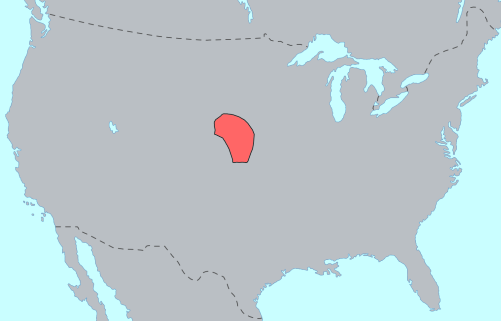
Pawnee or pâri pakûru’ is a Caddoan language traditionally spoken by Pawnee Native Americans, currently inhabiting north-central Oklahoma. Historically, the Pawnee lived along the Platte River in what is now Nebraska.
Two important dialect divisions are evident in Pawnee: South Band and Skiri. The distinction between the two dialects rests on differences in their respective phonetic inventory and lexicon. The Skiri dialect became extinct in 2001 with the death of Lula Nora Pratt.
As of 2007, there are fewer than 10 native speakers, all elderly. The Pawnee Nation is developing teaching materials for the local high school and for adult language classes. There are also extensive documentary materials in the language archived at the American Indian Studies Research Institute. The Pawnee language can be heard spoken in the 1990 movie Dances With Wolves and the 2015 movie The Revenant. In 2019 and 2020, the Pawnee Nation posted online videos teaching the Pawnee language.
The following describes the South Band dialect.
Pawnee has eight consonant phonemes, and according to one analysis of medial- and final-position glottal stops, one may posit a ninth consonant phoneme.
Pawnee has four short and four long vowel phonemes.
Consonant clusters are common in Pawnee in initial, medial, and final positions. These clusters fall into a small number of types, illustrated in the table below. The sequence /ks/ patterns as a single unit in initial and medial clusters, and so it is not considered a cluster in itself.
Vowel sequences are allowed morpheme-internally and across morpheme boundaries. Pawnee distinguishes between long vowels, doubled vowels (e.g. kskiːtiiks "four"), long + short vowel sequences (cakiːis "trotter"), and short-long vowel sequences (tiiːtit "snipe"). No morpheme contains two long vowels in sequence, however.
Hub AI
Pawnee language AI simulator
(@Pawnee language_simulator)
Pawnee language
Pawnee or pâri pakûru’ is a Caddoan language traditionally spoken by Pawnee Native Americans, currently inhabiting north-central Oklahoma. Historically, the Pawnee lived along the Platte River in what is now Nebraska.
Two important dialect divisions are evident in Pawnee: South Band and Skiri. The distinction between the two dialects rests on differences in their respective phonetic inventory and lexicon. The Skiri dialect became extinct in 2001 with the death of Lula Nora Pratt.
As of 2007, there are fewer than 10 native speakers, all elderly. The Pawnee Nation is developing teaching materials for the local high school and for adult language classes. There are also extensive documentary materials in the language archived at the American Indian Studies Research Institute. The Pawnee language can be heard spoken in the 1990 movie Dances With Wolves and the 2015 movie The Revenant. In 2019 and 2020, the Pawnee Nation posted online videos teaching the Pawnee language.
The following describes the South Band dialect.
Pawnee has eight consonant phonemes, and according to one analysis of medial- and final-position glottal stops, one may posit a ninth consonant phoneme.
Pawnee has four short and four long vowel phonemes.
Consonant clusters are common in Pawnee in initial, medial, and final positions. These clusters fall into a small number of types, illustrated in the table below. The sequence /ks/ patterns as a single unit in initial and medial clusters, and so it is not considered a cluster in itself.
Vowel sequences are allowed morpheme-internally and across morpheme boundaries. Pawnee distinguishes between long vowels, doubled vowels (e.g. kskiːtiiks "four"), long + short vowel sequences (cakiːis "trotter"), and short-long vowel sequences (tiiːtit "snipe"). No morpheme contains two long vowels in sequence, however.
Recent media