
Recent from talks
Pax Mongolica
Knowledge base stats:
Talk channels stats:
Members stats:
Pax Mongolica
The Pax Mongolica (Latin for "Mongol Peace"), less often known as Pax Tatarica ("Tatar Peace"), is a historiographical term modeled after the original phrase Pax Romana which describes the stabilizing effects of the conquests of the Mongol Empire on the social, cultural and economic life of the inhabitants of the vast Eurasian territory that the Mongols conquered in the 13th and 14th centuries. The term is used to describe the eased communication and commerce that the unified administration helped to create and the period of relative peace that followed the Mongols' vast and violent conquests.
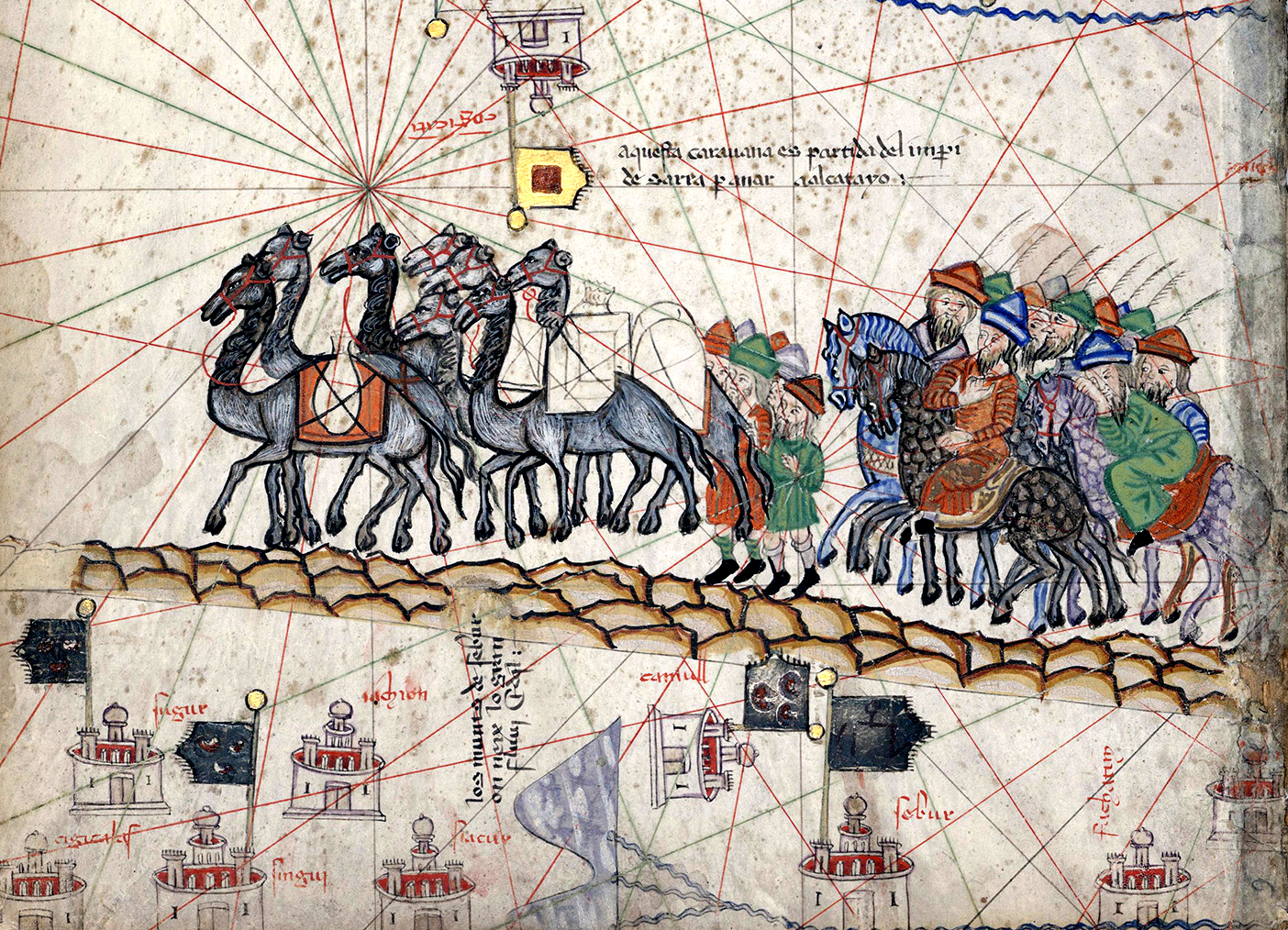
The conquests of Genghis Khan (r. 1206–1227) and his successors, spanning from Southeast Asia to Eastern Europe, effectively took over the Eastern world with the Western world. The Silk Road, connecting trade centres across Asia and Europe, came under the sole rule of the Mongol Empire. It was commonly said that "a maiden bearing a nugget of gold on her head could wander safely throughout the realm". Despite the political fragmentation of the Mongol Empire into four khanates (Yuan dynasty, Golden Horde, Chagatai Khanate, and Ilkhanate), nearly a century of conquest and civil war was followed by relative stability in the early 14th century. The end of the Pax Mongolica was marked by the disintegration of the khanates and the outbreak of the Black Death in Asia which spread along trade routes to much of the world in the mid-14th century.
During this time, Mongol elements including the ʼPhags-pa script made numerous appearances in Western art.
Pax Mongolica followed the wake of conquests by the Mongol Empire beginning with Genghis Khan in the early 13th century. In the process of conquering the various tribes in the region, Genghis Khan revolutionised the way Mongolian tribal society was structured. After each new victory, more and more people were incorporated under Genghis Khan's rule, thus diversifying the societal balance of the tribe. In 1203, Genghis Khan, in an effort to strengthen his army, ordered a reform that reorganised his army's structure while breaking down the traditional clan- and kindred-based divisions that had previously fragmented the society and military. He arranged his army into arbans (inter-ethnic groups of ten), and the members of an arban were commanded to be loyal to one another regardless of ethnic origin. Ten arbans made a zuun, or a company; ten zuuns made a myangan, or a battalion; and ten myangans formed a tumen, or an army of 10,000. This decimal system organisation of Genghis Khan's strong military would prove very effective in conquering, by persuasion or force, the many tribes of the central Asian steppe, but it would also strengthen Mongol society as a whole. By 1206, Genghis Khan's military expansion had unified the tribes of Mongolia, and in the same year he was elected and acclaimed as the leader of Mongolia.
The new Mongol empire quickly moved to annex more territory. The first Mongol conquests were campaigns against the Western Xia. In 1209, the Mongols conquered the Western Xia. Between 1213 and 1214, the Mongols conquered the Jin Empire, and by 1214, the Mongols had captured most of the land north of the Yellow River. In 1221, Mongol generals Jebe and Subutai began their expedition around the Caspian Sea and into Kievan Rus'; Genghis Khan defeated Turkic Jalal al-Din Mangburni at the Battle of the Indus; the Khwarazmian Empire were defeated that same year. In 1235, the Mongols successfully invaded Korea. Two years later in 1237, Batu Khan and Subutai began their conquest of Rus'; they invaded Poland and Hungary in 1241. In 1252, the Mongols began their invasion of Song China; they would seize the capital of Hangzhou in 1276. In 1258, Hulegu Khan captured Baghdad.
Each new victory gave the Mongols the chance to incorporate new people, especially foreign engineers and labourers, into their society. Each new conquest also acquired new trade routes and the opportunity to control taxation and tribute. Thus, through territorial expansion, the Mongol Nation not only became an empire, but also became more technologically and economically advanced.
At its height, the Mongolian empire stretched from Busan in the east to Budapest in the west, from Lithuania in the north to Vietnam in the south. This meant that an extremely large part of the continent was united under one political authority. As a result, the trade routes used by merchants became safe for travel, resulting in an overall growth and expansion of trade from China in the east to Britain in the west. Thus, the Pax Mongolica greatly influenced many civilizations in Eurasia during the 13th and 14th centuries.
Under the Mongols new technologies and commodities were exchanged across the Old World, particularly Eurasia. Thomas T. Allsen noted many personnel exchanges occurred during the Mongol period. There were many significant developments in economy (especially trade and public finance), military, medicine, agriculture, cuisine, astronomy, printing, geography, and historiography, which were not limited to Eurasia but also included North Africa.
Hub AI
Pax Mongolica AI simulator
(@Pax Mongolica_simulator)
Pax Mongolica
The Pax Mongolica (Latin for "Mongol Peace"), less often known as Pax Tatarica ("Tatar Peace"), is a historiographical term modeled after the original phrase Pax Romana which describes the stabilizing effects of the conquests of the Mongol Empire on the social, cultural and economic life of the inhabitants of the vast Eurasian territory that the Mongols conquered in the 13th and 14th centuries. The term is used to describe the eased communication and commerce that the unified administration helped to create and the period of relative peace that followed the Mongols' vast and violent conquests.
The conquests of Genghis Khan (r. 1206–1227) and his successors, spanning from Southeast Asia to Eastern Europe, effectively took over the Eastern world with the Western world. The Silk Road, connecting trade centres across Asia and Europe, came under the sole rule of the Mongol Empire. It was commonly said that "a maiden bearing a nugget of gold on her head could wander safely throughout the realm". Despite the political fragmentation of the Mongol Empire into four khanates (Yuan dynasty, Golden Horde, Chagatai Khanate, and Ilkhanate), nearly a century of conquest and civil war was followed by relative stability in the early 14th century. The end of the Pax Mongolica was marked by the disintegration of the khanates and the outbreak of the Black Death in Asia which spread along trade routes to much of the world in the mid-14th century.
During this time, Mongol elements including the ʼPhags-pa script made numerous appearances in Western art.
Pax Mongolica followed the wake of conquests by the Mongol Empire beginning with Genghis Khan in the early 13th century. In the process of conquering the various tribes in the region, Genghis Khan revolutionised the way Mongolian tribal society was structured. After each new victory, more and more people were incorporated under Genghis Khan's rule, thus diversifying the societal balance of the tribe. In 1203, Genghis Khan, in an effort to strengthen his army, ordered a reform that reorganised his army's structure while breaking down the traditional clan- and kindred-based divisions that had previously fragmented the society and military. He arranged his army into arbans (inter-ethnic groups of ten), and the members of an arban were commanded to be loyal to one another regardless of ethnic origin. Ten arbans made a zuun, or a company; ten zuuns made a myangan, or a battalion; and ten myangans formed a tumen, or an army of 10,000. This decimal system organisation of Genghis Khan's strong military would prove very effective in conquering, by persuasion or force, the many tribes of the central Asian steppe, but it would also strengthen Mongol society as a whole. By 1206, Genghis Khan's military expansion had unified the tribes of Mongolia, and in the same year he was elected and acclaimed as the leader of Mongolia.
The new Mongol empire quickly moved to annex more territory. The first Mongol conquests were campaigns against the Western Xia. In 1209, the Mongols conquered the Western Xia. Between 1213 and 1214, the Mongols conquered the Jin Empire, and by 1214, the Mongols had captured most of the land north of the Yellow River. In 1221, Mongol generals Jebe and Subutai began their expedition around the Caspian Sea and into Kievan Rus'; Genghis Khan defeated Turkic Jalal al-Din Mangburni at the Battle of the Indus; the Khwarazmian Empire were defeated that same year. In 1235, the Mongols successfully invaded Korea. Two years later in 1237, Batu Khan and Subutai began their conquest of Rus'; they invaded Poland and Hungary in 1241. In 1252, the Mongols began their invasion of Song China; they would seize the capital of Hangzhou in 1276. In 1258, Hulegu Khan captured Baghdad.
Each new victory gave the Mongols the chance to incorporate new people, especially foreign engineers and labourers, into their society. Each new conquest also acquired new trade routes and the opportunity to control taxation and tribute. Thus, through territorial expansion, the Mongol Nation not only became an empire, but also became more technologically and economically advanced.
At its height, the Mongolian empire stretched from Busan in the east to Budapest in the west, from Lithuania in the north to Vietnam in the south. This meant that an extremely large part of the continent was united under one political authority. As a result, the trade routes used by merchants became safe for travel, resulting in an overall growth and expansion of trade from China in the east to Britain in the west. Thus, the Pax Mongolica greatly influenced many civilizations in Eurasia during the 13th and 14th centuries.
Under the Mongols new technologies and commodities were exchanged across the Old World, particularly Eurasia. Thomas T. Allsen noted many personnel exchanges occurred during the Mongol period. There were many significant developments in economy (especially trade and public finance), military, medicine, agriculture, cuisine, astronomy, printing, geography, and historiography, which were not limited to Eurasia but also included North Africa.
Recent media