
Recent from talks
Pendennis Castle
Knowledge base stats:
Talk channels stats:
Members stats:
Pendennis Castle
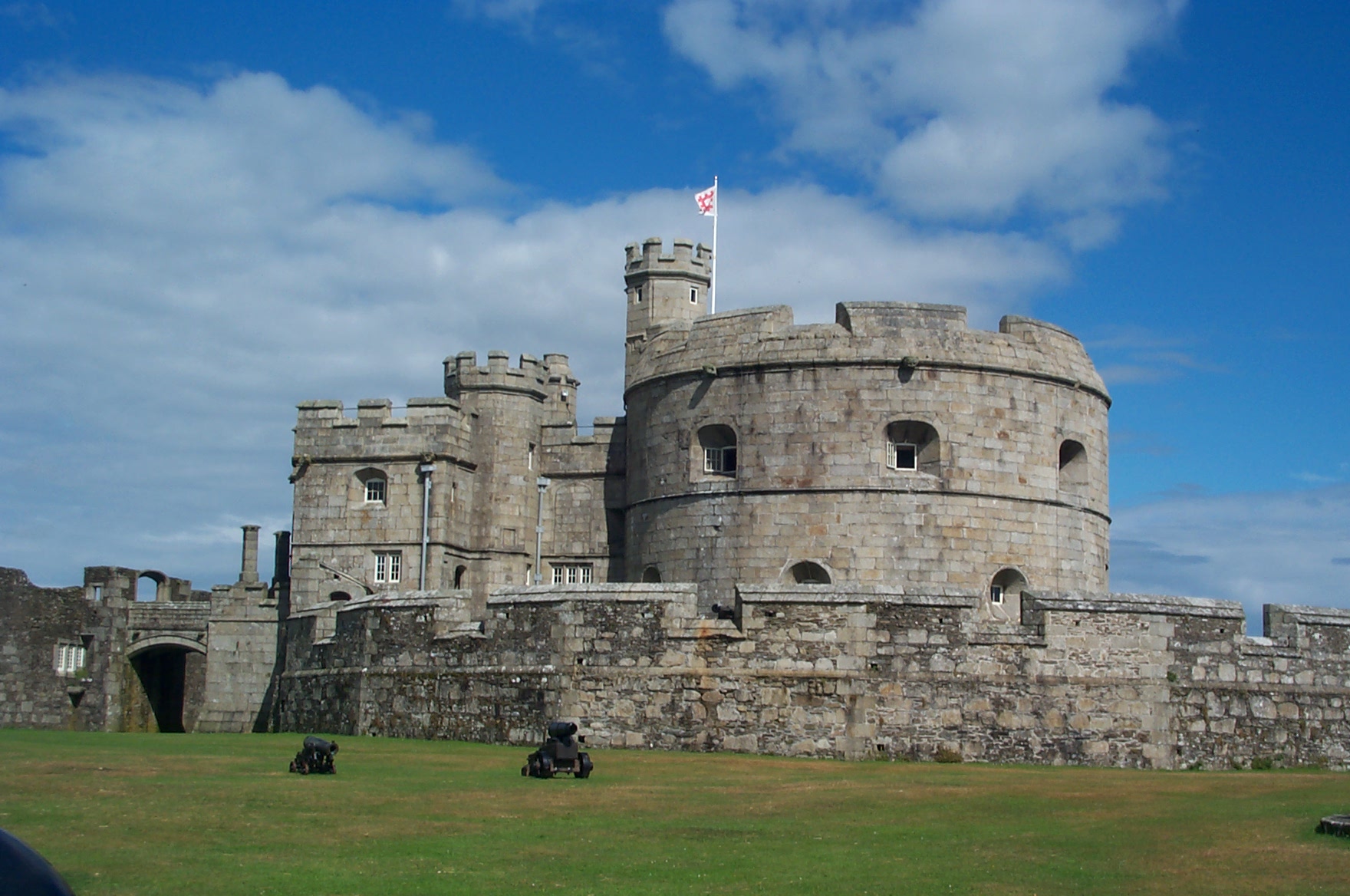
Pendennis Castle (Cornish: Kastel Penndinas) is an artillery fort constructed by Henry VIII near Falmouth, Cornwall, England between 1540 and 1542. It formed part of the King's Device programme to protect against invasion from France and the Holy Roman Empire, and defended the Carrick Roads waterway at the mouth of the River Fal. The original, circular keep and gun platform was expanded at the end of the century to cope with the increasing Spanish threat, with a ring of extensive stone ramparts and bastions built around the older castle. Pendennis saw service during the English Civil War, when it was held by the Royalists, and was only taken by Parliament after a long siege in 1646. It survived the interregnum and Charles II renovated the fortress after his restoration to the throne in 1660.
Ongoing concerns about a possible French invasion resulted in Pendennis's defences being modernised and upgraded in the 1730s and again during the 1790s; during the Napoleonic Wars, the castle held up to 48 guns. In the 1880s and 1890s an electrically operated minefield was laid across the River Fal, operated from Pendennis and St Mawes, and new, quick-firing guns were installed to support these defences. The castle was rearmed during the First World War but saw no action and was rearmed again during the Second World War when it saw action against the German Luftwaffe aircraft, but in 1956, by now obsolete, it was decommissioned. It passed into the control of the Ministry of Works, who cleared away many of the more modern military buildings and opened the site to visitors. In the 21st century, the castle is managed by English Heritage as a tourist attraction, receiving 74,230 visitors in 2011–12. The heritage agency Historic England considers Pendennis to be "one of the finest examples of a post-medieval defensive promontory fort in the country".
Pendennis Castle was built as a consequence of international tensions between England, France and the Holy Roman Empire in the final years of the reign of King Henry VIII. Traditionally the Crown had left coastal defences to the local lords and communities, only taking a modest role in building and maintaining fortifications, and while France and the Empire remained in conflict with one another, maritime raids were common but an actual invasion of England seemed unlikely. Basic defences, based around simple blockhouses and towers, existed in the south-west and along the Sussex coast, with a few more impressive works in the north of England, but in general the fortifications were very limited in scale.
In 1533, Henry broke with Pope Paul III in order to annul the long-standing marriage to his wife, Catherine of Aragon and remarry. Catherine was the aunt of Charles V, the Holy Roman Emperor, and he took the annulment as a personal insult. This resulted in France and the Empire declaring an alliance against Henry in 1538, and the Pope encouraging the two countries to attack England. An invasion of England appeared certain. In response, Henry issued an order, called a "device", in 1539, giving instructions for the "defence of the realm in time of invasion" and the construction of forts along the English coastline.
The stretch of water known as Carrick Roads at the mouth of the River Fal was an important anchorage serving shipping arriving from the Atlantic and the Mediterranean. A small gun tower, called the Little Dennis Blockhouse, was built in 1539 overlooking the entrance, and plans were made to protect the anchorage further with five additional castles. In the event, only two of these were constructed, Pendennis and St Mawes Castle, positioned on each side of Carrick Roads and able to provide overlapping fire across the water. John Killigrew, a prominent member of the local Cornish gentry, probably oversaw the construction of Pendennis; it was built on his land and he was appointed as its first captain. Pendennis Castle cost £5,614 to construct.
The Killigrews controlled the castle for several decades, with John Killigrew's son and grandson continuing in turn as the captain there until 1605. The captains of Pendennis frequently argued with those of St Mawes and in 1630 a legal dispute broke out about the rights to search and detain incoming shipping: both castles argued that they had a traditional right to do so. The Admiralty eventually issued a compromise, proposing that the castles share the searching of the traffic.
Meanwhile, a lasting peace with France was made in 1558 and the initial invasion threat passed. The Spanish threat to the south-west of England became more serious, however, and war broke out in 1569. As a result, a defensive earthwork was constructed north-west of the castle to protect it against an attack from the land, and an additional gun battery facing upriver was installed alongside the blockhouse. The levels of the garrison varied considerably during the period. Pendennis had a garrison of 100 men in 1578, and could have mustered around 500 men in 1596, while in 1599 it was reportedly guarded by 200 soldiers.
The Spanish threat continued; raiding parties destroyed the Killigrews' family home at Arwenack in 1593, and four Spanish ships attacked the towns along the coast in 1595. In 1597 a Spanish fleet with 20,000 men set out to assault Pendennis and invade England, only being prevented from landing by bad weather. The failed attack caused considerable concern inside government and the privy council were informed that the castle was not sufficient to prevent a Spanish landing along the coast. A subsequent review carried out by Sir Nicholas Parker, Sir Walter Raleigh and Sir Ferdinando Gorges recommended that the castle's defences should be significantly extended. The military engineer Paul Ivey constructed an Italian-styled ring of earthworks, embrasures, bastions and a stone-revetted ditch around the original Henrician castle between 1597 and 1600, using a team of 400 local workers, costing around £80 a week in wages.
Hub AI
Pendennis Castle AI simulator
(@Pendennis Castle_simulator)
Pendennis Castle
Pendennis Castle (Cornish: Kastel Penndinas) is an artillery fort constructed by Henry VIII near Falmouth, Cornwall, England between 1540 and 1542. It formed part of the King's Device programme to protect against invasion from France and the Holy Roman Empire, and defended the Carrick Roads waterway at the mouth of the River Fal. The original, circular keep and gun platform was expanded at the end of the century to cope with the increasing Spanish threat, with a ring of extensive stone ramparts and bastions built around the older castle. Pendennis saw service during the English Civil War, when it was held by the Royalists, and was only taken by Parliament after a long siege in 1646. It survived the interregnum and Charles II renovated the fortress after his restoration to the throne in 1660.
Ongoing concerns about a possible French invasion resulted in Pendennis's defences being modernised and upgraded in the 1730s and again during the 1790s; during the Napoleonic Wars, the castle held up to 48 guns. In the 1880s and 1890s an electrically operated minefield was laid across the River Fal, operated from Pendennis and St Mawes, and new, quick-firing guns were installed to support these defences. The castle was rearmed during the First World War but saw no action and was rearmed again during the Second World War when it saw action against the German Luftwaffe aircraft, but in 1956, by now obsolete, it was decommissioned. It passed into the control of the Ministry of Works, who cleared away many of the more modern military buildings and opened the site to visitors. In the 21st century, the castle is managed by English Heritage as a tourist attraction, receiving 74,230 visitors in 2011–12. The heritage agency Historic England considers Pendennis to be "one of the finest examples of a post-medieval defensive promontory fort in the country".
Pendennis Castle was built as a consequence of international tensions between England, France and the Holy Roman Empire in the final years of the reign of King Henry VIII. Traditionally the Crown had left coastal defences to the local lords and communities, only taking a modest role in building and maintaining fortifications, and while France and the Empire remained in conflict with one another, maritime raids were common but an actual invasion of England seemed unlikely. Basic defences, based around simple blockhouses and towers, existed in the south-west and along the Sussex coast, with a few more impressive works in the north of England, but in general the fortifications were very limited in scale.
In 1533, Henry broke with Pope Paul III in order to annul the long-standing marriage to his wife, Catherine of Aragon and remarry. Catherine was the aunt of Charles V, the Holy Roman Emperor, and he took the annulment as a personal insult. This resulted in France and the Empire declaring an alliance against Henry in 1538, and the Pope encouraging the two countries to attack England. An invasion of England appeared certain. In response, Henry issued an order, called a "device", in 1539, giving instructions for the "defence of the realm in time of invasion" and the construction of forts along the English coastline.
The stretch of water known as Carrick Roads at the mouth of the River Fal was an important anchorage serving shipping arriving from the Atlantic and the Mediterranean. A small gun tower, called the Little Dennis Blockhouse, was built in 1539 overlooking the entrance, and plans were made to protect the anchorage further with five additional castles. In the event, only two of these were constructed, Pendennis and St Mawes Castle, positioned on each side of Carrick Roads and able to provide overlapping fire across the water. John Killigrew, a prominent member of the local Cornish gentry, probably oversaw the construction of Pendennis; it was built on his land and he was appointed as its first captain. Pendennis Castle cost £5,614 to construct.
The Killigrews controlled the castle for several decades, with John Killigrew's son and grandson continuing in turn as the captain there until 1605. The captains of Pendennis frequently argued with those of St Mawes and in 1630 a legal dispute broke out about the rights to search and detain incoming shipping: both castles argued that they had a traditional right to do so. The Admiralty eventually issued a compromise, proposing that the castles share the searching of the traffic.
Meanwhile, a lasting peace with France was made in 1558 and the initial invasion threat passed. The Spanish threat to the south-west of England became more serious, however, and war broke out in 1569. As a result, a defensive earthwork was constructed north-west of the castle to protect it against an attack from the land, and an additional gun battery facing upriver was installed alongside the blockhouse. The levels of the garrison varied considerably during the period. Pendennis had a garrison of 100 men in 1578, and could have mustered around 500 men in 1596, while in 1599 it was reportedly guarded by 200 soldiers.
The Spanish threat continued; raiding parties destroyed the Killigrews' family home at Arwenack in 1593, and four Spanish ships attacked the towns along the coast in 1595. In 1597 a Spanish fleet with 20,000 men set out to assault Pendennis and invade England, only being prevented from landing by bad weather. The failed attack caused considerable concern inside government and the privy council were informed that the castle was not sufficient to prevent a Spanish landing along the coast. A subsequent review carried out by Sir Nicholas Parker, Sir Walter Raleigh and Sir Ferdinando Gorges recommended that the castle's defences should be significantly extended. The military engineer Paul Ivey constructed an Italian-styled ring of earthworks, embrasures, bastions and a stone-revetted ditch around the original Henrician castle between 1597 and 1600, using a team of 400 local workers, costing around £80 a week in wages.
Recent media