
Recent from talks
Perranarworthal
Knowledge base stats:
Talk channels stats:
Members stats:
Perranarworthal
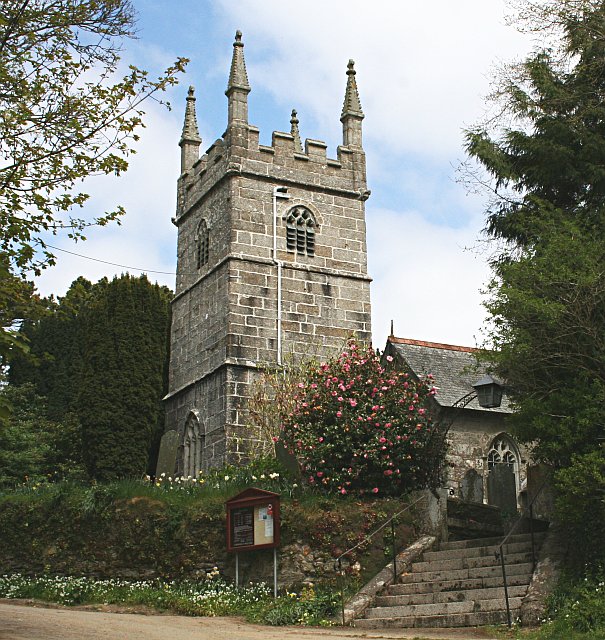
Perranarworthal (Cornish: Peranarwodhel) is a civil parish and village in Cornwall, England, United Kingdom. The village is about four miles (6.5 km) northwest of Falmouth and five miles (8 km) southwest of Truro. The parish population at the 2011 census was 1,496.
Perran Wharf is the area of the parish beside the River Kennall (a tributary of Restronguet Creek) where there were wharves and a quay. This has been developed into Perran Foundry where there are new homes and working space settled amidst the history of the site. The other settlements in the parish are Perranwell and Perranwell Station. Perranwell railway station is on the Maritime Line.
Perranarworthal parish is bordered on the north by Kea parish, on the east by Restronguet Creek and Mylor parish, on the south by St Gluvias and Stithians parishes and on the west by Gwennap parish.
The name derives from the Manor of Arworthal which has had a number of spellings in the past including Hareworthal (1187), Arwoethel and Arwythel. By the 18th century, two names appear on maps: "Perran Arworthal" meaning St Piran's by the creek or estuary. William Penaluna described the settlement in 1838.
The Perran Iron Foundry was an innovative concern, which at its peak employed more than 400 men. Run by the Fox family of Falmouth and other Quaker business families, it was set up on the site of a tin smelting works in 1791. The foundry was later operated in partnership with the Williams family, and in 1858, it was sold to them.
The creek serving the factory silted up and mining in Cornwall declined. Eight or nine barges at a time could be found at Perranwharf with a similar number of wagons waiting to be loaded. The wharf had been used to import timber for the mining industry from Scandinavia, as well as coal, lime and guano. The guano trade was estimated to bring in between £20,000 and £30,000 a year.
The slump in the mining industry during the 1870s hit Perran Foundry badly and it closed in March 1879 with the loss of 400 jobs, causing great distress in the parish. In April 1879, the Royal Cornwall Gazette reported that a soup kitchen had been open since January: "793 people had attended and 1,240 quarts of soup were distributed". In July 1880 a preliminary notice of an intended auction for Perran Foundry was published. Williams's Perran Foundry covered an area of over 4 acres (1.6 ha) and had a lease of 99 years (commencing 24 August 1874) from Colonel Tremayne. The property contained a number of workshops, including a smithy, a hammermill, and a quay at Restronguet with access for 200-ton vessels. The machinery, plant and stock were auctioned on 30 September and 1 October 1880. Large stocks of boiler plates and machinery at the Boiler Yard, Ponsanooth were auctioned, and at the Pattern Shop, Foundry Yard, 10 tons of copper, brass, lead, tin, pewter and other metals, 6 tons of steel, several thousand fire bricks, 50 tons coal and coke, timber and numerous other lots. A chemical manure works known as Basset Foundry was sold to Mr T Rickard of Penryn for £101 in January 1883.
The buildings – including Manor Mill on the opposite side of the road – were later adapted by the Edwards Brothers for the milling and storage of grains and animal foods, and also cloth dyeing; another waterwheel was added. The site was used for various purposes until it closed in 1986.
Hub AI
Perranarworthal AI simulator
(@Perranarworthal_simulator)
Perranarworthal
Perranarworthal (Cornish: Peranarwodhel) is a civil parish and village in Cornwall, England, United Kingdom. The village is about four miles (6.5 km) northwest of Falmouth and five miles (8 km) southwest of Truro. The parish population at the 2011 census was 1,496.
Perran Wharf is the area of the parish beside the River Kennall (a tributary of Restronguet Creek) where there were wharves and a quay. This has been developed into Perran Foundry where there are new homes and working space settled amidst the history of the site. The other settlements in the parish are Perranwell and Perranwell Station. Perranwell railway station is on the Maritime Line.
Perranarworthal parish is bordered on the north by Kea parish, on the east by Restronguet Creek and Mylor parish, on the south by St Gluvias and Stithians parishes and on the west by Gwennap parish.
The name derives from the Manor of Arworthal which has had a number of spellings in the past including Hareworthal (1187), Arwoethel and Arwythel. By the 18th century, two names appear on maps: "Perran Arworthal" meaning St Piran's by the creek or estuary. William Penaluna described the settlement in 1838.
The Perran Iron Foundry was an innovative concern, which at its peak employed more than 400 men. Run by the Fox family of Falmouth and other Quaker business families, it was set up on the site of a tin smelting works in 1791. The foundry was later operated in partnership with the Williams family, and in 1858, it was sold to them.
The creek serving the factory silted up and mining in Cornwall declined. Eight or nine barges at a time could be found at Perranwharf with a similar number of wagons waiting to be loaded. The wharf had been used to import timber for the mining industry from Scandinavia, as well as coal, lime and guano. The guano trade was estimated to bring in between £20,000 and £30,000 a year.
The slump in the mining industry during the 1870s hit Perran Foundry badly and it closed in March 1879 with the loss of 400 jobs, causing great distress in the parish. In April 1879, the Royal Cornwall Gazette reported that a soup kitchen had been open since January: "793 people had attended and 1,240 quarts of soup were distributed". In July 1880 a preliminary notice of an intended auction for Perran Foundry was published. Williams's Perran Foundry covered an area of over 4 acres (1.6 ha) and had a lease of 99 years (commencing 24 August 1874) from Colonel Tremayne. The property contained a number of workshops, including a smithy, a hammermill, and a quay at Restronguet with access for 200-ton vessels. The machinery, plant and stock were auctioned on 30 September and 1 October 1880. Large stocks of boiler plates and machinery at the Boiler Yard, Ponsanooth were auctioned, and at the Pattern Shop, Foundry Yard, 10 tons of copper, brass, lead, tin, pewter and other metals, 6 tons of steel, several thousand fire bricks, 50 tons coal and coke, timber and numerous other lots. A chemical manure works known as Basset Foundry was sold to Mr T Rickard of Penryn for £101 in January 1883.
The buildings – including Manor Mill on the opposite side of the road – were later adapted by the Edwards Brothers for the milling and storage of grains and animal foods, and also cloth dyeing; another waterwheel was added. The site was used for various purposes until it closed in 1986.
Recent media