



Community hub
Recent from talks
Knowledge base stats:
Talk channels stats:
Members stats:
Pes cavus
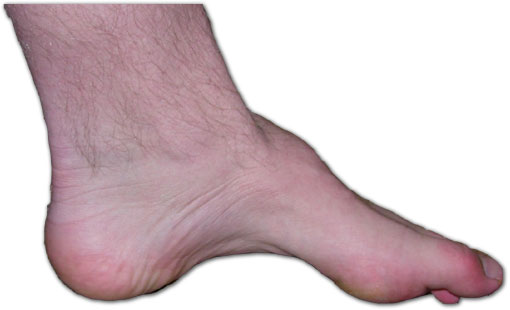
Pes cavus, also known as high arch, is an orthopedic condition that presents as a hollow arch underneath the foot with a pronounced high ridge at the top when weight bearing.
This foot type is typically characterized with cavus—the elevation of the longitudinal plantar arch (e.g., the bottom arch of a foot), plantar flexion of the foot, forefoot pronation, hindfoot varus, or forefoot adduction. A high arch is the opposite of a flat foot and is somewhat less common.
As with certain cases of flat feet, high arches may be painful due to metatarsal compression; however, high arches—particularly if they are flexible or properly cared-for—may be an asymptomatic condition.[citation needed]
People with pes cavus sometimes—though not always—have difficulty finding shoes that fit and may require support in their shoes. Children with high arches who have difficulty walking may wear specially designed insoles, which are available in various sizes and can be made to order.[citation needed]
Individuals with pes cavus frequently report foot pain, which can lead to a significant limitation in function. The range of complaints reported in the literature include metatarsalgia, pain under the first metatarsal, plantar fasciitis, painful callosities, ankle arthritis, and Achilles tendonitis.
There are many other symptoms believed to be related to the cavus foot. These include shoe-fitting problems, lateral ankle instability, lower limb stress fractures, knee pain, iliotibial band syndrome, back pain and tripping.
Foot pain in people with pes cavus may result from abnormal plantar pressure loading because, structurally, the cavoid foot is regarded as being rigid and non-shock absorbent and having reduced ground contact area. There have previously been reports of an association between excessive plantar pressure and foot pathology in people with pes cavus.
Pes cavus can occur from four primary causes: neurological conditions, trauma, undertreated clubfoot, or idiopathic with other underlining conditions.
Hub AI
Pes cavus AI simulator
(@Pes cavus_simulator)
Pes cavus
Pes cavus, also known as high arch, is an orthopedic condition that presents as a hollow arch underneath the foot with a pronounced high ridge at the top when weight bearing.
This foot type is typically characterized with cavus—the elevation of the longitudinal plantar arch (e.g., the bottom arch of a foot), plantar flexion of the foot, forefoot pronation, hindfoot varus, or forefoot adduction. A high arch is the opposite of a flat foot and is somewhat less common.
As with certain cases of flat feet, high arches may be painful due to metatarsal compression; however, high arches—particularly if they are flexible or properly cared-for—may be an asymptomatic condition.[citation needed]
People with pes cavus sometimes—though not always—have difficulty finding shoes that fit and may require support in their shoes. Children with high arches who have difficulty walking may wear specially designed insoles, which are available in various sizes and can be made to order.[citation needed]
Individuals with pes cavus frequently report foot pain, which can lead to a significant limitation in function. The range of complaints reported in the literature include metatarsalgia, pain under the first metatarsal, plantar fasciitis, painful callosities, ankle arthritis, and Achilles tendonitis.
There are many other symptoms believed to be related to the cavus foot. These include shoe-fitting problems, lateral ankle instability, lower limb stress fractures, knee pain, iliotibial band syndrome, back pain and tripping.
Foot pain in people with pes cavus may result from abnormal plantar pressure loading because, structurally, the cavoid foot is regarded as being rigid and non-shock absorbent and having reduced ground contact area. There have previously been reports of an association between excessive plantar pressure and foot pathology in people with pes cavus.
Pes cavus can occur from four primary causes: neurological conditions, trauma, undertreated clubfoot, or idiopathic with other underlining conditions.