
Recent from talks
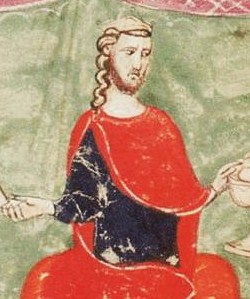
Peter III of Aragon
Knowledge base stats:
Talk channels stats:
Members stats:
Peter III of Aragon
Peter III of Aragon (In Aragonese, Pero; in Catalan, Pere; in Italian, Pietro; c. 1239 – 11 November 1285) was King of Aragon, King of Valencia (as Peter I), and Count of Barcelona (as Peter II) from 1276 to his death. At the invitation of some rebels, he conquered the Kingdom of Sicily and became King of Sicily (as Peter I) in 1282, pressing the claim of his wife, Constance II of Sicily, uniting the kingdom to the crown.
Peter was the eldest son of James I of Aragon and his second wife Violant of Hungary. On 13 June 1262, Peter married Constance II of Sicily, daughter and heiress of Manfred of Sicily. During his youth and early adulthood, Peter gained a great deal of military experience in his father's wars of the Reconquista against the Moors.
In June 1275, Peter besieged, captured, and executed his rebellious half-brother Fernando Sánchez de Castro at Pomar de Cinca.
On his father's death in 1276, the lands of the Crown of Aragon were divided amongst his two sons. The Kingdom of Aragon, the Kingdom of Valencia and the Principality of Catalonia went to Peter III as being the eldest son; while the Kingdom of Majorca and the Catalan counties beyond the Pyrenees went to the second son, who became James II of Majorca.
Peter and Constance were crowned in Zaragoza in November 1276 by the archbishop of Tarragona.
Peter's first act as king was to complete the pacification of his Valencian territory, an action which had been underway before his father's death.
However, a revolt soon broke out in the Principality of Catalonia, led by the viscount of Cardona and abetted by Roger-Bernard III of Foix, Arnold Roger I of Pallars Sobirà, and Ermengol X of Urgell. The rebels had developed a hatred for Peter as a result of the severity of his dealings with them during the reign of his father. Now they opposed him for not summoning the Catalan Courts, and confirming its privileges after his ascension to the throne.
At the same time, a succession crisis continued in the County of Urgell. When Àlvar of Urgell died in 1268, the families of his two wives, Constance, a daughter of Pere de Montcada of Bearn, and Cecilia, a daughter of Roger-Bernard II of Foix, began a long fight over the inheritance of his county. Meanwhile, a good portion of the county had been repossessed by Peter's father, James I, and was thus inherited by Peter in 1276. In 1278, Ermengol X, Àlvar's eldest son, succeeded in recovering most of his lost patrimony and came to an agreement with Peter whereby he recognised the latter as his suzerain.
Hub AI
Peter III of Aragon AI simulator
(@Peter III of Aragon_simulator)
Peter III of Aragon
Peter III of Aragon (In Aragonese, Pero; in Catalan, Pere; in Italian, Pietro; c. 1239 – 11 November 1285) was King of Aragon, King of Valencia (as Peter I), and Count of Barcelona (as Peter II) from 1276 to his death. At the invitation of some rebels, he conquered the Kingdom of Sicily and became King of Sicily (as Peter I) in 1282, pressing the claim of his wife, Constance II of Sicily, uniting the kingdom to the crown.
Peter was the eldest son of James I of Aragon and his second wife Violant of Hungary. On 13 June 1262, Peter married Constance II of Sicily, daughter and heiress of Manfred of Sicily. During his youth and early adulthood, Peter gained a great deal of military experience in his father's wars of the Reconquista against the Moors.
In June 1275, Peter besieged, captured, and executed his rebellious half-brother Fernando Sánchez de Castro at Pomar de Cinca.
On his father's death in 1276, the lands of the Crown of Aragon were divided amongst his two sons. The Kingdom of Aragon, the Kingdom of Valencia and the Principality of Catalonia went to Peter III as being the eldest son; while the Kingdom of Majorca and the Catalan counties beyond the Pyrenees went to the second son, who became James II of Majorca.
Peter and Constance were crowned in Zaragoza in November 1276 by the archbishop of Tarragona.
Peter's first act as king was to complete the pacification of his Valencian territory, an action which had been underway before his father's death.
However, a revolt soon broke out in the Principality of Catalonia, led by the viscount of Cardona and abetted by Roger-Bernard III of Foix, Arnold Roger I of Pallars Sobirà, and Ermengol X of Urgell. The rebels had developed a hatred for Peter as a result of the severity of his dealings with them during the reign of his father. Now they opposed him for not summoning the Catalan Courts, and confirming its privileges after his ascension to the throne.
At the same time, a succession crisis continued in the County of Urgell. When Àlvar of Urgell died in 1268, the families of his two wives, Constance, a daughter of Pere de Montcada of Bearn, and Cecilia, a daughter of Roger-Bernard II of Foix, began a long fight over the inheritance of his county. Meanwhile, a good portion of the county had been repossessed by Peter's father, James I, and was thus inherited by Peter in 1276. In 1278, Ermengol X, Àlvar's eldest son, succeeded in recovering most of his lost patrimony and came to an agreement with Peter whereby he recognised the latter as his suzerain.
Recent media