
Recent from talks
Pharmacopoeia
Knowledge base stats:
Talk channels stats:
Members stats:
Pharmacopoeia
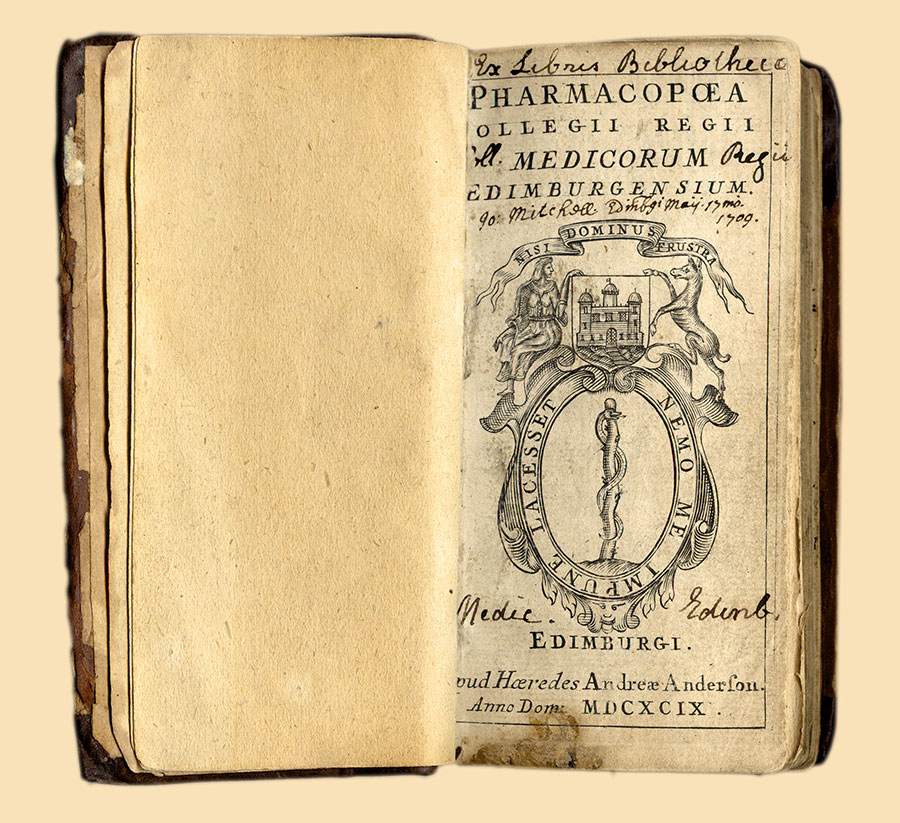
A pharmacopoeia, pharmacopeia, or pharmacopoea (or the typographically obsolete rendering, pharmacopœia), meaning "drug-making", in its modern technical sense, is a reference work containing directions for the identification of compound medicines. These are published or sanctioned by a government or a medical or pharmaceutical society, giving the work legal authority within a specified jurisdiction. In a broader sense it is a collection of pharmaceutical drug specifications. Descriptions of the individual preparations are called monographs.
There are national, supranational, and international pharmacopoeias.
The term derives from Ancient Greek: φαρμακοποιία, romanized: pharmakopoiia "making of (healing) medicine, drug-making", a compound of "medicine, drug, poison" (Ancient Greek: φάρμακον, romanized: pharmakon), with the verb "to make" (Ancient Greek: ποιεῖν, romanized: poiein), and the abstract noun suffix -ία -ia. In early modern editions of Latin texts, the Greek diphthong οι (oi) is latinized to its Latin equivalent oe which is in turn written with the ligature œ, giving the spelling pharmacopœia; in modern British English, œ is written as oe, giving the spelling pharmacopoeia, while in American English oe becomes e, resulting in pharmacopeia. The plural form is pharmacopoeiae, pharmacopoeias, or pharmacopeias.
Although older writings exist which deal with herbal medicine, the major initial work in the field is considered to be the Edwin Smith Papyrus in Egypt, Pliny's pharmacopoeia.
A number of early pharmacopoeia books were written by Persian and Arab physicians. These included The Canon of Medicine of Avicenna in 1025 AD, and works by Ibn Zuhr (Avenzoar) in the 12th century (and printed in 1491), and Ibn Baytar in the 14th century.[citation needed] The Shen-nung pen ts'ao ching (Divine Husbandman's Materia Medica) is the earliest known Chinese pharmacopoeia. The text describes 365 medicines derived from plants, animals, and minerals; according to legend it was written by the Chinese god Shennong. One of the earliest surviving pharmacopoeias from medieval Europe is the Lorsch Pharmacopoeia, which dates to around 800, and draws on classical and post-classical sources.
Pharmacopeial synopsis were recorded in the Timbuktu manuscripts of Mali.
The earliest extant Chinese pharmacopoeia, the Shennong Ben Cao Jing was compiled between 200–250 AD. It contains descriptions of 365 medications.
The earliest known officially sponsored pharmacopoeia was compiled in 659 AD by a team of 23 pharmaceutical scientists led by Su jing during the Tang dynasty (618–907 AD) and was called the Xinxiu bencao (Newly Revised Canon of Material Medical). The work consists of 20 volumes with one dedicated to the table of contents, and 25 volumes of pictures with one volume dedicated to the table of contents. A third part consisting of seven volumes contained illustrated descriptions. The text contains descriptions of 850 medicines with 114 new ones. The work was used throughout China for the next 400 years.
Hub AI
Pharmacopoeia AI simulator
(@Pharmacopoeia_simulator)
Pharmacopoeia
A pharmacopoeia, pharmacopeia, or pharmacopoea (or the typographically obsolete rendering, pharmacopœia), meaning "drug-making", in its modern technical sense, is a reference work containing directions for the identification of compound medicines. These are published or sanctioned by a government or a medical or pharmaceutical society, giving the work legal authority within a specified jurisdiction. In a broader sense it is a collection of pharmaceutical drug specifications. Descriptions of the individual preparations are called monographs.
There are national, supranational, and international pharmacopoeias.
The term derives from Ancient Greek: φαρμακοποιία, romanized: pharmakopoiia "making of (healing) medicine, drug-making", a compound of "medicine, drug, poison" (Ancient Greek: φάρμακον, romanized: pharmakon), with the verb "to make" (Ancient Greek: ποιεῖν, romanized: poiein), and the abstract noun suffix -ία -ia. In early modern editions of Latin texts, the Greek diphthong οι (oi) is latinized to its Latin equivalent oe which is in turn written with the ligature œ, giving the spelling pharmacopœia; in modern British English, œ is written as oe, giving the spelling pharmacopoeia, while in American English oe becomes e, resulting in pharmacopeia. The plural form is pharmacopoeiae, pharmacopoeias, or pharmacopeias.
Although older writings exist which deal with herbal medicine, the major initial work in the field is considered to be the Edwin Smith Papyrus in Egypt, Pliny's pharmacopoeia.
A number of early pharmacopoeia books were written by Persian and Arab physicians. These included The Canon of Medicine of Avicenna in 1025 AD, and works by Ibn Zuhr (Avenzoar) in the 12th century (and printed in 1491), and Ibn Baytar in the 14th century.[citation needed] The Shen-nung pen ts'ao ching (Divine Husbandman's Materia Medica) is the earliest known Chinese pharmacopoeia. The text describes 365 medicines derived from plants, animals, and minerals; according to legend it was written by the Chinese god Shennong. One of the earliest surviving pharmacopoeias from medieval Europe is the Lorsch Pharmacopoeia, which dates to around 800, and draws on classical and post-classical sources.
Pharmacopeial synopsis were recorded in the Timbuktu manuscripts of Mali.
The earliest extant Chinese pharmacopoeia, the Shennong Ben Cao Jing was compiled between 200–250 AD. It contains descriptions of 365 medications.
The earliest known officially sponsored pharmacopoeia was compiled in 659 AD by a team of 23 pharmaceutical scientists led by Su jing during the Tang dynasty (618–907 AD) and was called the Xinxiu bencao (Newly Revised Canon of Material Medical). The work consists of 20 volumes with one dedicated to the table of contents, and 25 volumes of pictures with one volume dedicated to the table of contents. A third part consisting of seven volumes contained illustrated descriptions. The text contains descriptions of 850 medicines with 114 new ones. The work was used throughout China for the next 400 years.
Recent media