
Recent from talks
Chelsea Piers
Knowledge base stats:
Talk channels stats:
Members stats:
Chelsea Piers
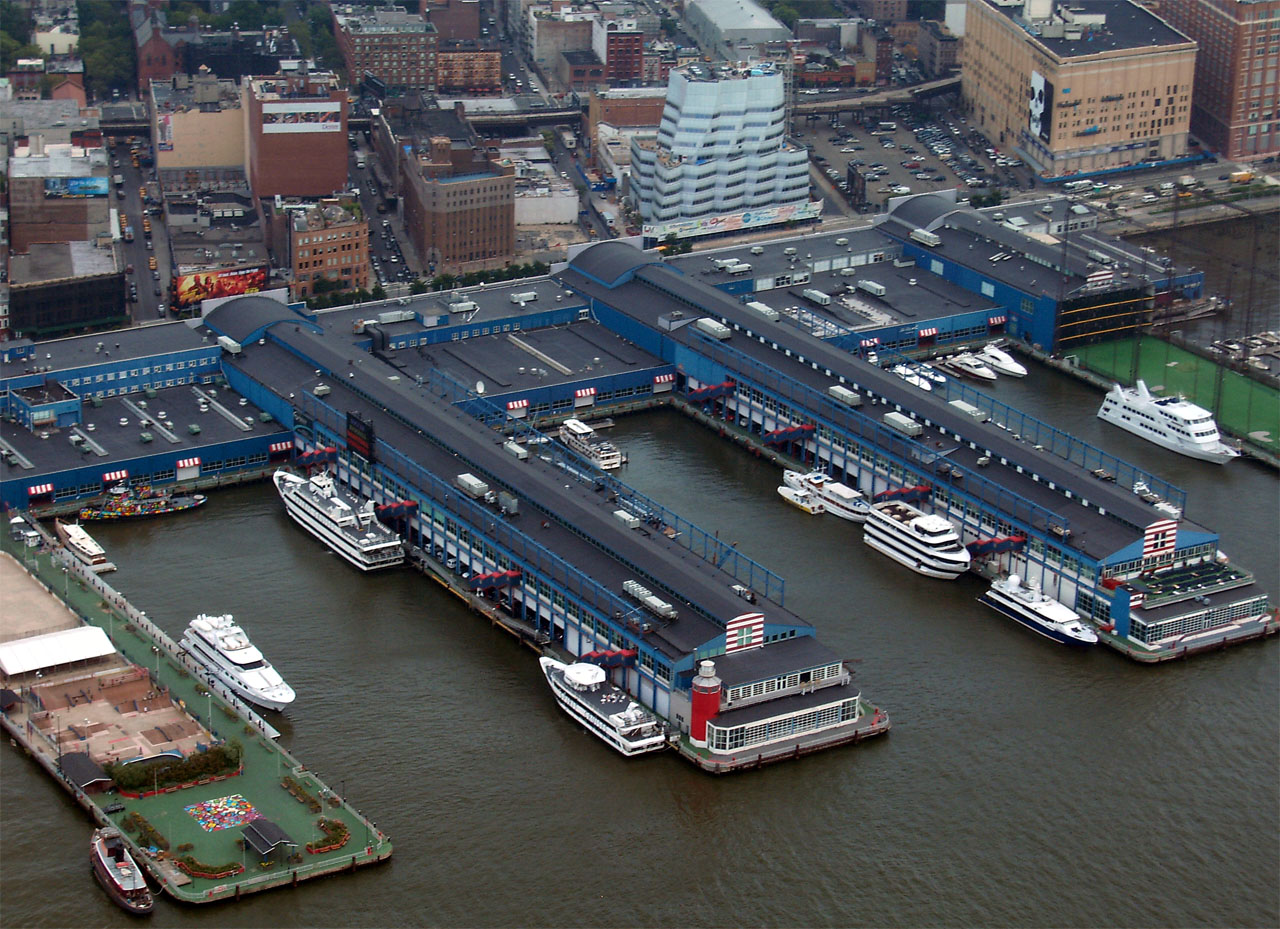
Chelsea Piers is a series of piers in Chelsea, on the West Side of Manhattan in New York City. Located to the west of the West Side Highway (Eleventh Avenue) and Hudson River Park and to the east of the Hudson River, they were originally a passenger ship terminal in the early 1900s that was used by RMS Lusitania and was the destination of RMS Carpathia after rescuing the survivors of RMS Titanic. The piers replaced a variety of run-down waterfront structures with a row of grand buildings embellished with pink granite facades.
The piers are currently used by the Chelsea Piers Sports & Entertainment Complex. The Complex is a 28-acre waterfront sports village located between 17th and 23rd Streets along Manhattan's Hudson River. This privately financed project opened in 1995. Situated on Piers 59, 60 and 61 and in the head house that connects them, the complex features the Golf Club, a multi-story driving range; the Field House, which contains numerous sports and training facilities; Sky Rink, which has two full-sized ice rinks; the Chelsea Piers Fitness health club; Bowlero at Chelsea Piers, a bowling alley; and Sunset Terrace, a venue that hosts weddings and other events. The complex also includes: several event centers; the Silver Screen Studios film and television production facilities; and the Maritime Center marina for mooring private boats.
Historically, the term Chelsea Piers referred to the ocean liner berths on Manhattan's west side from 1910 to the 1930s. With ocean liners such as Lusitania becoming larger in size, New York City was looking for a new passenger ship dock in the early 1900s. The Army, which controls the location and size of piers, refused to let any piers extend beyond the existing pierhead line of the North River (the navigation name for the Hudson River south of 30th Street). Ship lines were reluctant to build north of 23rd Street because infrastructure was already in place, including the New York Central railway line and a ferry station near the river at 23rd Street.
Part of the waterfront had been infilled in 1837, extending Manhattan to 13th Avenue, but the city government took over the infilled land and converted most of it into piers. The controversial decision included condemning many businesses. The city was unable to condemn the West Washington Street Market, which remained infilled. The market ultimately closed and the dock was converted to a sanitation facility that was used to load garbage barges headed for the Fresh Kills Landfill. The only section of 13th Avenue that remains is behind the sanitation facility, now a parking lot for sanitation trucks. That section is now called the Gansevoort Peninsula.
The new piers were designed by the architectural firm of Warren and Wetmore, which also designed Grand Central Terminal. Under contracts let by the New York City Department of Dock and Ferries, the Chelsea Section Improvement, as it was officially called, replaced a hodgepodge of run-down waterfront structures with a row of grand buildings embellished with pink granite facades and formed the docking points for the rival Cunard and White Star Lines.
Most of the major trans-Atlantic liners of the day docked at the piers and they played pivotal roles in the Titanic and Lusitania disasters. The two most memorable moments for the pier were with Lusitania and Titanic. In 1912, Titanic was destined for the White Star pier 59 when she sank. Survivors were rescued on Cunard's RMS Carpathia. Carpathia disembarked Titanic's lifeboats at Pier 59 before going back south to Pier 54, where she unloaded the passengers and survivors. Thousands of people assembled at the dock to greet the ship. Lusitania left her Cunard Pier 54 in 1915 before being torpedoed by German submarine U-20.
In the summer of 1920, a dramatic rally was organized on July 31 at the White Star Line docks. This was to send off Daniel Mannix, the Irish born Archbishop of Melbourne, Australia who had been outspoken on the English rule in Ireland, and successfully led anti conscription campaigns during WW1. A reported 15,000 New Yorkers turned up at Pier 60 at the foot of West 20th street to make sure Lloyd George would allow Mannix passage to Ireland.
A luxury liner row was built between West 44th and West 52nd Street to handle larger liners in the 1930s. After New York moved its luxury liner piers to the New York Cruise Terminal between West 46th and West 54th Street in 1935 to accommodate bigger ships such as the RMS Queen Mary and the SS Normandie, the Chelsea piers became a cargo terminal. In World War II the piers were used to deploy troops. The piers had catastrophic fires in 1932 and 1947 that destroyed some of the south piers New construction resulted in new cargo piers used by the United States Lines and Grace line.
Hub AI
Chelsea Piers AI simulator
(@Chelsea Piers_simulator)
Chelsea Piers
Chelsea Piers is a series of piers in Chelsea, on the West Side of Manhattan in New York City. Located to the west of the West Side Highway (Eleventh Avenue) and Hudson River Park and to the east of the Hudson River, they were originally a passenger ship terminal in the early 1900s that was used by RMS Lusitania and was the destination of RMS Carpathia after rescuing the survivors of RMS Titanic. The piers replaced a variety of run-down waterfront structures with a row of grand buildings embellished with pink granite facades.
The piers are currently used by the Chelsea Piers Sports & Entertainment Complex. The Complex is a 28-acre waterfront sports village located between 17th and 23rd Streets along Manhattan's Hudson River. This privately financed project opened in 1995. Situated on Piers 59, 60 and 61 and in the head house that connects them, the complex features the Golf Club, a multi-story driving range; the Field House, which contains numerous sports and training facilities; Sky Rink, which has two full-sized ice rinks; the Chelsea Piers Fitness health club; Bowlero at Chelsea Piers, a bowling alley; and Sunset Terrace, a venue that hosts weddings and other events. The complex also includes: several event centers; the Silver Screen Studios film and television production facilities; and the Maritime Center marina for mooring private boats.
Historically, the term Chelsea Piers referred to the ocean liner berths on Manhattan's west side from 1910 to the 1930s. With ocean liners such as Lusitania becoming larger in size, New York City was looking for a new passenger ship dock in the early 1900s. The Army, which controls the location and size of piers, refused to let any piers extend beyond the existing pierhead line of the North River (the navigation name for the Hudson River south of 30th Street). Ship lines were reluctant to build north of 23rd Street because infrastructure was already in place, including the New York Central railway line and a ferry station near the river at 23rd Street.
Part of the waterfront had been infilled in 1837, extending Manhattan to 13th Avenue, but the city government took over the infilled land and converted most of it into piers. The controversial decision included condemning many businesses. The city was unable to condemn the West Washington Street Market, which remained infilled. The market ultimately closed and the dock was converted to a sanitation facility that was used to load garbage barges headed for the Fresh Kills Landfill. The only section of 13th Avenue that remains is behind the sanitation facility, now a parking lot for sanitation trucks. That section is now called the Gansevoort Peninsula.
The new piers were designed by the architectural firm of Warren and Wetmore, which also designed Grand Central Terminal. Under contracts let by the New York City Department of Dock and Ferries, the Chelsea Section Improvement, as it was officially called, replaced a hodgepodge of run-down waterfront structures with a row of grand buildings embellished with pink granite facades and formed the docking points for the rival Cunard and White Star Lines.
Most of the major trans-Atlantic liners of the day docked at the piers and they played pivotal roles in the Titanic and Lusitania disasters. The two most memorable moments for the pier were with Lusitania and Titanic. In 1912, Titanic was destined for the White Star pier 59 when she sank. Survivors were rescued on Cunard's RMS Carpathia. Carpathia disembarked Titanic's lifeboats at Pier 59 before going back south to Pier 54, where she unloaded the passengers and survivors. Thousands of people assembled at the dock to greet the ship. Lusitania left her Cunard Pier 54 in 1915 before being torpedoed by German submarine U-20.
In the summer of 1920, a dramatic rally was organized on July 31 at the White Star Line docks. This was to send off Daniel Mannix, the Irish born Archbishop of Melbourne, Australia who had been outspoken on the English rule in Ireland, and successfully led anti conscription campaigns during WW1. A reported 15,000 New Yorkers turned up at Pier 60 at the foot of West 20th street to make sure Lloyd George would allow Mannix passage to Ireland.
A luxury liner row was built between West 44th and West 52nd Street to handle larger liners in the 1930s. After New York moved its luxury liner piers to the New York Cruise Terminal between West 46th and West 54th Street in 1935 to accommodate bigger ships such as the RMS Queen Mary and the SS Normandie, the Chelsea piers became a cargo terminal. In World War II the piers were used to deploy troops. The piers had catastrophic fires in 1932 and 1947 that destroyed some of the south piers New construction resulted in new cargo piers used by the United States Lines and Grace line.
Recent media