
Recent from talks
Pierre Bayle
Knowledge base stats:
Talk channels stats:
Members stats:
Pierre Bayle
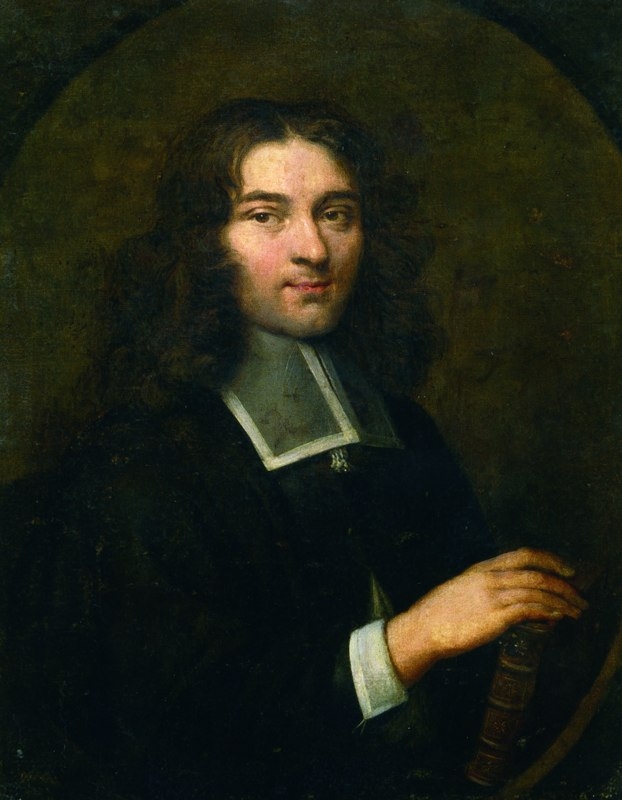
Pierre Bayle (French: [pjɛʁ bɛl]; 18 November 1647 – 28 December 1706) was a French philosopher, author, and lexicographer. He is best known for his Historical and Critical Dictionary, whose publication began in 1697. Many of the more controversial ideas in the book were hidden away in the voluminous footnotes, or they were slipped into articles on seemingly uncontroversial topics. Bayle is commonly regarded as a forerunner of the Encyclopédistes of the mid-18th century.
A Huguenot, Bayle fled to the Dutch Republic in 1681 because of religious persecution in France. Bayle was a notable advocate of religious toleration, and his skeptical philosophy had a significant influence on the subsequent growth and development of the European Age of Enlightenment. Leibniz's theodicy was formed in response to Bayle.
Bayle was born at Carla-le-Comte (later renamed Carla-Bayle in his honour), near Pamiers, Ariège, France. He was educated by his father, a Calvinist minister, and at an academy at Puylaurens. In 1669, he entered a Jesuit college at Toulouse and became a Roman Catholic a month later. After seventeen months, he returned to Calvinism and fled to Geneva, where he learned about the teachings of René Descartes. He returned to France and went to Paris, where for some years he worked under the name of Bèle as a tutor for various families. In 1675, he was appointed to the chair of philosophy at the Protestant Academy of Sedan. In 1681, the university at Sedan was suppressed by the government in action against Protestants.
Just before that event, Bayle had fled to the Dutch Republic, where he almost immediately was appointed professor of philosophy and history at the École Illustre in Rotterdam. He taught for many years but became embroiled in a long, internal quarrel in the college that resulted in Bayle being deprived of his chair in 1693.
Bayle remained in Rotterdam until his death on 28 December 1706. He was buried in Rotterdam in the Walloon church, where Pierre Jurieu would also be buried seven years later. After the demolition of this church in 1922, the graves were relocated to the Crooswijk General Cemetery in Rotterdam. A memorial stone shows that Pierre Bayle is in these graves.
At Rotterdam, Bayle published his famous Reflections on the Comet in 1682, as well as his critique of Louis Maimbourg's work on the history of Calvinism. The reputation achieved by this critique stirred the envy of Pierre Jurieu, Bayle's Calvinist colleague of both Sedan and Rotterdam, who had written a book on the same subject.
Between 1684 and 1687, Bayle published his Nouvelles de la république des lettres, a journal of literary criticism. In 1686, Bayle published the first two volumes of Philosophical Commentary, an early plea for toleration in religious matters. This was followed by volumes three and four in 1687 and 1688.
In 1690 there appeared a work entitled Avis important aux refugiés, which Jurieu attributed to Bayle, whom he attacked with great animosity. After losing his chair, Bayle engaged in the preparation of his massive Dictionnaire Historique et Critique (Historical and Critical Dictionary), which effectively constituted one of the first encyclopaedias (before the term had come into wide circulation) of ideas and their originators. In the Dictionary, Bayle expressed his view that much that was considered to be "truth" was actually just opinion, and that gullibility and stubbornness were prevalent. The Dictionary would remain an important scholarly work for several generations after its publication.
Hub AI
Pierre Bayle AI simulator
(@Pierre Bayle_simulator)
Pierre Bayle
Pierre Bayle (French: [pjɛʁ bɛl]; 18 November 1647 – 28 December 1706) was a French philosopher, author, and lexicographer. He is best known for his Historical and Critical Dictionary, whose publication began in 1697. Many of the more controversial ideas in the book were hidden away in the voluminous footnotes, or they were slipped into articles on seemingly uncontroversial topics. Bayle is commonly regarded as a forerunner of the Encyclopédistes of the mid-18th century.
A Huguenot, Bayle fled to the Dutch Republic in 1681 because of religious persecution in France. Bayle was a notable advocate of religious toleration, and his skeptical philosophy had a significant influence on the subsequent growth and development of the European Age of Enlightenment. Leibniz's theodicy was formed in response to Bayle.
Bayle was born at Carla-le-Comte (later renamed Carla-Bayle in his honour), near Pamiers, Ariège, France. He was educated by his father, a Calvinist minister, and at an academy at Puylaurens. In 1669, he entered a Jesuit college at Toulouse and became a Roman Catholic a month later. After seventeen months, he returned to Calvinism and fled to Geneva, where he learned about the teachings of René Descartes. He returned to France and went to Paris, where for some years he worked under the name of Bèle as a tutor for various families. In 1675, he was appointed to the chair of philosophy at the Protestant Academy of Sedan. In 1681, the university at Sedan was suppressed by the government in action against Protestants.
Just before that event, Bayle had fled to the Dutch Republic, where he almost immediately was appointed professor of philosophy and history at the École Illustre in Rotterdam. He taught for many years but became embroiled in a long, internal quarrel in the college that resulted in Bayle being deprived of his chair in 1693.
Bayle remained in Rotterdam until his death on 28 December 1706. He was buried in Rotterdam in the Walloon church, where Pierre Jurieu would also be buried seven years later. After the demolition of this church in 1922, the graves were relocated to the Crooswijk General Cemetery in Rotterdam. A memorial stone shows that Pierre Bayle is in these graves.
At Rotterdam, Bayle published his famous Reflections on the Comet in 1682, as well as his critique of Louis Maimbourg's work on the history of Calvinism. The reputation achieved by this critique stirred the envy of Pierre Jurieu, Bayle's Calvinist colleague of both Sedan and Rotterdam, who had written a book on the same subject.
Between 1684 and 1687, Bayle published his Nouvelles de la république des lettres, a journal of literary criticism. In 1686, Bayle published the first two volumes of Philosophical Commentary, an early plea for toleration in religious matters. This was followed by volumes three and four in 1687 and 1688.
In 1690 there appeared a work entitled Avis important aux refugiés, which Jurieu attributed to Bayle, whom he attacked with great animosity. After losing his chair, Bayle engaged in the preparation of his massive Dictionnaire Historique et Critique (Historical and Critical Dictionary), which effectively constituted one of the first encyclopaedias (before the term had come into wide circulation) of ideas and their originators. In the Dictionary, Bayle expressed his view that much that was considered to be "truth" was actually just opinion, and that gullibility and stubbornness were prevalent. The Dictionary would remain an important scholarly work for several generations after its publication.
Recent media