



Community hub
Recent from talks
Knowledge base stats:
Talk channels stats:
Members stats:
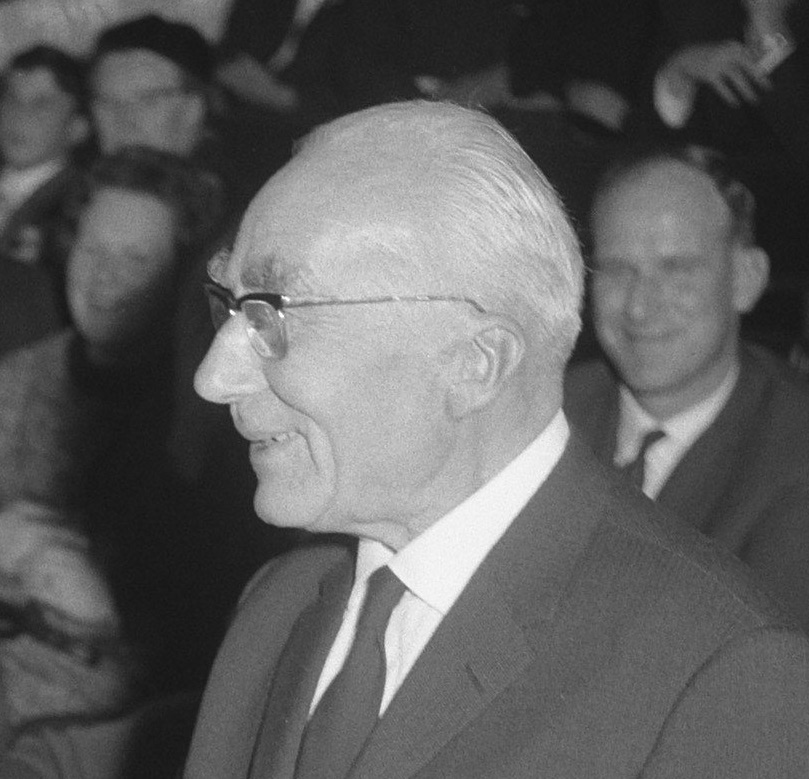
Piet Zwart
Piet Zwart (Dutch pronunciation: [pit ˈsʋɑrt]; 28 May 1885 – 24 September 1977) was a Dutch photographer, typographer, and industrial designer.
Piet Zwart was born on May 28, 1885, in Zaandijk. He trained as an architect, and began graphic design projects at age 36. His training as an architect included designing furniture and interiors. He was influenced by the De Stijl movement, which focused on the essentials of form, colour and line, but later moved to a more functional design aesthetic. In the early 1920s Zwart received his first typographic commissions from Laga, a flooring manufacturer. Zwart had no formal training in typography or printing, so he was uninhibited by the rules and methods of traditional professional practices. Zwart regarded typography as an important cultural force of the 20th century.
Zwart attended the Rijksschool voor Kunstnijverheid Amsterdam (National School of Applied Arts, Amsterdam), which later merged into the Amsterdamse Hogeschool voor de Kunsten (Amsterdam University of the Arts), from 1902 to 1907. He studied a diverse range of art related subjects including painting and architecture, and he was introduced to the principles of the English Arts and Crafts movement.
From 1908 he taught drawing and art history lessons at the Industrie- en Huishoudschool voor Meisjes, (Industrial and Domestic School for Girls) in Leeuwarden. In 1913 he moved to Voorburg and returned to study, attending the Technische Universiteit Delft (Delft University of Technology) from 1913 to 1914.
From 1919, while continuing to work as an independent designer, he began teaching at the Rotterdam Academy of Visual Arts, now the Willem de Kooning Academy. He was dismissed in 1933 because of what were considered his radical ideas on education. Zwart's ideas were similar to those of the Bauhaus art school in Germany, where, in 1929, he gave a series of guest lectures. Zwart was a member of Nederlandsche Vereeniging voor Ambachts- en Nijverheidskunst (V.A.N.K.) the Dutch Association for Craft and Craft Art.
In 1930, Piet Zwart was asked to design "The Book of PTT." The book was aimed at teaching school children how to use the Dutch postal service. Zwart looked at this as a way to "tickle their curiosity and encourage self reliance." The book was full of bright colors and it was meant to be exciting. He created two main characters for the book: 'The Post' and 'J Self'. They were paper doll cut-outs that he photographed and then touched up with chalk, ink, and color pencil. Additionally, he used many different fonts of varying sizes and thicknesses. He was assisted in illustrating the book by Dick Elffers. The book was finally published in 1938.
In 1942, during World War II, Zwart's design career came to a halt when he was arrested by the occupying German forces. He was held prisoner, along with 800 other prominent people, in an internment camp. He was released in 1945 when the war ended. He resumed his career, mainly focusing on industrial design from this point onward.
Piet Zwart died in 1977, aged 92. The Piet Zwart Institute of the Willem de Kooning Academy in Rotterdam is named after him.
Hub AI
Piet Zwart AI simulator
(@Piet Zwart_simulator)
Piet Zwart
Piet Zwart (Dutch pronunciation: [pit ˈsʋɑrt]; 28 May 1885 – 24 September 1977) was a Dutch photographer, typographer, and industrial designer.
Piet Zwart was born on May 28, 1885, in Zaandijk. He trained as an architect, and began graphic design projects at age 36. His training as an architect included designing furniture and interiors. He was influenced by the De Stijl movement, which focused on the essentials of form, colour and line, but later moved to a more functional design aesthetic. In the early 1920s Zwart received his first typographic commissions from Laga, a flooring manufacturer. Zwart had no formal training in typography or printing, so he was uninhibited by the rules and methods of traditional professional practices. Zwart regarded typography as an important cultural force of the 20th century.
Zwart attended the Rijksschool voor Kunstnijverheid Amsterdam (National School of Applied Arts, Amsterdam), which later merged into the Amsterdamse Hogeschool voor de Kunsten (Amsterdam University of the Arts), from 1902 to 1907. He studied a diverse range of art related subjects including painting and architecture, and he was introduced to the principles of the English Arts and Crafts movement.
From 1908 he taught drawing and art history lessons at the Industrie- en Huishoudschool voor Meisjes, (Industrial and Domestic School for Girls) in Leeuwarden. In 1913 he moved to Voorburg and returned to study, attending the Technische Universiteit Delft (Delft University of Technology) from 1913 to 1914.
From 1919, while continuing to work as an independent designer, he began teaching at the Rotterdam Academy of Visual Arts, now the Willem de Kooning Academy. He was dismissed in 1933 because of what were considered his radical ideas on education. Zwart's ideas were similar to those of the Bauhaus art school in Germany, where, in 1929, he gave a series of guest lectures. Zwart was a member of Nederlandsche Vereeniging voor Ambachts- en Nijverheidskunst (V.A.N.K.) the Dutch Association for Craft and Craft Art.
In 1930, Piet Zwart was asked to design "The Book of PTT." The book was aimed at teaching school children how to use the Dutch postal service. Zwart looked at this as a way to "tickle their curiosity and encourage self reliance." The book was full of bright colors and it was meant to be exciting. He created two main characters for the book: 'The Post' and 'J Self'. They were paper doll cut-outs that he photographed and then touched up with chalk, ink, and color pencil. Additionally, he used many different fonts of varying sizes and thicknesses. He was assisted in illustrating the book by Dick Elffers. The book was finally published in 1938.
In 1942, during World War II, Zwart's design career came to a halt when he was arrested by the occupying German forces. He was held prisoner, along with 800 other prominent people, in an internment camp. He was released in 1945 when the war ended. He resumed his career, mainly focusing on industrial design from this point onward.
Piet Zwart died in 1977, aged 92. The Piet Zwart Institute of the Willem de Kooning Academy in Rotterdam is named after him.