
Recent from talks
Pillars of Hercules
Knowledge base stats:
Talk channels stats:
Members stats:
Pillars of Hercules
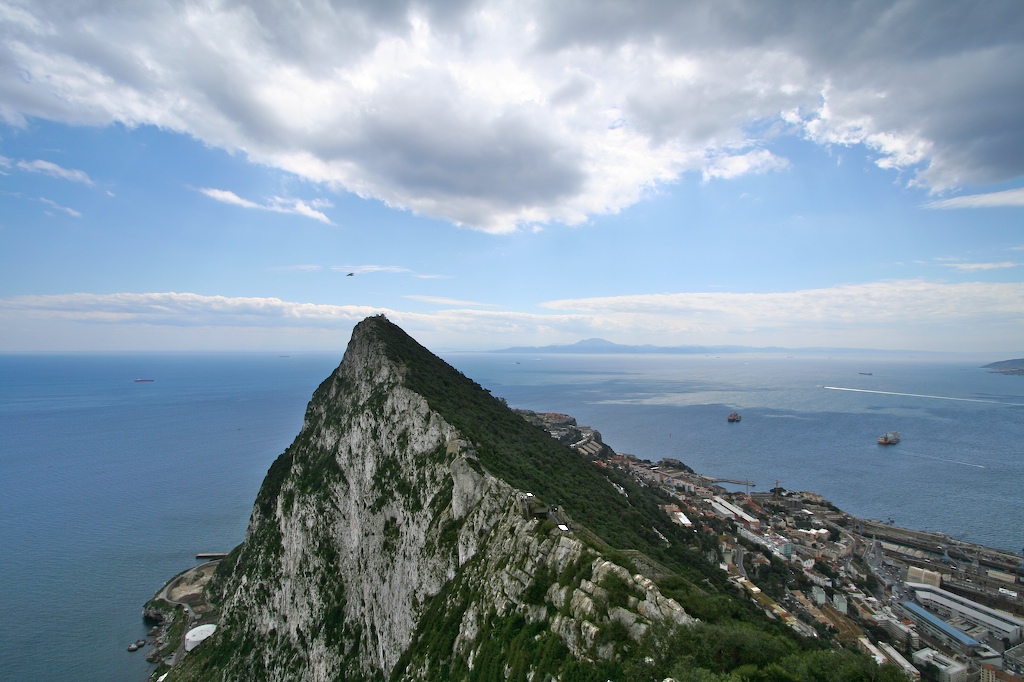
The Pillars of Hercules are the promontories that flank the entrance to the Strait of Gibraltar. The northern Pillar, Calpe Mons, is the Rock of Gibraltar. A corresponding North African peak not being predominant, the identity of the southern Pillar, Abila Mons, has been disputed throughout history, with the two most likely candidates being Monte Hacho in Ceuta and Jebel Musa in Morocco. The term was applied in antiquity: Pliny the Elder included the Pillars of Hercules in his Naturalis historia (Book III:3).
According to Greek mythology adopted by the Etruscans and Romans, when Hercules had to perform twelve labours, one of them (the tenth) was to fetch the Cattle of Geryon of the far West and bring them to Eurystheus; this marked the westward extent of his travels. A lost passage of Pindar quoted by Strabo was the earliest traceable reference in this context: "the pillars which Pindar calls the 'gates of Gades' when he asserts that they are the farthermost limits reached by Heracles". Since there has been a one-to-one association between Heracles and Melqart since Herodotus, the "Pillars of Melqart" in the temple near Gades/Gádeira (modern Cádiz) have sometimes been considered to be the true Pillars of Hercules.
Plato placed the legendary island of Atlantis beyond the "Pillars of Hercules". Renaissance tradition says the pillars bore the warning Ne plus ultra (also Non plus ultra, "nothing further beyond"), serving as a warning to sailors and navigators to go no further.
According to some Roman sources, while on his way to the garden of the Hesperides on the island of Erytheia, Hercules had to cross the mountain that was once Atlas. Instead of climbing the great mountain, Hercules used his superhuman strength to smash through it. By doing so, he connected the Atlantic Ocean to the Mediterranean Sea and formed the Strait of Gibraltar. One part of the split mountain is Gibraltar and the other is either Monte Hacho or Jebel Musa. These two mountains taken together have since then been known as the Pillars of Hercules, though other natural features have been associated with the name.
Diodorus Siculus, however, held that, instead of smashing through an isthmus to create the Straits of Gibraltar, Hercules "narrowed" an already existing strait to prevent monsters from the Atlantic Ocean from entering the Mediterranean Sea.
In some versions, Heracles instead built the two to hold the sky away from the earth, liberating Atlas from his damnation.
Beyond Gades, several important Mauretanian colonies (in modern-day Morocco) were founded by the Phoenicians as the Phoenician merchant fleet pushed through the Pillars of Hercules and began constructing a series of bases along the Atlantic coast starting with Lixus in the north, then Chellah and finally Mogador.
Near the eastern shore of the island of Gades/Gadeira (modern Cádiz, just beyond the strait) Strabo describes the westernmost temple of Tyrian Heracles, the god with whom Greeks associated the Phoenician and Punic Melqart, by interpretatio graeca. Strabo notes that the two bronze pillars within the temple, each eight cubits high, were widely proclaimed to be the true Pillars of Hercules by many who had visited the place and had sacrificed to Heracles there. But Strabo believes the account to be fraudulent, in part noting that the inscriptions on those pillars mentioned nothing about Heracles, speaking only of the expenses incurred by the Phoenicians in their making. The columns of the Melqart temple at Tyre were also of religious significance.
Hub AI
Pillars of Hercules AI simulator
(@Pillars of Hercules_simulator)
Pillars of Hercules
The Pillars of Hercules are the promontories that flank the entrance to the Strait of Gibraltar. The northern Pillar, Calpe Mons, is the Rock of Gibraltar. A corresponding North African peak not being predominant, the identity of the southern Pillar, Abila Mons, has been disputed throughout history, with the two most likely candidates being Monte Hacho in Ceuta and Jebel Musa in Morocco. The term was applied in antiquity: Pliny the Elder included the Pillars of Hercules in his Naturalis historia (Book III:3).
According to Greek mythology adopted by the Etruscans and Romans, when Hercules had to perform twelve labours, one of them (the tenth) was to fetch the Cattle of Geryon of the far West and bring them to Eurystheus; this marked the westward extent of his travels. A lost passage of Pindar quoted by Strabo was the earliest traceable reference in this context: "the pillars which Pindar calls the 'gates of Gades' when he asserts that they are the farthermost limits reached by Heracles". Since there has been a one-to-one association between Heracles and Melqart since Herodotus, the "Pillars of Melqart" in the temple near Gades/Gádeira (modern Cádiz) have sometimes been considered to be the true Pillars of Hercules.
Plato placed the legendary island of Atlantis beyond the "Pillars of Hercules". Renaissance tradition says the pillars bore the warning Ne plus ultra (also Non plus ultra, "nothing further beyond"), serving as a warning to sailors and navigators to go no further.
According to some Roman sources, while on his way to the garden of the Hesperides on the island of Erytheia, Hercules had to cross the mountain that was once Atlas. Instead of climbing the great mountain, Hercules used his superhuman strength to smash through it. By doing so, he connected the Atlantic Ocean to the Mediterranean Sea and formed the Strait of Gibraltar. One part of the split mountain is Gibraltar and the other is either Monte Hacho or Jebel Musa. These two mountains taken together have since then been known as the Pillars of Hercules, though other natural features have been associated with the name.
Diodorus Siculus, however, held that, instead of smashing through an isthmus to create the Straits of Gibraltar, Hercules "narrowed" an already existing strait to prevent monsters from the Atlantic Ocean from entering the Mediterranean Sea.
In some versions, Heracles instead built the two to hold the sky away from the earth, liberating Atlas from his damnation.
Beyond Gades, several important Mauretanian colonies (in modern-day Morocco) were founded by the Phoenicians as the Phoenician merchant fleet pushed through the Pillars of Hercules and began constructing a series of bases along the Atlantic coast starting with Lixus in the north, then Chellah and finally Mogador.
Near the eastern shore of the island of Gades/Gadeira (modern Cádiz, just beyond the strait) Strabo describes the westernmost temple of Tyrian Heracles, the god with whom Greeks associated the Phoenician and Punic Melqart, by interpretatio graeca. Strabo notes that the two bronze pillars within the temple, each eight cubits high, were widely proclaimed to be the true Pillars of Hercules by many who had visited the place and had sacrificed to Heracles there. But Strabo believes the account to be fraudulent, in part noting that the inscriptions on those pillars mentioned nothing about Heracles, speaking only of the expenses incurred by the Phoenicians in their making. The columns of the Melqart temple at Tyre were also of religious significance.
Recent media