
Recent from talks
Plant intelligence
Knowledge base stats:
Talk channels stats:
Members stats:
Plant intelligence
Plant intelligence is a field of plant biology which aims to understand how plants process the information they obtain from their environment. Plant intelligence has been defined as "any type of intentional and flexible behavior that is beneficial and enables the organism to achieve its goal".
Plant neurobiology is a subfield of plant intelligence research that claims plants possess abilities associated with cognition including anticipation, decision making, learning and memory. Terminology used in plant neurobiology is rejected by the majority of plant scientists as misleading, as plants do not possess consciousness or neurons, thus the term plant gnosophysiology is infrequently used. Most plant scientists tend to avoid using the term "intelligence" to refer to plants in their published research, despite the rise of the term in popular science writing.
In 1811, James Perchard Tupper authored An Essay on the Probability of Sensation in Vegetables which argued that plants possess a low form of sensation. He has been cited as an early botanist "attracted to the notion that the ability of plants to feel pain or pleasure demonstrated the universal beneficence of a Creator".
The notion that plants are capable of feeling emotions was first recorded in 1848, when Gustav Fechner, an experimental psychologist, suggested that plants are capable of emotions and that one could promote healthy growth with talk, attention, attitude, and affection. Federico Delpino wrote about plant intelligence in 1867.
The idea of cognition in plants was explored by Charles Darwin in 1880 in the book The Power of Movement in Plants, co-authored with his son Francis. Using a neurological metaphor, he described the sensitivity of plant roots in proposing that the tip of roots acts like the brain of some lower animals. This involves reacting to sensation in order to determine their next movement. Darwin's "root-brain hypothesis" influenced those in the field of plant neurobiology many years later.
John Ellor Taylor in his 1884 book The Sagacity and Morality of Plants argued that plants are conscious agents.
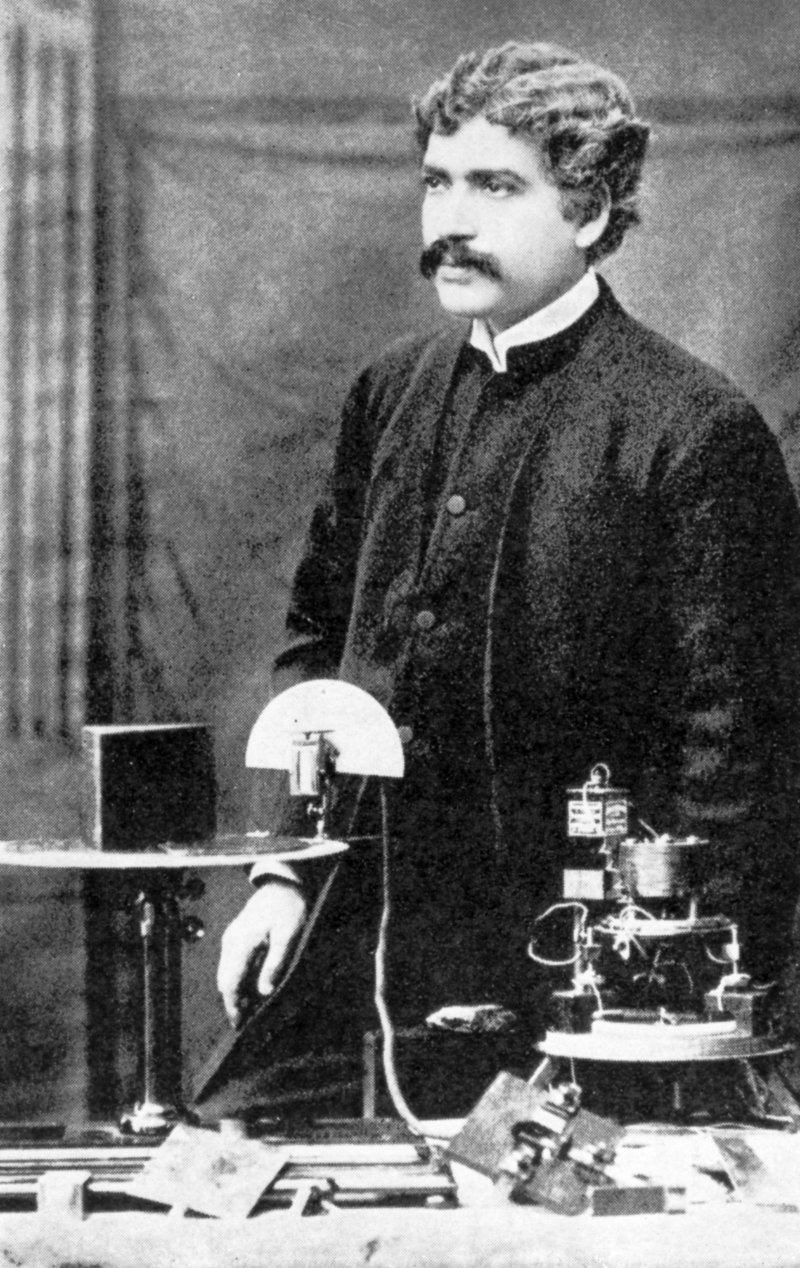
Jagadish Chandra Bose invented various devices and instruments to measure electrical responses in plants. According to biologist Patrick Geddes "In his investigations on response in general Bose had found that even ordinary plants and their different organs were sensitive— exhibiting, under mechanical or other stimuli, an electric response, indicative of excitation." One visitor to his laboratory, the vegetarian playwright George Bernard Shaw, was intensely disturbed upon witnessing a demonstration in which a cabbage had "convulsions" as it boiled to death. Jagadish Chandra Bose is considered an important forerunner of plant neurobiology by proponents of plant cognition. Bose was the author of The Nervous Mechanism of Plants, published in 1926. Karl F. Kellerman, Associate Chief of the Bureau of Plant Industry, United States Department of Agriculture criticized Bose's interpretation of the results from his experiments, stating that he failed to prove the conclusions from his reports that plants feel pain. Kellerman commented that "Sir Jagadar passed an electric current through plants, and his instruments recorded a break in the current. Such variations in resistance to electric current are found even when passing a current through dead matter".
In 1900, ornithologist Thomas G. Gentry authored Intelligence in Plants and Animals which argued that plants have consciousness. Historian Ed Folsom described it as "an exhaustive investigation of how such animals as bees, ants, worms and buzzards, as well as all kinds of plants, display intelligence and thus have souls". Captain Arthur Smith in the early 1900s authored the first article on "plant consciousness". In 1905, Rev. Charles Fletcher Argyll Saxby authored a pamphlet, Do Plants Think? Some speculations concerning a neurology and psychology of plants. Maurice Maeterlinck wrote about the intelligence of flowers in 1907. Royal Dixon in his 1914 book, The Human Side of Plants argued that plants are sentient and have minds and souls.
Hub AI
Plant intelligence AI simulator
(@Plant intelligence_simulator)
Plant intelligence
Plant intelligence is a field of plant biology which aims to understand how plants process the information they obtain from their environment. Plant intelligence has been defined as "any type of intentional and flexible behavior that is beneficial and enables the organism to achieve its goal".
Plant neurobiology is a subfield of plant intelligence research that claims plants possess abilities associated with cognition including anticipation, decision making, learning and memory. Terminology used in plant neurobiology is rejected by the majority of plant scientists as misleading, as plants do not possess consciousness or neurons, thus the term plant gnosophysiology is infrequently used. Most plant scientists tend to avoid using the term "intelligence" to refer to plants in their published research, despite the rise of the term in popular science writing.
In 1811, James Perchard Tupper authored An Essay on the Probability of Sensation in Vegetables which argued that plants possess a low form of sensation. He has been cited as an early botanist "attracted to the notion that the ability of plants to feel pain or pleasure demonstrated the universal beneficence of a Creator".
The notion that plants are capable of feeling emotions was first recorded in 1848, when Gustav Fechner, an experimental psychologist, suggested that plants are capable of emotions and that one could promote healthy growth with talk, attention, attitude, and affection. Federico Delpino wrote about plant intelligence in 1867.
The idea of cognition in plants was explored by Charles Darwin in 1880 in the book The Power of Movement in Plants, co-authored with his son Francis. Using a neurological metaphor, he described the sensitivity of plant roots in proposing that the tip of roots acts like the brain of some lower animals. This involves reacting to sensation in order to determine their next movement. Darwin's "root-brain hypothesis" influenced those in the field of plant neurobiology many years later.
John Ellor Taylor in his 1884 book The Sagacity and Morality of Plants argued that plants are conscious agents.
Jagadish Chandra Bose invented various devices and instruments to measure electrical responses in plants. According to biologist Patrick Geddes "In his investigations on response in general Bose had found that even ordinary plants and their different organs were sensitive— exhibiting, under mechanical or other stimuli, an electric response, indicative of excitation." One visitor to his laboratory, the vegetarian playwright George Bernard Shaw, was intensely disturbed upon witnessing a demonstration in which a cabbage had "convulsions" as it boiled to death. Jagadish Chandra Bose is considered an important forerunner of plant neurobiology by proponents of plant cognition. Bose was the author of The Nervous Mechanism of Plants, published in 1926. Karl F. Kellerman, Associate Chief of the Bureau of Plant Industry, United States Department of Agriculture criticized Bose's interpretation of the results from his experiments, stating that he failed to prove the conclusions from his reports that plants feel pain. Kellerman commented that "Sir Jagadar passed an electric current through plants, and his instruments recorded a break in the current. Such variations in resistance to electric current are found even when passing a current through dead matter".
In 1900, ornithologist Thomas G. Gentry authored Intelligence in Plants and Animals which argued that plants have consciousness. Historian Ed Folsom described it as "an exhaustive investigation of how such animals as bees, ants, worms and buzzards, as well as all kinds of plants, display intelligence and thus have souls". Captain Arthur Smith in the early 1900s authored the first article on "plant consciousness". In 1905, Rev. Charles Fletcher Argyll Saxby authored a pamphlet, Do Plants Think? Some speculations concerning a neurology and psychology of plants. Maurice Maeterlinck wrote about the intelligence of flowers in 1907. Royal Dixon in his 1914 book, The Human Side of Plants argued that plants are sentient and have minds and souls.
Recent media