



Community hub
Recent from talks
Contribute something to knowledge base
Content stats: 0 posts, 0 articles, 1 media, 0 notes
Members stats: 0 subscribers, 0 contributors, 0 moderators, 0 supporters
Subscribers
Supporters
Contributors
Moderators
Playing card suit
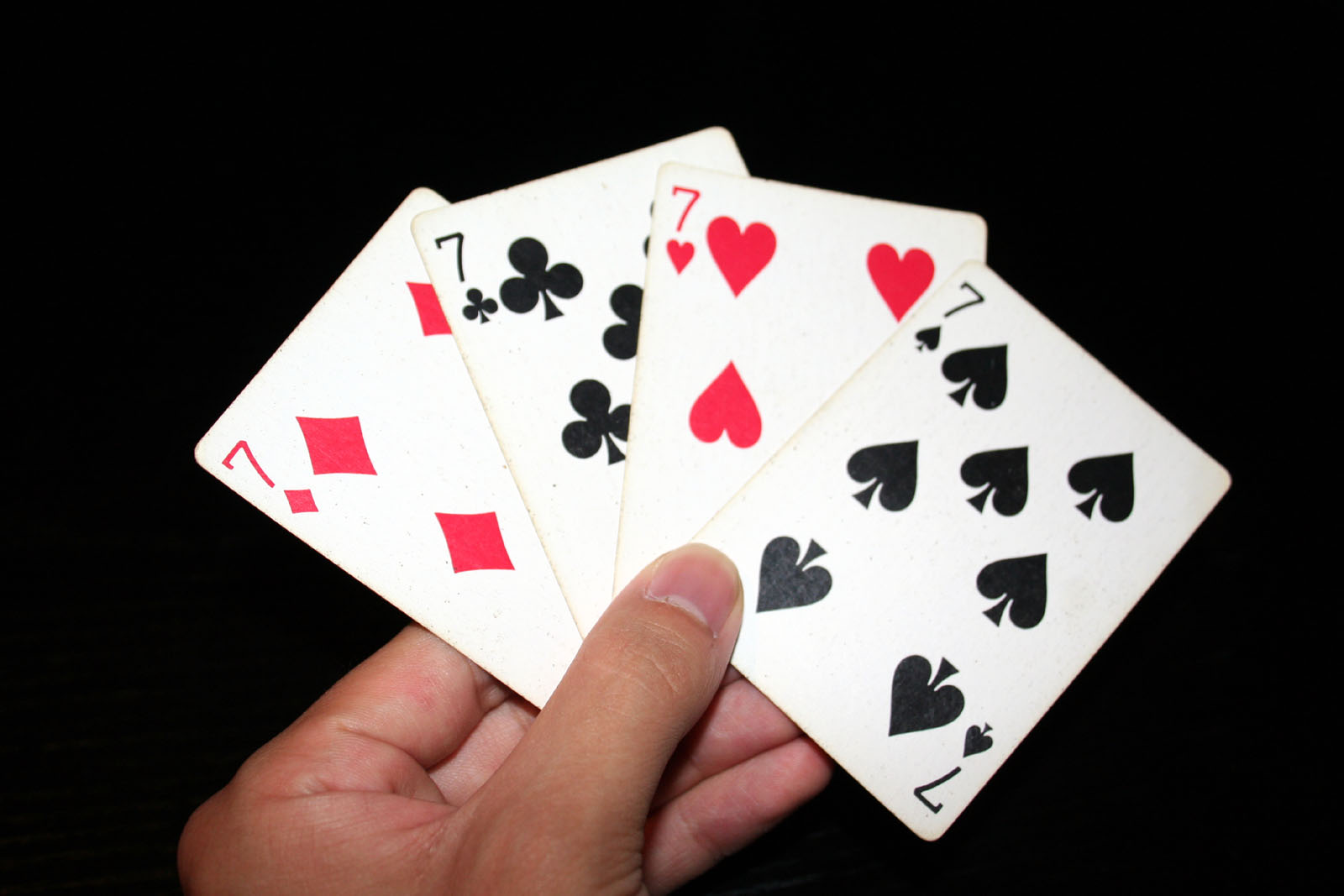
In playing cards, a suit is one of the categories into which the cards of a deck are divided. Most often, each card bears one of several pips (symbols) showing to which suit it belongs; the suit may alternatively or additionally be indicated by the color printed on the card. The rank for each card is determined by the number of pips on it, except on face cards. Ranking indicates which cards within a suit are better, higher or more valuable than others, whereas there is no order between the suits unless defined in the rules of a specific card game. In most decks, there is exactly one card of any given rank in any given suit. A deck may include special cards that belong to no suit, often called jokers.
While English-speaking countries traditionally use cards with the French suits of Clubs, Spades, Hearts and Diamonds, many other countries have their own traditional suits. Much of central Europe uses the Germanic suits of Acorns, Leaves, Hearts and Bells; Spain and parts of Italy and South America use the Latin suits of Swords, Batons, Cups and Coins; German Switzerland uses the Swiss suits of Acorns, Shields, yellow Roses and Bells. Asian countries such as China and Japan also have their own traditional suits. Tarot card packs have a set of distinct picture cards alongside the traditional four suits.
Modern Western playing cards are generally divided into two or three general suit-systems. The older Latin suits are subdivided into the Italian and Spanish suit-systems. The younger Germanic suits are subdivided into the German and Swiss suit-systems. The French suits are a derivative of the German suits but are generally considered a separate system.
The earliest card games were trick-taking games and the invention of suits increased the level of strategy and depth in these games. A card of one suit cannot beat a card from another regardless of its rank. The concept of suits predates playing cards and can be found in Chinese dice and domino games such as Tien Gow.
Chinese money-suited cards are believed to be the oldest ancestor to the Latin suit system. The money-suit system is based on denominations of currency: Coins, Strings of Coins, Myriads of Strings (or of coins), and Tens of Myriads. Old Chinese coins had holes in the middle to allow them to be strung together. A string of coins could easily be misinterpreted as a stick to those unfamiliar with them.
By then the Islamic world had spread into Central Asia and had contacted China, and had adopted playing cards. The Muslims renamed the suit of myriads as cups; this may have been due to seeing a Chinese character for "myriad" (万) upside-down. The Chinese numeral character for Ten (十) on the Tens of Myriads suit may have inspired the Muslim suit of swords. Another clue linking these Chinese, Muslim, and European cards are the ranking of certain suits. In many early Chinese games like Madiao, the suit of coins was in reverse order so that the lower ones beat the higher ones. In the Indo-Persian game of Ganjifa, half the suits were also inverted, including a suit of coins. This was also true for the European games of Tarot and Ombre. The inverting of suits had no purpose in terms of play but was an artifact from the earliest games.
These Turko-Arabic cards, called Kanjifa, used the suits coins, clubs, cups, and swords, but the clubs represented polo sticks; Europeans changed that suit, as polo was an obscure sport to them.
The Latin suits are coins, clubs, cups, and swords. They are the earliest suit-system in Europe, and were adopted from the cards imported from Mamluk Egypt and Moorish Granada in the 1370s.
Playing card suit
In playing cards, a suit is one of the categories into which the cards of a deck are divided. Most often, each card bears one of several pips (symbols) showing to which suit it belongs; the suit may alternatively or additionally be indicated by the color printed on the card. The rank for each card is determined by the number of pips on it, except on face cards. Ranking indicates which cards within a suit are better, higher or more valuable than others, whereas there is no order between the suits unless defined in the rules of a specific card game. In most decks, there is exactly one card of any given rank in any given suit. A deck may include special cards that belong to no suit, often called jokers.
While English-speaking countries traditionally use cards with the French suits of Clubs, Spades, Hearts and Diamonds, many other countries have their own traditional suits. Much of central Europe uses the Germanic suits of Acorns, Leaves, Hearts and Bells; Spain and parts of Italy and South America use the Latin suits of Swords, Batons, Cups and Coins; German Switzerland uses the Swiss suits of Acorns, Shields, yellow Roses and Bells. Asian countries such as China and Japan also have their own traditional suits. Tarot card packs have a set of distinct picture cards alongside the traditional four suits.
Modern Western playing cards are generally divided into two or three general suit-systems. The older Latin suits are subdivided into the Italian and Spanish suit-systems. The younger Germanic suits are subdivided into the German and Swiss suit-systems. The French suits are a derivative of the German suits but are generally considered a separate system.
The earliest card games were trick-taking games and the invention of suits increased the level of strategy and depth in these games. A card of one suit cannot beat a card from another regardless of its rank. The concept of suits predates playing cards and can be found in Chinese dice and domino games such as Tien Gow.
Chinese money-suited cards are believed to be the oldest ancestor to the Latin suit system. The money-suit system is based on denominations of currency: Coins, Strings of Coins, Myriads of Strings (or of coins), and Tens of Myriads. Old Chinese coins had holes in the middle to allow them to be strung together. A string of coins could easily be misinterpreted as a stick to those unfamiliar with them.
By then the Islamic world had spread into Central Asia and had contacted China, and had adopted playing cards. The Muslims renamed the suit of myriads as cups; this may have been due to seeing a Chinese character for "myriad" (万) upside-down. The Chinese numeral character for Ten (十) on the Tens of Myriads suit may have inspired the Muslim suit of swords. Another clue linking these Chinese, Muslim, and European cards are the ranking of certain suits. In many early Chinese games like Madiao, the suit of coins was in reverse order so that the lower ones beat the higher ones. In the Indo-Persian game of Ganjifa, half the suits were also inverted, including a suit of coins. This was also true for the European games of Tarot and Ombre. The inverting of suits had no purpose in terms of play but was an artifact from the earliest games.
These Turko-Arabic cards, called Kanjifa, used the suits coins, clubs, cups, and swords, but the clubs represented polo sticks; Europeans changed that suit, as polo was an obscure sport to them.
The Latin suits are coins, clubs, cups, and swords. They are the earliest suit-system in Europe, and were adopted from the cards imported from Mamluk Egypt and Moorish Granada in the 1370s.
Recent media
Recent media