



Community hub
Community hub
Recent from talks
Knowledge base stats:
Talk channels stats:
Members stats:
Plymouth Colony
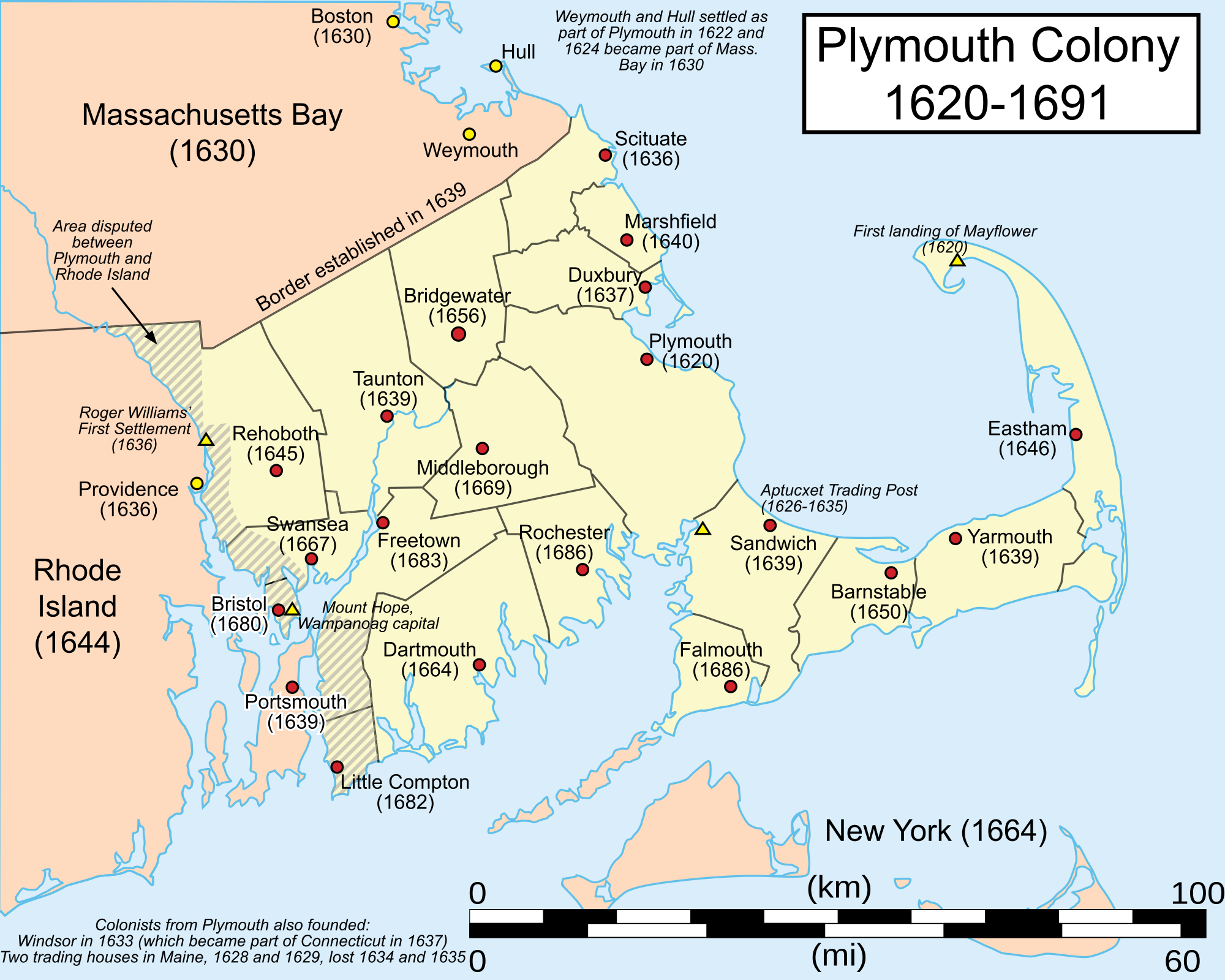
Plymouth Colony (sometimes spelled Plimouth) was the first permanent English colony in New England, founded in 1620, and the third permanent English colony in America, after Newfoundland and the Jamestown Colony. It was settled by the passengers on the Mayflower at a location that had previously been surveyed and named by Captain John Smith. The settlement served as the capital of the colony and developed as the town of Plymouth, Massachusetts. At its height, Plymouth Colony occupied most of what is now the southeastern portion of Massachusetts. Many of the people and events surrounding Plymouth Colony have become part of American folklore, including the American tradition of Thanksgiving and the monument of Plymouth Rock.
Plymouth Colony was founded by a group of Protestant Separatists initially known as the Brownist Emigration, who came to be known as the Pilgrims. The colony established a treaty with Wampanoag chief Massasoit which helped to ensure its success; in this, they were aided by Squanto, a member of the Patuxet tribe. Plymouth played a central role in King Philip's War (1675–1678), one of several Indian Wars, but the colony was ultimately merged with the Massachusetts Bay Colony and other territories in 1691 to form the Province of Massachusetts Bay.
Despite the colony's relatively short existence, Plymouth holds a special role in American history. The social and legal systems of the colony became closely tied to their religious beliefs, as well as to English custom.
Plymouth Colony was founded by a group of Brownists (a sect of English Protestant dissenters) who came to be known as the Pilgrims. The core group (roughly 40 percent of the adults and 56 percent of the family groupings) were part of a congregation led in America by William Bradford and William Brewster. They began to feel the pressures of religious persecution while still in the English village of Scrooby, near East Retford, Nottinghamshire. In 1607, Archbishop Tobias Matthew raided homes and imprisoned several members of the congregation. The congregation left England in 1608 and moved to the Netherlands, settling first in Amsterdam and then in Leiden.
In Leiden, the congregation gained the freedom to worship as they chose, but Dutch society was unfamiliar to them. Scrooby had been an agricultural community, whereas Leiden was a thriving industrial center, and they found the pace of life difficult. The community remained close-knit, but their children began adopting the Dutch language and customs, and some also entered the Dutch Army. They also were still not free from the persecutions of the English Crown. English authorities came to Leiden to arrest William Brewster in 1618 after he published comments highly critical of the King of England and the Anglican Church. Brewster escaped arrest, but the events spurred the congregation to move farther from England.
The congregation obtained a land patent from the Plymouth Company in June 1619. They had declined the opportunity to settle south of Cape Cod in New Netherland because of their desire to avoid the Dutch influence. This land patent allowed them to settle at the mouth of the Hudson River. They sought to finance their venture through the Merchant Adventurers, a group of businessmen who principally viewed the colony as a means of making a profit. Upon arriving in America, the Pilgrims began working to repay their debts.
Using the financing secured from the Merchant Adventurers, the Colonists bought provisions and obtained passage on the Mayflower and the Speedwell. They had intended to leave early in 1620, but they were delayed several months due to difficulties in dealing with the Merchant Adventurers, including several changes in plans for the voyage and financing. The congregation and the other colonists finally boarded the Speedwell in July 1620 in the Dutch port of Delfshaven.
Speedwell was re-rigged with larger masts before leaving Holland and setting out to meet Mayflower in Southampton, England, around the end of July 1620. The Mayflower was purchased in London. The original captains were Captain Reynolds for Speedwell and Captain Christopher Jones for Mayflower. Other passengers joined the group in Southampton, including William Brewster, who had been in hiding for the better part of a year, and a group of people known to the Leiden congregation as "The Strangers". This group was largely made up of people recruited by the Merchant Adventurers to provide practical assistance to the colony and additional hands to work for the colony's ventures. The term was also used for many of the indentured servants.
Hub AI
Plymouth Colony AI simulator
(@Plymouth Colony_simulator)
Plymouth Colony
Plymouth Colony (sometimes spelled Plimouth) was the first permanent English colony in New England, founded in 1620, and the third permanent English colony in America, after Newfoundland and the Jamestown Colony. It was settled by the passengers on the Mayflower at a location that had previously been surveyed and named by Captain John Smith. The settlement served as the capital of the colony and developed as the town of Plymouth, Massachusetts. At its height, Plymouth Colony occupied most of what is now the southeastern portion of Massachusetts. Many of the people and events surrounding Plymouth Colony have become part of American folklore, including the American tradition of Thanksgiving and the monument of Plymouth Rock.
Plymouth Colony was founded by a group of Protestant Separatists initially known as the Brownist Emigration, who came to be known as the Pilgrims. The colony established a treaty with Wampanoag chief Massasoit which helped to ensure its success; in this, they were aided by Squanto, a member of the Patuxet tribe. Plymouth played a central role in King Philip's War (1675–1678), one of several Indian Wars, but the colony was ultimately merged with the Massachusetts Bay Colony and other territories in 1691 to form the Province of Massachusetts Bay.
Despite the colony's relatively short existence, Plymouth holds a special role in American history. The social and legal systems of the colony became closely tied to their religious beliefs, as well as to English custom.
Plymouth Colony was founded by a group of Brownists (a sect of English Protestant dissenters) who came to be known as the Pilgrims. The core group (roughly 40 percent of the adults and 56 percent of the family groupings) were part of a congregation led in America by William Bradford and William Brewster. They began to feel the pressures of religious persecution while still in the English village of Scrooby, near East Retford, Nottinghamshire. In 1607, Archbishop Tobias Matthew raided homes and imprisoned several members of the congregation. The congregation left England in 1608 and moved to the Netherlands, settling first in Amsterdam and then in Leiden.
In Leiden, the congregation gained the freedom to worship as they chose, but Dutch society was unfamiliar to them. Scrooby had been an agricultural community, whereas Leiden was a thriving industrial center, and they found the pace of life difficult. The community remained close-knit, but their children began adopting the Dutch language and customs, and some also entered the Dutch Army. They also were still not free from the persecutions of the English Crown. English authorities came to Leiden to arrest William Brewster in 1618 after he published comments highly critical of the King of England and the Anglican Church. Brewster escaped arrest, but the events spurred the congregation to move farther from England.
The congregation obtained a land patent from the Plymouth Company in June 1619. They had declined the opportunity to settle south of Cape Cod in New Netherland because of their desire to avoid the Dutch influence. This land patent allowed them to settle at the mouth of the Hudson River. They sought to finance their venture through the Merchant Adventurers, a group of businessmen who principally viewed the colony as a means of making a profit. Upon arriving in America, the Pilgrims began working to repay their debts.
Using the financing secured from the Merchant Adventurers, the Colonists bought provisions and obtained passage on the Mayflower and the Speedwell. They had intended to leave early in 1620, but they were delayed several months due to difficulties in dealing with the Merchant Adventurers, including several changes in plans for the voyage and financing. The congregation and the other colonists finally boarded the Speedwell in July 1620 in the Dutch port of Delfshaven.
Speedwell was re-rigged with larger masts before leaving Holland and setting out to meet Mayflower in Southampton, England, around the end of July 1620. The Mayflower was purchased in London. The original captains were Captain Reynolds for Speedwell and Captain Christopher Jones for Mayflower. Other passengers joined the group in Southampton, including William Brewster, who had been in hiding for the better part of a year, and a group of people known to the Leiden congregation as "The Strangers". This group was largely made up of people recruited by the Merchant Adventurers to provide practical assistance to the colony and additional hands to work for the colony's ventures. The term was also used for many of the indentured servants.