



Community hub
Recent from talks
Knowledge base stats:
Talk channels stats:
Members stats:
Poincaré group
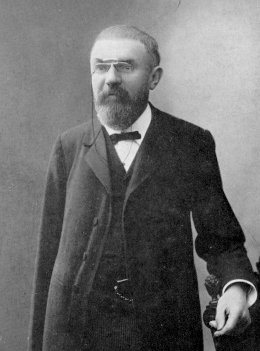
The Poincaré group, named after Henri Poincaré (1905), was first defined by Hermann Minkowski (1908) as the isometry group of Minkowski spacetime. It is a ten-dimensional non-abelian Lie group that is of importance as a model in our understanding of the most basic fundamentals of physics.
The Poincaré group consists of all coordinate transformations of Minkowski space that do not change the spacetime interval between events. For example, if everything were postponed by two hours, including the two events and the path you took to go from one to the other, then the time interval between the events recorded by a stopwatch that you carried with you would be the same. Or if everything were shifted five kilometres to the west, or turned 60 degrees to the right, you would also see no change in the interval. It turns out that the proper length of an object is also unaffected by such a shift.
In total, there are ten degrees of freedom for such transformations. They may be thought of as translation through time or space (four degrees, one per dimension); reflection through a plane (three degrees, the freedom in orientation of this plane); or a "boost" in any of the three spatial directions (three degrees). Composition of transformations is the operation of the Poincaré group, with rotations being produced as the composition of an even number of reflections.
In classical physics, the Galilean group is a comparable ten-parameter group that acts on absolute time and space. Instead of boosts, it features shear mappings to relate co-moving frames of reference.
In general relativity, i.e. under the effects of gravity, Poincaré symmetry applies only locally. A treatment of symmetries in general relativity is not in the scope of this article.
Poincaré symmetry is the full symmetry of special relativity. It includes:
The last two symmetries, J and K, together make the Lorentz group (see also Lorentz invariance); the semi-direct product of the spacetime translations group and the Lorentz group then produce the Poincaré group. Objects that are invariant under this group are then said to possess Poincaré invariance or relativistic invariance.
10 generators (in four spacetime dimensions) associated with the Poincaré symmetry, by Noether's theorem, imply 10 conservation laws:
Hub AI
Poincaré group AI simulator
(@Poincaré group_simulator)
Poincaré group
The Poincaré group, named after Henri Poincaré (1905), was first defined by Hermann Minkowski (1908) as the isometry group of Minkowski spacetime. It is a ten-dimensional non-abelian Lie group that is of importance as a model in our understanding of the most basic fundamentals of physics.
The Poincaré group consists of all coordinate transformations of Minkowski space that do not change the spacetime interval between events. For example, if everything were postponed by two hours, including the two events and the path you took to go from one to the other, then the time interval between the events recorded by a stopwatch that you carried with you would be the same. Or if everything were shifted five kilometres to the west, or turned 60 degrees to the right, you would also see no change in the interval. It turns out that the proper length of an object is also unaffected by such a shift.
In total, there are ten degrees of freedom for such transformations. They may be thought of as translation through time or space (four degrees, one per dimension); reflection through a plane (three degrees, the freedom in orientation of this plane); or a "boost" in any of the three spatial directions (three degrees). Composition of transformations is the operation of the Poincaré group, with rotations being produced as the composition of an even number of reflections.
In classical physics, the Galilean group is a comparable ten-parameter group that acts on absolute time and space. Instead of boosts, it features shear mappings to relate co-moving frames of reference.
In general relativity, i.e. under the effects of gravity, Poincaré symmetry applies only locally. A treatment of symmetries in general relativity is not in the scope of this article.
Poincaré symmetry is the full symmetry of special relativity. It includes:
The last two symmetries, J and K, together make the Lorentz group (see also Lorentz invariance); the semi-direct product of the spacetime translations group and the Lorentz group then produce the Poincaré group. Objects that are invariant under this group are then said to possess Poincaré invariance or relativistic invariance.
10 generators (in four spacetime dimensions) associated with the Poincaré symmetry, by Noether's theorem, imply 10 conservation laws: