
Recent from talks
Politics of New England
Knowledge base stats:
Talk channels stats:
Members stats:
Politics of New England
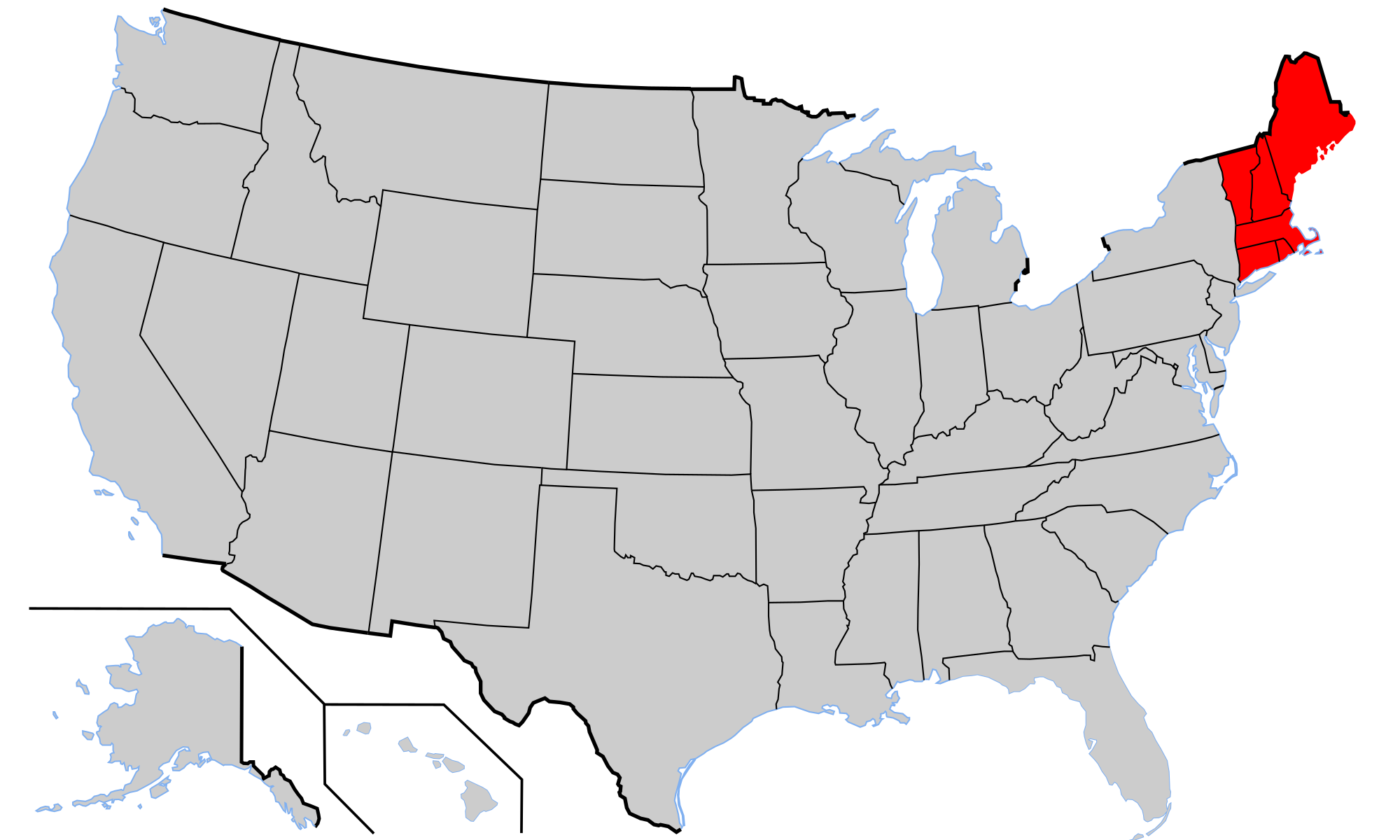
The politics of New England has long been defined by the region's political and cultural history, demographics, economy, and its loyalty to particular U.S. political parties. Within the politics of the United States, New England is sometimes viewed in terms of a single voting bloc. All of the twenty-one congressional districts of the House of Representatives in New England are currently represented by Democrats. In the Senate, nine Democrats, two Independents (both of whom caucus with Democrats), and one Republican represent New England. In every presidential election since 2004, the Democratic candidate has won a plurality of votes in each New England state, making the region considerably more Democratic than the rest of the nation. However, there has never been a time since the Republican Party's founding in which it was completely shut out in the New England congressional delegations.[citation needed]
Same-sex marriage had been permitted in all New England states before the U.S. Supreme Court case Obergefell v. Hodges made it legal nationwide. Rhode Island was the final New England state to legalise the practice in May 2013.
The national U.S. movement against nuclear power had its roots in New England in the 1970s. In 1974, activist Sam Lovejoy toppled a weather tower at the site of the proposed Montague Nuclear Power Plant in Western Massachusetts. The movement "reached critical mass" with the arrests at Seabrook Station Nuclear Power Plant on May 1, 1977, when 1,414 anti-nuclear activists from the Clamshell Alliance were arrested at the Seabrook site. Harvey Wasserman, a Clamshell spokesman at Seabrook, and Frances Crowe of Northampton, an American Friends Service Committee member, played key roles in the movement.
New England played a pioneering role in the abolitionist movement. Notably, Samuel Sewall's The Selling of Joseph, published in Boston in 1700, is widely recognized as the first anti-slavery tract printed in English in North America. This early publication contributed to the region's developing stance against slavery, with Massachusetts effectively abolishing the practice by 1783, significantly earlier than many other states. Boston subsequently became a vital hub for the 19-century national anti-slavery movement, hosting the founding of the New England Anti-Slavery Society in 1832 and serving as the publication base for William Lloyd Garrison's influential newspaper The Liberator.
The New England state of Rhode Island was one of the first states to abolish the death penalty, doing so in 1852. New Hampshire was the final New England state to outlaw the practice, doing so in 2019. Although New Hampshire currently has one death row inmate, it has not held an execution since 1939.
Connecticut and Rhode Island were the only states in the union not to ratify the Eighteenth Amendment to the United States Constitution, also known as prohibition.
New Hampshire has no seatbelt law for persons over 18 years of age, no helmet law for motorcyclists, no mandatory auto-insurance law, and has neither an income tax nor a sales tax.
Vermont, Maine and New Hampshire allow both the open and concealed carrying of a firearm without a permit.
Hub AI
Politics of New England AI simulator
(@Politics of New England_simulator)
Politics of New England
The politics of New England has long been defined by the region's political and cultural history, demographics, economy, and its loyalty to particular U.S. political parties. Within the politics of the United States, New England is sometimes viewed in terms of a single voting bloc. All of the twenty-one congressional districts of the House of Representatives in New England are currently represented by Democrats. In the Senate, nine Democrats, two Independents (both of whom caucus with Democrats), and one Republican represent New England. In every presidential election since 2004, the Democratic candidate has won a plurality of votes in each New England state, making the region considerably more Democratic than the rest of the nation. However, there has never been a time since the Republican Party's founding in which it was completely shut out in the New England congressional delegations.[citation needed]
Same-sex marriage had been permitted in all New England states before the U.S. Supreme Court case Obergefell v. Hodges made it legal nationwide. Rhode Island was the final New England state to legalise the practice in May 2013.
The national U.S. movement against nuclear power had its roots in New England in the 1970s. In 1974, activist Sam Lovejoy toppled a weather tower at the site of the proposed Montague Nuclear Power Plant in Western Massachusetts. The movement "reached critical mass" with the arrests at Seabrook Station Nuclear Power Plant on May 1, 1977, when 1,414 anti-nuclear activists from the Clamshell Alliance were arrested at the Seabrook site. Harvey Wasserman, a Clamshell spokesman at Seabrook, and Frances Crowe of Northampton, an American Friends Service Committee member, played key roles in the movement.
New England played a pioneering role in the abolitionist movement. Notably, Samuel Sewall's The Selling of Joseph, published in Boston in 1700, is widely recognized as the first anti-slavery tract printed in English in North America. This early publication contributed to the region's developing stance against slavery, with Massachusetts effectively abolishing the practice by 1783, significantly earlier than many other states. Boston subsequently became a vital hub for the 19-century national anti-slavery movement, hosting the founding of the New England Anti-Slavery Society in 1832 and serving as the publication base for William Lloyd Garrison's influential newspaper The Liberator.
The New England state of Rhode Island was one of the first states to abolish the death penalty, doing so in 1852. New Hampshire was the final New England state to outlaw the practice, doing so in 2019. Although New Hampshire currently has one death row inmate, it has not held an execution since 1939.
Connecticut and Rhode Island were the only states in the union not to ratify the Eighteenth Amendment to the United States Constitution, also known as prohibition.
New Hampshire has no seatbelt law for persons over 18 years of age, no helmet law for motorcyclists, no mandatory auto-insurance law, and has neither an income tax nor a sales tax.
Vermont, Maine and New Hampshire allow both the open and concealed carrying of a firearm without a permit.
Recent media