
Recent from talks
Polycythemia
Knowledge base stats:
Talk channels stats:
Members stats:
Polycythemia
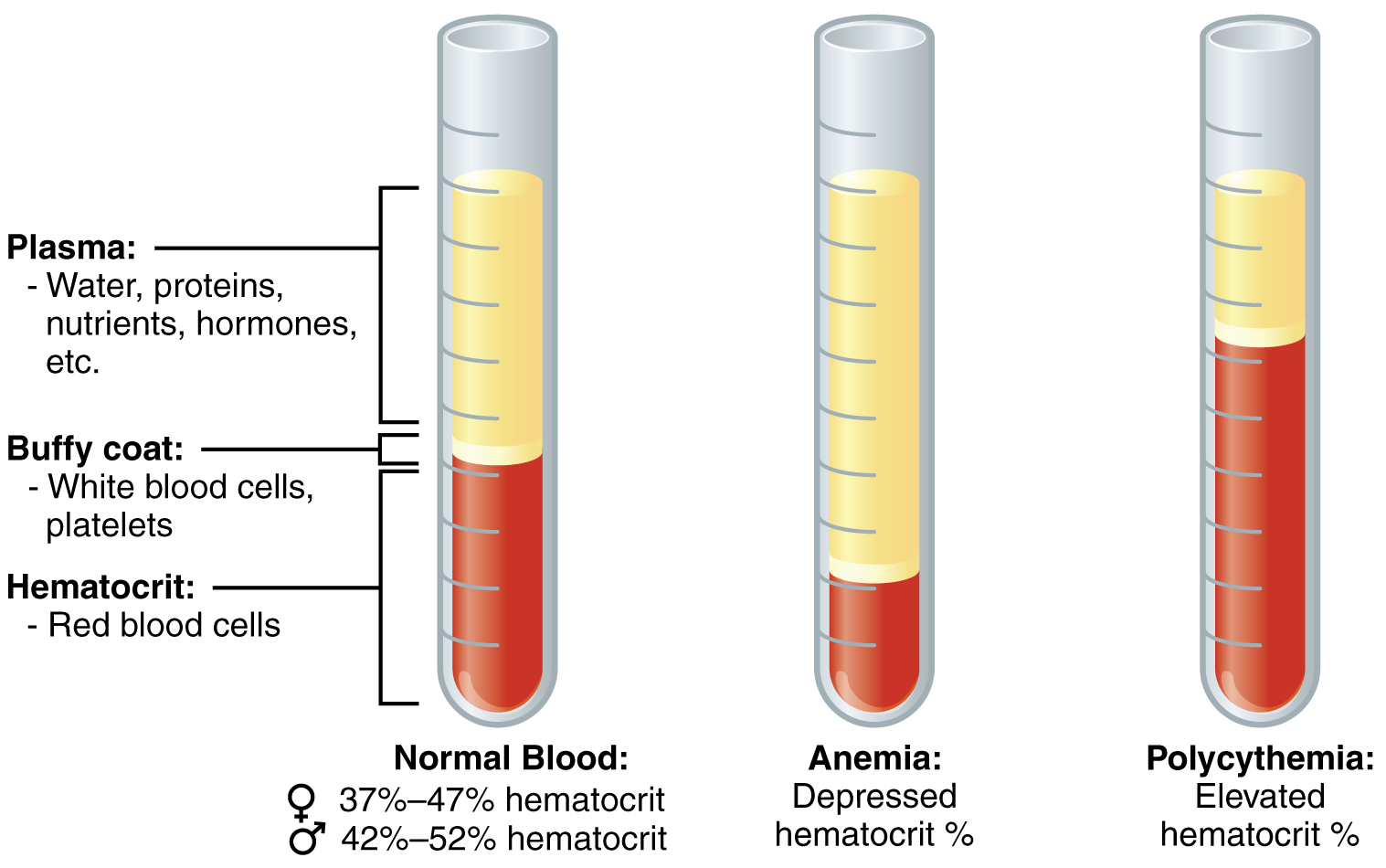
Polycythemia (also spelt polycythaemia) is a laboratory finding that the hematocrit (the volume percentage of red blood cells in the blood) and/or hemoglobin concentration are increased in the blood. Polycythemia is sometimes called erythrocytosis, and there is significant overlap in the two findings, but the terms are not the same: polycythemia describes any increase in hematocrit and/or hemoglobin, while erythrocytosis describes an increase specifically in the number of red blood cells in the blood.[citation needed]
Polycythemia has many causes. It can describe an increase in the number of red blood cells ("absolute polycythemia") or a decrease in the volume of plasma ("relative polycythemia"). Absolute polycythemia can be due to genetic mutations in the bone marrow ("primary polycythemia"), physiological adaptations to one's environment, medications, and/or other health conditions. Laboratory studies such as serum erythropoeitin levels and genetic testing might be helpful to clarify the cause of polycythemia if the physical exam and patient history do not reveal a likely cause.
Mild polycythemia on its own is often asymptomatic. Treatment for polycythemia varies, and typically involves treating its underlying cause. Treatment of primary polycythemia (see polycythemia vera) could involve phlebotomy, antiplatelet therapy to reduce risk of blood clots, and additional cytoreductive therapy to reduce the number of red blood cells produced in the bone marrow.
Polycythemia is defined as serum hematocrit (Hct) or hemoglobin (HgB) exceeding normal ranges expected for age and gender, typically Hct >49% in healthy adult men and >48% in women, or HgB >16.5 g/dL in men or >16.0 g/dL in women. The definition is different for neonates and varies by age in children.
Different diseases or conditions can cause polycythemia in adults. These processes are discussed in more detail in their respective sections below.
Relative polycythemia, also known as pseudopolycythemia, is not a true increase in the number of red blood cells or hemoglobin in the blood, but rather an elevated laboratory finding caused by reduced blood plasma (hypovolemia, cf. dehydration). Relative polycythemia is often caused by loss of body fluids, such as through burns, dehydration, and stress.[citation needed] A specific type of relative polycythemia is Gaisböck syndrome; in this syndrome, primarily occurring in obese men, hypertension causes a reduction in plasma volume, resulting in (amongst other changes) a relative increase in red blood cell count. If relative polycythemia is deemed unlikely because the patient has no other signs of hemoconcentration and has sustained polycythemia without clear loss of body fluids, the patient likely has absolute or true polycythemia.
Absolute or true polycythemia (also erythrocytosis) can be split into two categories:
Polycythemia in newborns is defined as hematocrit > 65%. Significant polycythemia can be associated with blood hyperviscosity, or thickening of the blood. Causes of neonatal polycythemia include:
Hub AI
Polycythemia AI simulator
(@Polycythemia_simulator)
Polycythemia
Polycythemia (also spelt polycythaemia) is a laboratory finding that the hematocrit (the volume percentage of red blood cells in the blood) and/or hemoglobin concentration are increased in the blood. Polycythemia is sometimes called erythrocytosis, and there is significant overlap in the two findings, but the terms are not the same: polycythemia describes any increase in hematocrit and/or hemoglobin, while erythrocytosis describes an increase specifically in the number of red blood cells in the blood.[citation needed]
Polycythemia has many causes. It can describe an increase in the number of red blood cells ("absolute polycythemia") or a decrease in the volume of plasma ("relative polycythemia"). Absolute polycythemia can be due to genetic mutations in the bone marrow ("primary polycythemia"), physiological adaptations to one's environment, medications, and/or other health conditions. Laboratory studies such as serum erythropoeitin levels and genetic testing might be helpful to clarify the cause of polycythemia if the physical exam and patient history do not reveal a likely cause.
Mild polycythemia on its own is often asymptomatic. Treatment for polycythemia varies, and typically involves treating its underlying cause. Treatment of primary polycythemia (see polycythemia vera) could involve phlebotomy, antiplatelet therapy to reduce risk of blood clots, and additional cytoreductive therapy to reduce the number of red blood cells produced in the bone marrow.
Polycythemia is defined as serum hematocrit (Hct) or hemoglobin (HgB) exceeding normal ranges expected for age and gender, typically Hct >49% in healthy adult men and >48% in women, or HgB >16.5 g/dL in men or >16.0 g/dL in women. The definition is different for neonates and varies by age in children.
Different diseases or conditions can cause polycythemia in adults. These processes are discussed in more detail in their respective sections below.
Relative polycythemia, also known as pseudopolycythemia, is not a true increase in the number of red blood cells or hemoglobin in the blood, but rather an elevated laboratory finding caused by reduced blood plasma (hypovolemia, cf. dehydration). Relative polycythemia is often caused by loss of body fluids, such as through burns, dehydration, and stress.[citation needed] A specific type of relative polycythemia is Gaisböck syndrome; in this syndrome, primarily occurring in obese men, hypertension causes a reduction in plasma volume, resulting in (amongst other changes) a relative increase in red blood cell count. If relative polycythemia is deemed unlikely because the patient has no other signs of hemoconcentration and has sustained polycythemia without clear loss of body fluids, the patient likely has absolute or true polycythemia.
Absolute or true polycythemia (also erythrocytosis) can be split into two categories:
Polycythemia in newborns is defined as hematocrit > 65%. Significant polycythemia can be associated with blood hyperviscosity, or thickening of the blood. Causes of neonatal polycythemia include:
Recent media